Marriage between Lab Tests and Risk Scoring: A Path to Proactive Healthcare
In modern medicine, lab tests have long been the foundation of diagnosis and treatment. Whether it’s routine blood work or advanced genetic panels, these tests provide invaluable insights into a patient’s health. But as healthcare evolves, the ability to not only diagnose but also predict and prevent diseases has become critical.
This is where risk scoring steps in—transforming lab results into actionable insights for personalized and preventive care.
What Is Risk Scoring in Healthcare?
Risk scoring is the process of analyzing a patient’s health data—such as lab test results, demographics, and medical history—to calculate their likelihood of developing specific conditions. It translates raw numbers into easily interpretable scores that highlight potential health risks, empowering both patients and healthcare providers to take early action.
For example, a patient’s cholesterol levels, combined with age, weight, and family history, can be used to generate a cardiovascular risk score, estimating their likelihood of developing heart disease.
How Lab Tests Fuel Risk Scoring
Lab tests are the backbone of effective risk scoring. Here’s how they contribute:
- Accurate Biomarker Detection Lab tests measure biomarkers—biological indicators of health. For instance, HbA1c levels reveal long-term blood sugar control, and lipid profiles provide insights into cholesterol levels.
- Trend Analysis Over Time Risk scoring isn’t just about a single test result. By analyzing trends across multiple tests, healthcare providers can track progression or improvement, leading to more informed decisions.
- Integrating with AI and Algorithms Modern healthcare leverages advanced algorithms to integrate lab results with other data points, such as genetics and lifestyle factors, to provide highly accurate risk scores.
The Role of Risk Scoring in Preventive Healthcare
Preventive healthcare focuses on identifying risks before they manifest into diseases. Risk scoring plays a pivotal role in this paradigm by enabling:
- Early Detection: Risk scores highlight potential issues, such as prediabetes or hypertension, allowing for lifestyle adjustments or medical interventions before conditions worsen.
- Personalized Care: Each patient’s risk profile helps customize treatment plans that are specific to their unique needs.
- Enhanced Patient Engagement: When patients understand their risk scores, they are more likely to take ownership of their health and adhere to recommended actions.

Applications of Risk Scoring in Key Diseases
- Cardiovascular Disease (CVD) Risk scoring systems like the ASCVD (Atherosclerotic Cardiovascular Disease) Risk Calculator use lab tests, such as lipid profiles, along with age and lifestyle data, to predict a patient’s 10-year risk of heart disease.
- Diabetes Combining fasting glucose, HbA1c, and BMI, diabetes risk scores identify individuals at high risk of developing Type 2 diabetes, enabling preventive measures like diet modifications and regular monitoring.
- Cancer Genetic testing and tumor markers are now integrated into risk scores to assess the likelihood of developing cancers such as breast and colorectal cancer, allowing for targeted screening protocols.
- Kidney Disease Lab tests measuring creatinine and urine albumin levels are used in risk models to evaluate the progression of chronic kidney disease (CKD).
Challenges in Implementing Risk Scoring
Despite its promise, there are challenges to integrating risk scoring into everyday healthcare:
- Data Accuracy: Inconsistent lab test results or incomplete patient data can skew risk scores.
- Integration Issues: Risk scoring relies on interoperability between lab systems, electronic health records (EHR), and healthcare providers.
- Patient Education: Communicating complex risk scores to patients in a way they understand is essential for engagement and action.
How NirogGyan Is Driving Change
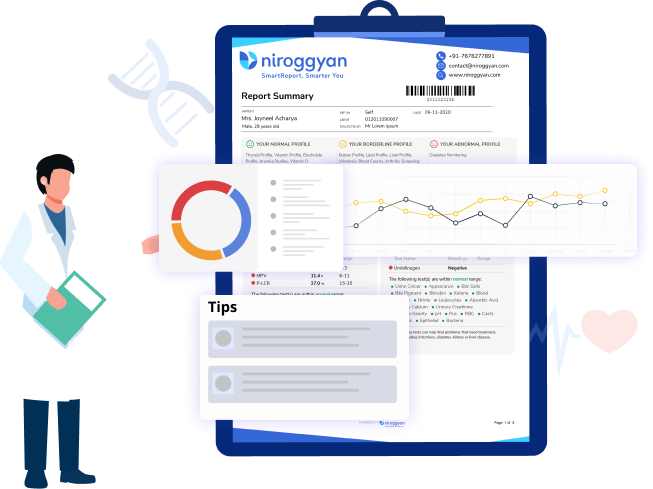
At NirogGyan, we believe in empowering patients and healthcare providers with smart, actionable insights. Our Smart Lab Reports go beyond delivering test results—they include risk scoring modules that:
- Simplify complex data into visual, patient-friendly formats.
- Highlight risk areas with actionable recommendations.
- Integrate seamlessly with lab and hospital information systems for a smooth workflow.
By combining cutting-edge technology with human-centered design, we’re helping labs and healthcare providers deliver personalized care at scale.
The Future of Risk Scoring in Healthcare
As healthcare becomes more data-driven, the integration of lab tests and risk scoring will continue to transform patient care. With advances in AI, genomics, and digital health platforms, we’re moving toward a future where risk scores not only predict diseases but also suggest precise, proactive solutions tailored to each individual.
#RiskScoring #LabTests #PreventiveCare #SmartReports #NirogGyan