The global health landscape of May 2026 has been suddenly punctuated by a formidable name: Hantavirus. Following the WHO Disease Outbreak News (May 4, 2026) regarding a cluster of Andes virus cases linked to an international maritime route, the diagnostic industry is facing its most significant test of the decade.
For the modern pathology lab, this isn't just a challenge of molecular detection. It is a challenge of Information Architecture. We are living in an era where the "Black Box" model of diagnostics—where a lab produces data and a patient simply waits in the dark—is officially obsolete. To survive this shift, B2B providers must bridge the gap between complex pathology and the personal health literacy that tools like niro.health & NirogGyan provide.
The Evolutionary Leap: What Makes the 2026 Outbreak Different?
Hantaviruses have historically been classified into two camps: "Old World" (kidney-focused) and "New World" (lung-focused). The Andes orthohantavirus, the center of the May 2026 alerts, is the wildcard of the family.
The Shift to Person-to-Person Transmission
Unlike its cousins, such as the Sin Nombre virus common in North America, the Andes strain is the only Hantavirus known to support person-to-person transmission of Andes virus. The recent cruise ship cluster highlighted how high-density, enclosed environments act as catalysts for a virus that was once confined to rural rodent burrows.
The virus is a master of mimicry. For the first 3 to 5 days, it feels like a standard seasonal flu: fever, chills, and deep muscle aches. However, the transition to the "leakage" phase is swift and brutal.
The Pathophysiology of the Vascular Assault
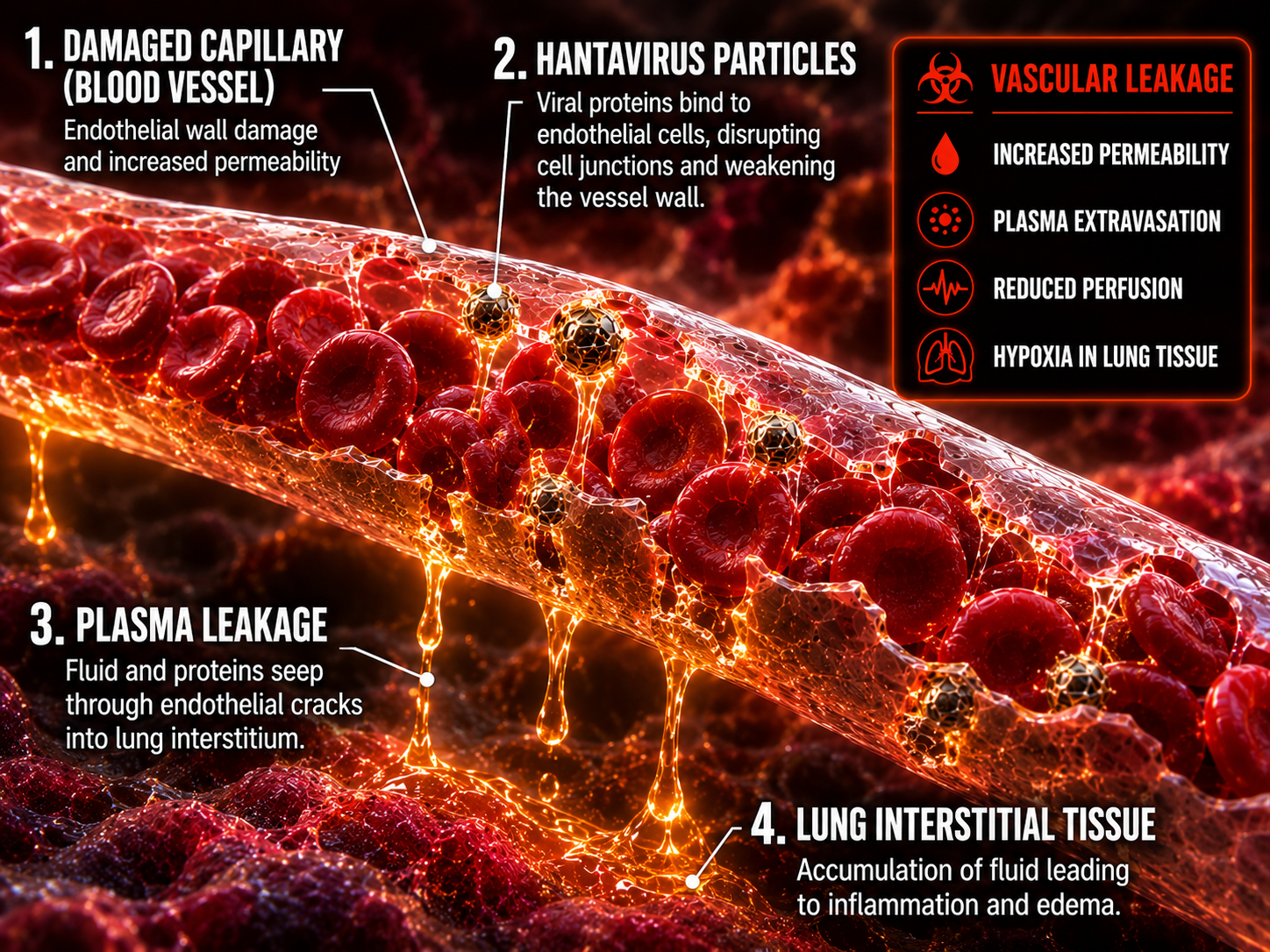
The virus targets the vascular endothelium—the thin membrane that lines the inside of the heart and blood vessels. It triggers a "cytokine storm" that causes capillaries to leak fluid directly into the lungs. In a matter of hours, a patient can shift from "feeling under the weather" to critical Hantavirus Pulmonary Syndrome (HPS). Unlike typical pneumonia, HPS is a vascular crisis, not a primary alveolar infection.
The Pathologist’s "Secret Triad": Spotting the Red Flags
Diagnostic labs are the frontline of defense. If a lab misses the early signs of HPS in a routine blood check, the mortality rate can exceed 35%. However, early intervention—specifically aggressive supportive care—saves lives.
Every B2B provider should train their logic engines—like the ones we architect at NirogGyan—to flag the Hantavirus Triad even before a specialized PCR is ordered:
1. The Platelet Crash (Thrombocytopenia)
A rapid, unexplained drop in platelets is often the very first clinical signal. Understanding the mechanisms of viral thrombocytopenia is critical in a 2026 context where Dengue or Zika may be co-circulating. In Hantavirus, the platelets aren't just dying; they are being sequestered in the pulmonary microvasculature.
2. The Internal Leak (Hemoconcentration)
As fluid (plasma) leaves the vessels and enters the lungs, the blood becomes concentrated. A rising Hematocrit (HCT) in a feverish patient is a massive red alert. The pathophysiology of hemoconcentration is the primary harbinger of respiratory failure.
3. The Left Shift
The presence of immature white blood cells (immunoblasts) signaling that the bone marrow is in "crisis mode" attempting to replace depleted immune cells.
The Biochemistry of the Cytokine Storm: Why Accuracy Isn't Enough
To understand why Hantavirus is so lethal, we must look at the body's overreaction. When the Andes virus enters the endothelial cells, it triggers a cascade of pro-inflammatory cytokines, including Interleukin-6 (IL-6) and Tumor Necrosis Factor-alpha (TNF-α).
This release causes the junctions between endothelial cells to loosen. Think of your blood vessels as a garden hose that suddenly develops thousands of microscopic pores. The liquid part of the blood escapes into the surrounding lung tissue (alveoli). This leads to Non-Cardiogenic Pulmonary Edema.
For a lab owner, reporting "Positive" or "Negative" is no longer the end of the job. In 2026, the lab's value lies in its ability to contextualize the cytokine risk for the treating physician.
Solving the "Anxious PDF" Problem: The B2B Operational Bottleneck
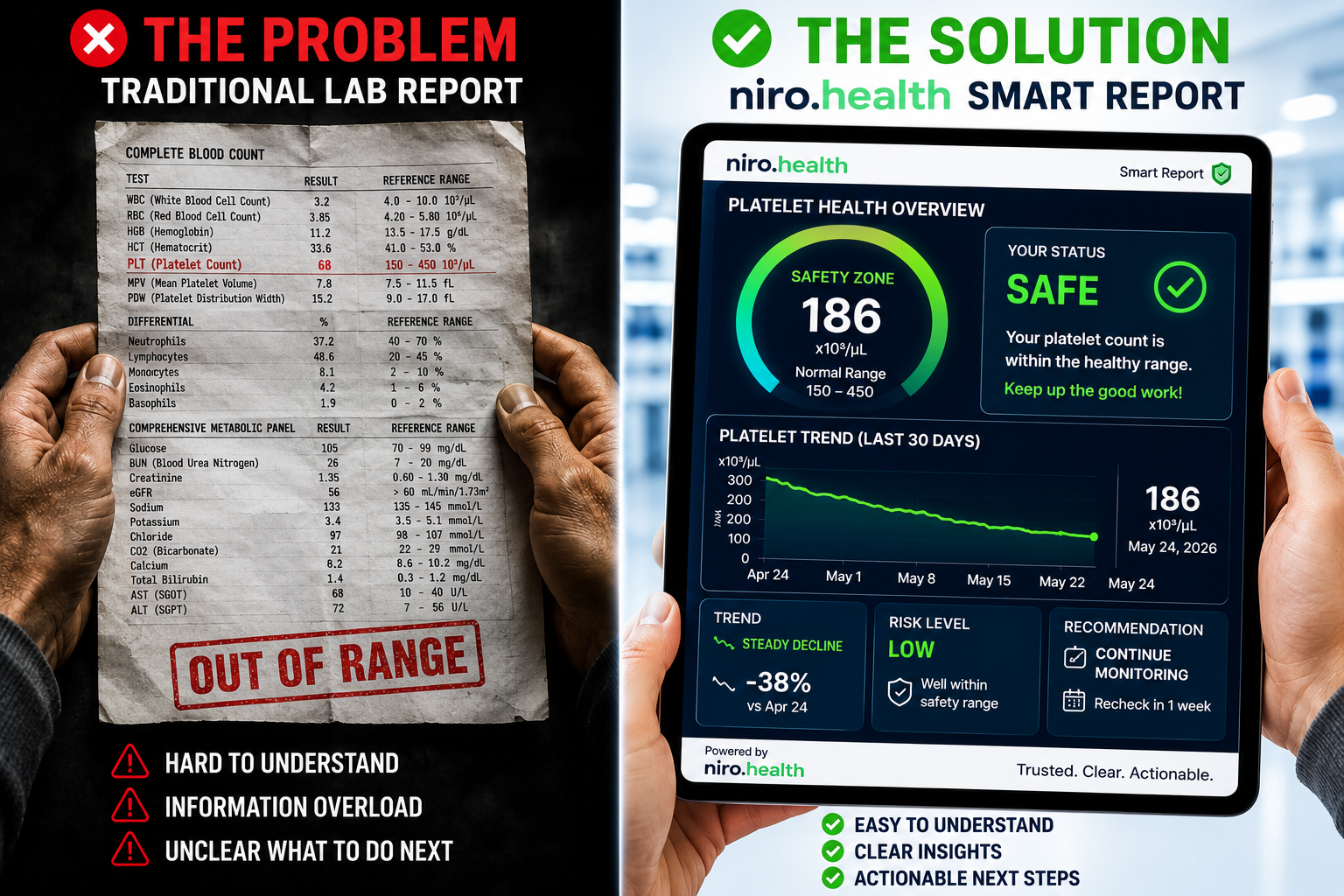
The biggest bottleneck in 2026 diagnostics isn't technical accuracy—it’s the Anxiety Gap. For decades, the industry has operated on a "Dump and Run" model. A lab performs a high-complexity test and emails a 5-page PDF filled with acronyms like RT-PCR, IgG/IgM, and HCT.
The Cost of Confusion
To a patient, this is a foreign language. In an outbreak, this leads to:
- ER Overcrowding: People with mild flu symptoms rushing to emergency rooms because they misunderstood a "borderline" marker.
- Delayed Treatment: Patients ignoring critical drops in platelets because the report didn't explain the urgency.
- Operational Burnout: Lab owners spending more time answering "Am I going to die?" calls than processing samples.
This "Support Burden" is an operational drain. The solution isn't more call center staff; it's Self-Serve Literacy.
The Universal Translator: How niro.health Bridges the Gap
This is where the precision of NirogGyan meets the user-centric vision of niro.health. While we power the backend infrastructure for the world’s leading labs, niro.health is the "Human Interface" for the individual.
Three Core Pillars of Health Literacy
The Niro Health Lab Report Analyzer changes the relationship between the patient and their data:
- Educational De-Escalation: The analyzer explains complex markers in plain English. It tells the user what "Thrombocytopenia" actually means, providing a calm roadmap for the next steps.
- Trend Tracking: If a user has been tracking their routine blood work on niro.health, the AI can compare today's data to their historical "Normal." Context is the only thing that matters in a crisis.
- B2B Synergy: For the lab owner, niro.health acts as a buffer. It provides the first layer of interpretation, ensuring that when the patient finally speaks to a professional, they are informed and calm.
Strategic Roadmap: How Labs Can Adopt "Smart Diagnostics"
For B2B players, the 2026 Hantavirus outbreak is a wake-up call to modernize. Here is how labs should evolve to maintain market share:
Step 1: Implement AI-Driven Correlation
Don't just report single values. Your LIMS should automatically correlate Hematocrit and Platelets. If both are moving in opposite directions, the system should flag a "Viral Hemorrhagic/Pulmonary Risk" for the reviewing pathologist immediately.
Step 2: Adopt Visual Reporting
Move away from black-and-white tables. Use color-coded risk zones and visual trend lines. If a patient can see their platelets plummeting on a graph, they don't need a phone call to tell them to see a doctor. Referencing Hantavirus Antibody (IgG, IgM) profiles in a visual format makes a daunting diagnosis digestible.
Step 3: Integrate the B2C Bridge
By offering a direct "Analyze with niro.health" button on your digital reports, you provide an immediate value-add. This reduces your customer support costs while increasing your brand loyalty.
The Future: Participatory Health and Global Surveillance
The Hantavirus outbreak of 2026 is a case study for the future. We are moving toward an era of Participatory Diagnostics, where the patient is an active collaborator in their own survival.
Imagine a world where anonymized data from thousands of niro.health uploads allows us to spot a "Low Platelet Cluster" in a specific city before the WHO even issues an alert. This is the power of health-tech synergy. We aren't just treating individuals; we are monitoring the heartbeat of a population.
The Three Pillars of 2026 Diagnostics:
- Scalable Empathy: Using AI to provide personalized, human-readable explanations at scale.
- Visual Narrative: Moving away from static tables toward visual health storytelling.
- Proactive Flagging: Systems that alert clinicians the moment a "triad" of symptoms appears in the data stream.
Deep Dive: A 2026 Case Study in Lab Resilience
Consider "Lab A," a traditional pathology center, and "Lab B," powered by NirogGyan and integrated with niro.health.
During the May 2026 cruise ship incident, Lab A processed 400 potential Hantavirus samples. Their staff was overwhelmed by 1,200 phone calls from panicked passengers. 15% of their reports were misinterpreted by patients, leading to unnecessary hospital admissions.
Lab B, meanwhile, sent out "Smart Reports." Each report included an "Analyze with Niro Health" link. Patients received immediate, calm explanations of their platelet levels. Phone inquiries dropped by 65%. Most importantly, the "Secret Triad" flagging system identified 3 high-risk patients 24 hours before their PCR results were even ready, allowing for life-saving early admission.
Conclusion: Information is Medicine
In the world of 2026, clarity is the cure. A patient who understands their report is a patient who takes action. A lab that provides that understanding is a lab that leads the market.
At NirogGyan, we build the engines that power these insights. And through niro.health, we ensure those insights reach the people who need them most. Whether it is a routine cholesterol check or a high-stakes viral screening, our mission remains the same: Transforming data into value, and reports into relationships.
Is your lab report confusing you? Don't wait for a callback. Sign Up & Analyze your blood reports for free at niro.health and get the clarity you deserve today.