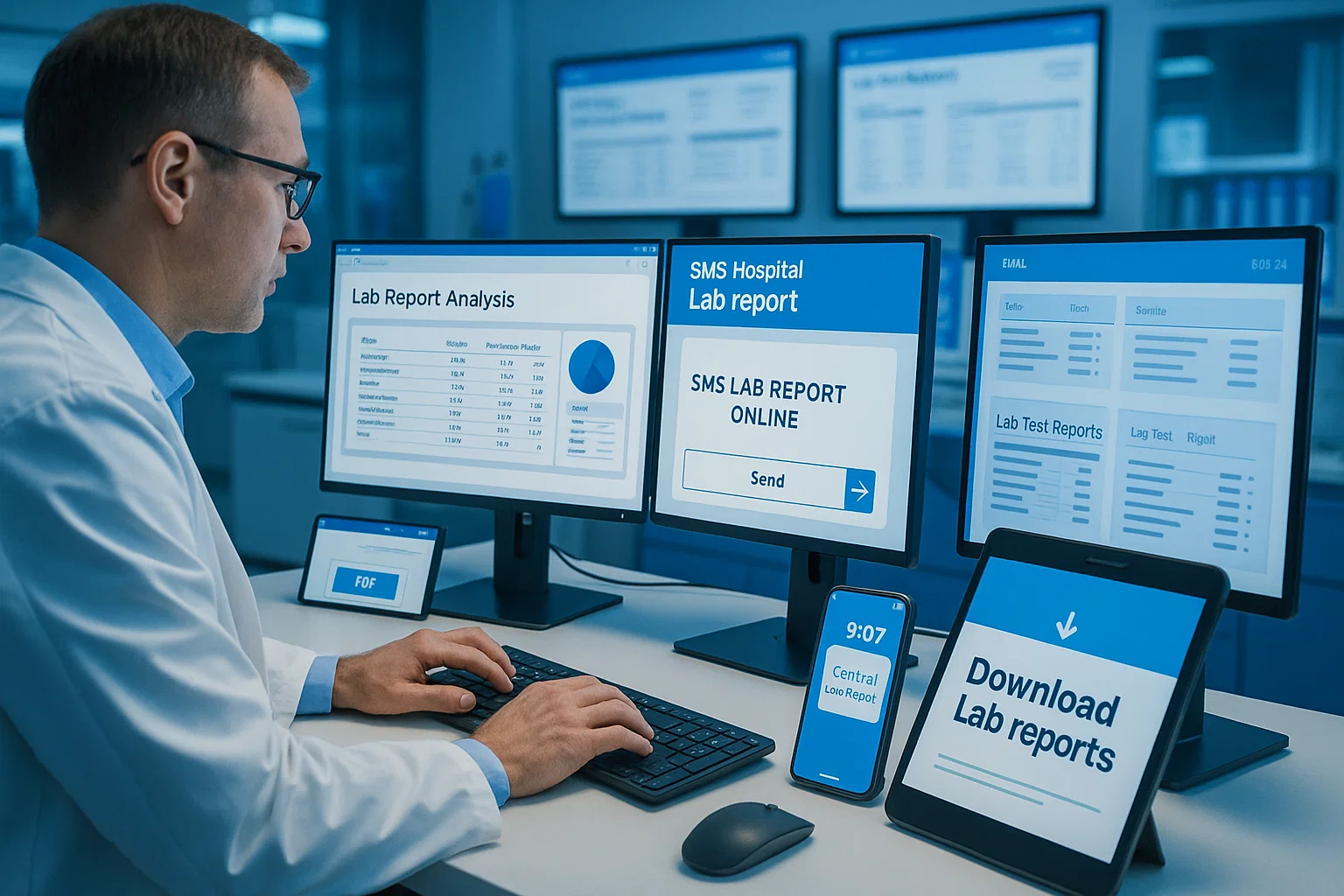
Automating Lab Report Format and Delivery: Benefits for Diagnostic Centers
Author: Joyneel AcharyaLast Updated on: 7th August 2025
Key Takeaways
- Automation reduces manual data entry errors by over 70%, ensuring more reliable lab reports.
- Standardized report formats improve clarity and consistency for clinicians and patients.
- Automated delivery via SMS and secure online portals speeds up communication and enhances patient satisfaction.
- Integration with lab instruments and LIMS streamlines workflows and supports high test volumes without delays.
- Automation improves data security and regulatory compliance compared to manual methods.
- Overall, automation decreases staff workload, allowing focus on critical tasks and reducing operational costs.
Understanding Lab Report Format Automation
Lab report format automation streamlines the creation of consistent, accurate, and compliant reports by using standardized templates and software integration. Instead of manually compiling data, automation tools pull results directly from lab instruments, applying predefined formats that include key sections like Title, Methods, Results, and Conclusions. This reduces formatting errors and saves valuable time, directly translating into operational cost savings and improved resource allocation.
The financial impact becomes clear when considering the labour hours saved. Manual compilation and proofreading are significant time drains for highly paid lab staff. Automating these tasks reduces labour hours spent on formatting and delivery, allowing staff to focus on critical, value-added tasks such as complex analysis or patient consultations. This optimises staff workload, driving efficiency.
Key features of lab report automation include:
- Use of modular templates ensuring uniformity across reports.
- Automated data validation to minimise human errors.
- Integration with Laboratory Information Management Systems (LIMS) for seamless data flow.
- Support for multiple output formats (PDF, HTML) and delivery channels.
For example, a diagnostic center using automation can instantly generate reports that meet regulatory standards and are ready for secure SMS or portal delivery, improving turnaround time and patient communication. ROI accelerates when you consider that such systems, like NirogGyan's zero upfront cost LIMS offering, democratise access to advanced technology, making immediate investment returns feasible without significant initial capital outlay. This model significantly lowers the barrier to entry for diagnostic centers looking to modernise their operations and achieve rapid cost efficiencies.
Challenges Faced by Diagnostic Centers with Manual Lab Report Formatting and Delivery

Manual lab report formatting and delivery create significant delays and errors that impact diagnostic center efficiency and patient care. Staff often spend excessive time compiling and formatting reports, increasing turnaround times despite quick test processing. Inconsistent report formats cause confusion for clinicians, leading to misinterpretation or follow-up delays. Additionally, manual delivery methods like phone calls or physical handovers risk data breaches and lost reports, compromising patient confidentiality and compliance.
Common challenges include:
- Time-consuming formatting and proofreading.
- Delays in communicating critical results.
- Difficulty standardising report layouts across tests.
- Lack of integration with lab instruments and databases.
- Risks to data security and regulatory compliance.
For example, a center relying on paper reports may struggle to provide timely results to patients, affecting treatment decisions and satisfaction. The economic cost of these inefficiencies is substantial, including increased administrative overhead, potential for medical errors leading to costly retests or legal liabilities, and diminished patient satisfaction, which can negatively impact reputation and future revenue.
Financial Impact Summary: Manual Processes
| Issue | Financial Consequence |
| Manual Errors | Increased retesting costs, potential legal liabilities from misdiagnosis, reputation damage. |
| Delays | Lost patient revenue due to dissatisfaction, increased administrative costs for follow-ups, delayed treatment leading to worse outcomes |
| Lack of Standardisation | Inefficient interpretation by clinicians, increased calls for clarification, potential for medical errors. |
| Data Security Risks | Fines for non-compliance (e.g., HIPAA violations), significant reputation damage, loss of patient trust. |
Key Benefits of Automating Lab Report Format and Delivery
Automating lab report formatting and delivery delivers faster, more accurate results while reducing operational costs. By eliminating manual formatting, labs can generate standardised reports instantly, ensuring consistency and compliance with regulatory standards. Automated delivery through secure channels like SMS or patient portals accelerates communication, improving patient satisfaction and enabling timely clinical decisions.
Key benefits include:
- Reduced errors and improved report accuracy.
- Faster turnaround times for test results.
- Enhanced data security and compliance adherence.
- Lower administrative workload, freeing staff for critical tasks.
- Seamless integration with lab instruments and information systems.
For example, a diagnostic center using automation can handle increased test volumes without delays, maintaining quality and efficiency. Healthcare costs reduce significantly when human error is minimised and throughput is maximised, leading to a leaner, more profitable operation.
Enhanced Accuracy and Reduced Errors
Automation dramatically improves lab report accuracy by minimising human errors and standardising data handling. Automated systems pull data directly from lab instruments, reducing manual entry mistakes that commonly occur in traditional workflows. Built-in error-checking mechanisms flag inconsistencies early, preventing incorrect results from reaching clinicians or patients.
Key ways automation enhances accuracy include:
- Direct data capture from instruments, eliminating transcription errors.
- Standardised report templates that reduce formatting mistakes.
- Real-time validation and alerts for out-of-range or missing data.
- Integration with Laboratory Information Management Systems (LIMS) to ensure consistent data flow.
For example, diagnostic centers using LIMS report up to 70% fewer errors, leading to more reliable patient diagnoses and improved clinical decisions. The ROI on error reduction is immediate and profound, as each error prevented saves the cost of retesting, staff time for corrections, and potentially avoids legal or reputational damage.
ROI Calculation: Error Reduction
| Metric | Manual Process (Baseline) | Automated Process | Benefit/Savings |
| Error Rate | 10% (estimated) | 3% (70% reduction) | 7% reduction in errors. |
| Cost per Error | £50 (retest, staff time, admin) | £50 (remaining errors) | Avoiding retests, preventing patient dissatisfaction, reducing potential liabilities. |
| Annual Tests | 100,000 | 100,000 | |
| Annual Cost of Errors (Manual) | £500,000 (£50 x 10,000 errors) | £150,000 (£50 x 3,000 errors) | Annual Savings: £350,000 |
Value Proposition Matrix: Accuracy
| Value Driver | Impact on Business | Quantifiable Benefit |
| Patient Safety | Reduced risk of misdiagnosis, leading to better patient outcomes and reduced liability. | Decreased retest rates, fewer patient complaints, lower legal costs. |
| Operational Efficiency | Less time spent correcting errors, more time on high-value tasks. | Staff productivity gains (e.g., 70% reduction in error correction time). |
| Reputation & Trust | Enhanced credibility with clinicians and patients, leading to increased referrals and loyalty. | Improved patient satisfaction scores, positive word-of-mouth, stable or increasing patient volume despite a competitive market. |
Faster Report Turnaround and Delivery
Automating lab report generation and delivery drastically reduces turnaround time (TAT), enabling faster clinical decisions and improved patient care. By integrating Laboratory Information Systems (LIS) with analyzers and Electronic Health Records (EHRs), diagnostic centers can automate data capture and report compilation, eliminating manual bottlenecks.
Key factors speeding up report turnaround include:
- Real-time data transfer from instruments to reporting systems.
- Automated formatting and error-checking to avoid delays.
- Instant electronic delivery via secure portals or SMS.
- Automated alerts for pending or delayed reports.
For example, a diagnostic center using automation can cut report delivery time from days to hours, helping physicians initiate timely treatments and enhancing patient satisfaction. This speed is a critical differentiator in competitive healthcare markets, allowing centers to handle increased test volumes without adding staff, thereby improving throughput and lowering per-test expenses.
Cost Comparison Chart: Turnaround Time (Illustrative example for a single report)
| Process | Time Required (Avg.) | Staff Time Cost (per report) |
| Manual Delivery | 2-3 days | £5.00 (printing, sorting, calls) |
| Automated Delivery | Hours | £0.50 (system overhead) |
Annual Savings from Faster Delivery (Illustrative) If a centre processes 100,000 reports annually:
- Manual Cost: 100,000 reports * £5.00/report = £500,000
- Automated Cost: 100,000 reports * £0.50/report = £50,000
- Annual Savings: £450,000
Improved Patient Communication via SMS and Online Delivery
Leveraging SMS and online delivery for lab reports significantly enhances patient communication and satisfaction. SMS notifications provide instant alerts when results are ready, often including secure links to view detailed reports online. This immediacy reduces patient anxiety and encourages timely follow-up.
Key advantages include:
- Quick, direct delivery of test results to patients’ mobile devices.
- Easy access to reports through secure online portals anytime.
- Automated reminders for appointments and retests improving compliance.
- Cost-effective communication reducing administrative burden.
For example, a diagnostic center using SMS alerts saw a 30% increase in patient engagement and faster report access, enabling prompt medical decisions. ROI accelerates when you consider that enhanced patient satisfaction directly correlates with patient retention and positive referrals, a key driver of long-term revenue growth. This also reduces inbound calls for result inquiries, freeing up administrative staff.
Cost Efficiency and Resource Optimization
Automating lab report formatting and delivery drives significant cost savings and optimises resource use in diagnostic centers. By reducing manual tasks, labs cut labour costs and minimise errors that cause costly rework. Automation enables faster processing of higher test volumes without adding staff, improving throughput and lowering per-test expenses.
Healthcare costs reduce by an estimated 20-30% on administrative tasks alone when automation is fully implemented. The financial impact becomes clear when considering the reallocation of human capital from mundane, repetitive tasks to more complex, revenue-generating activities.
Key ways automation enhances cost efficiency and resource optimization:
- Reduces labour hours spent on formatting and delivery.
- Minimises errors that lead to repeat tests or corrections.
- Optimises staff workload, allowing focus on value-added tasks.
- Improves use of lab instruments and scheduling for maximum capacity.
For example, integrating lab scheduling software with automation tools helps balance workload and avoid bottlenecks, leading to smoother operations and lower operational costs. This represents a substantial return on investment through sustained operational savings.
SMS and Mobile Integration for Lab Report Delivery

Integrating SMS and mobile platforms for lab report delivery enhances speed, convenience, and patient engagement. Automated SMS alerts notify patients instantly when reports are ready, often including secure links to access detailed results via mobile-friendly portals. This eliminates manual handling and reduces wait times, especially critical for urgent cases.
Key advantages of SMS and mobile integration include:
- Immediate delivery of lab results to patients and doctors.
- Secure, HIPAA-compliant communication channels.
- Automated reminders for appointments and follow-ups.
- Reduced administrative workload and errors.
For example, diagnostic centers using SMS delivery report faster patient response times and improved satisfaction by providing easy, on-the-go access to lab reports. The ROI on mobile integration is seen through increased patient loyalty and operational efficiency. This approach significantly reduces the cost associated with traditional communication methods like phone calls or postal mail, further enhancing cost efficiency.
Conclusion: Embracing Automation for Enhanced Diagnostic Center Efficiency
Embracing automation transforms diagnostic centers by boosting accuracy, speeding up report delivery, and optimising resources. Automated lab report formatting and delivery reduce manual errors and turnaround times, enabling faster clinical decisions and improved patient care. Integration with LIMS and mobile platforms streamlines workflows, freeing staff to focus on critical tasks rather than repetitive processes.
For diagnostic centers, the decision to automate is not merely about adopting new technology; it is a strategic investment that yields quantifiable business value and a rapid return on investment. Healthcare costs reduce significantly when human intervention in report processing is minimised, and efficiency gains are realised across the entire diagnostic workflow.
Key takeaways for successful automation adoption:
- Standardise report templates and automate data capture.
- Leverage SMS and online portals for instant patient communication.
- Prioritise data security and regulatory compliance.
- Implement scalable, integrated software solutions, such as NirogGyan's zero upfront cost LIMS, which significantly reduces initial capital outlay.
By adopting these strategies, diagnostic centers can enhance operational efficiency, reduce costs, and elevate patient satisfaction-paving the way for a smarter, more reliable diagnostic future. The ROI accelerates significantly with reduced errors, faster throughput, and improved patient engagement, making automation a financially compelling imperative for modern diagnostic centers.
Financial Impact Summary: Automation Benefits
| Benefit Area | Key Financial Outcomes |
| Accuracy & Error Reduction | 70% fewer errors, leading to significant savings from avoided retests, reduced legal exposure, and enhanced clinical reliability. Staff reallocated from error correction. |
| Faster Turnaround Time | Reduced delivery time from days to hours, improving patient experience and enabling higher test volumes without additional staff, driving down per-test operational costs. |
| Improved Communication | 30% increase in patient engagement, reducing administrative burden from calls, improving patient retention and positive referrals, leading to sustained revenue growth. |
| Cost Efficiency | Significant reduction in labour hours and operational costs by optimising staff workload and resource utilisation. Healthcare costs reduce by 20-30% on administrative tasks. |
| Data Security & Compliance | Reduced risk of costly fines and reputational damage from data breaches, ensuring long-term operational stability and trustworthiness. |
| NirogGyan LIMS Advantage | Zero upfront cost significantly lowers financial risk and accelerates ROI, making advanced automation accessible for diagnostic centers of all sizes, ensuring immediate operational cost benefits. |
Frequently asked questions (FAQs)
1. What is lab report format automation?
Lab report format automation is the use of software tools and systems to automatically generate standardized, accurate, and compliant lab reports by pulling data directly from lab instruments and applying predefined templates.
2. How does automating lab report delivery improve diagnostic center efficiency?
Automation speeds up report generation and delivery, reduces manual errors, ensures consistent formatting, and enables instant communication with patients via SMS or online portals, thereby improving overall workflow and patient satisfaction.
3. What types of software are used for lab report automation?
Common software includes Laboratory Information Management Systems (LIMS), lab report software with integrated templates, and platforms offering SMS and online delivery capabilities to streamline report generation and distribution.
4. How does SMS-based lab report delivery work?
SMS-based delivery automatically sends notifications and secure links to patients’ mobile devices when their lab reports are ready, providing quick and convenient access while enhancing communication and reducing administrative workload.
5. How can diagnostic centers ensure compliance and data security in automated lab reporting?
By implementing role-based access controls, encrypting data during storage and transmission, maintaining audit trails, and using validated software that complies with healthcare regulations like HIPAA and local standards, centers can safeguard patient information effectively."Enhance your lab’s report delivery with NirogGyan’s smart, patient-friendly solutions. Improve engagement and accuracy- book a demo today!"