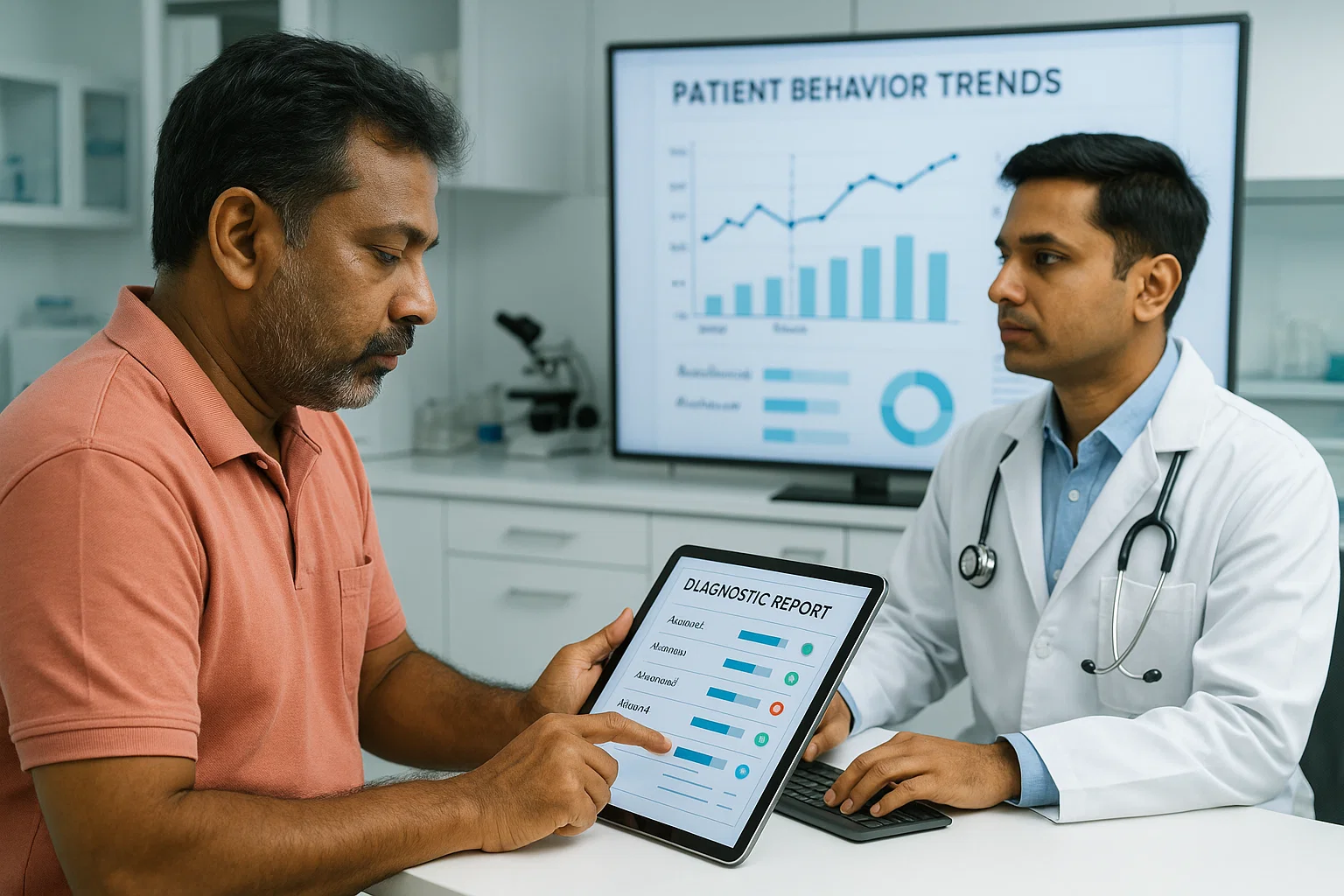
Patient behavioral change is crucial for better health outcomes, involving the adoption of new habits influenced by clear communication, patient activation, and clinician empathy. Diagnostics companies play a key role by simplifying complex results, delivering personalized reports, integrating digital tools, and collaborating with healthcare providers to encourage timely follow-ups and treatment adherence. Advanced technologies like mobile health apps, AI platforms, and Remote Patient Monitoring (RPM) devices enable real-time behavior tracking and support personalized interventions.
Key Takeaways
- Diagnostics companies in India measure patient behavioral change using surveys, telephonic interviews, and digital tracking, focusing on lifestyle modifications, medication adherence, and follow-up test uptake.
- Patient behavioral change is crucial for better health outcomes, involving adoption of new habits influenced by clear communication, patient activation, and clinician empathy.
- Diagnostics companies play a key role by delivering personalized reports, simplifying complex results, integrating digital tools, and collaborating with healthcare providers to encourage timely follow-ups and treatment adherence.
- Advanced technologies like Remote Patient Monitoring (RPM) devices, mobile health apps, AI platforms, and telehealth solutions enable real-time behavior tracking and support personalized interventions.
- Digital platforms and mobile apps such as TeleVox, Simbie AI, MyChart, and mySugr streamline communication through automated reminders, secure messaging, remote monitoring, and scheduling, enhancing patient engagement.
- Wearable devices continuously monitor vital signs and behaviors, integrated with RPM systems to provide actionable data for early intervention and improved chronic disease management.
Understanding Patient Behavioral Change in Healthcare

This isn't just medical jargon; it's about whether a patient stops smoking, starts exercising, or remembers to take their prescribed medication every single day. Patient behavioral change is absolutely pivotal for us in the diagnostics field. It involves the patient adopting new, positive habits, which are heavily influenced by clear communication and sustained support.
I’ve seen that when reports are unclear or confusing a common issue with traditional reports patients often feel lost and unable to take an active role in their health. But when a provider offers clinician empathy and uses tailored patient behavior engagement strategies, the patient’s self-management improves significantly. Don't we all want to feel empowered, not confused, by our own health data? Imagine if the cryptic results you received suddenly made perfect sense you'd be far more likely to stick to the plan! Successful behavior change enhances self-management and reduces complications, making it vital for overall healthcare diagnostics.
The Role of Diagnostics Companies in Influencing Patient Behavior
It's easy to assume that diagnostics companies just run tests. But their role goes far beyond the lab bench! They're actually crucial bridges, linking complex medical diagnostics data with genuine patient behavior. How do they do this? By delivering personalized, clear reports that literally empower informed decisions.
For instance, NirogGyan, founded in Delhi, India in 2019, specializes in health visualization software. NirogGyan transforms traditional, opaque lab reports into 'Smart Reports' that use plain language and clear visualizations. This simplifies complex results so much that a patient actually understands why they need a follow-up, encouraging timely action and treatment adherence. This proactive involvement helps patients adopt healthier behaviors, improving outcomes and system efficiency within healthcare diagnostics. Effective communication remains central to transforming diagnostic insights into actionable health changes.
Technologies and Tools for Patient Monitoring and Behavior Tracking
Measuring behavior is hard, right? Especially when the patient walks out the door. That's why technology is a lifesaver for behavior tracking and patient monitoring. We rely on advanced tools that allow for real-time insight, bridging the gap between the clinic and home. Key tools include:
- Remote Patient Monitoring (RPM) devices like Bluetooth scales and pulse oximeters.
- Mobile health apps for lifestyle logging and medication reminders.
- AI-powered platforms that analyze vital signs and behavioral patterns.
- Telehealth solutions facilitating continuous clinician-patient engagement.
These technologies support timely interventions and personalized care, addressing the sticky challenge of patient adherence in medical diagnostics.
Digital Platforms and Mobile Apps for Patient Engagement
Digital platforms are the engine of modern patient engagement in healthcare. They streamline communication and care management incredibly well. Tools like Simbie AI and MyChart automate appointment reminders, scheduling, and follow-ups, which drastically reduce no-shows and improves adherence. Mobile apps, such as NirogGyan’s Viz App, offer a secure, instant, mobile-friendly portal for patients to access their Smart Reports, empowering them with convenient access to their data.
In my experience, giving patients access to secure messaging, remote monitoring, and automated reminders really fosters sustained patient engagement. These technologies bridge clinical care with daily patient experiences, helping support lasting behavioral change.
Wearable Devices and Remote Monitoring Technologies
Wearables aren't just for fitness fanatics anymore! They enable continuous, real-time patient monitoring of vital signs (heart rate, sleep patterns, activity) far beyond the hospital walls. Remote Patient Monitoring (RPM) systems integrate this data, providing actionable insights for early intervention. This is revolutionary for managing chronic diseases and personalizing care. For long-term behavior tracking, a pulse oximeter or a multi-parameter sensor can be invaluable, supporting sustained patient engagement.
Patient Engagement Strategies Employed by Diagnostics Companies
To truly influence patient behavior, we need more than just good tech; we need smart patient engagement strategies. Diagnostics companies in India are deploying personalized, multi-channel approaches:
- Tailored communication via emails, SMS, and mobile apps.
- Clear, easy-to-understand report explanations.
- Timely follow-up reminders and targeted educational content.
When a major partner like PharmEasy reports that NirogGyan’s Smart Report acts as a "special advantage" that boosts "user-engagement... with a great ROI," you realize these patient engagement in healthcare strategies aren't just fluffy service enhancements they’re central to the business model. These personalized approaches foster trust, improve health literacy, and drive sustained patient behavior change.
Measuring Behavioral Change: Metrics and Methods
Okay, how do diagnostics companies actually put a number on behavioral change? It’s a mix of hard data and human feedback. Effective measurement combines quantitative and qualitative metrics, providing actionable insights into adherence and treatment effectiveness. If we see improved follow-up rates after patients receive clearer medical reports, that signals a positive shift in behavior tracking. This helps us refine patient support going forward.
Quantitative Metrics: Adherence Rates and Follow-up Compliance
These are the hard numbers we chase! Adherence rates (how consistently someone follows treatment) and follow-up compliance (did they show up for the next test?) are critical quantitative metrics to assess patient behavior. We track this using electronic health records, app logs, and automated reminder systems. High adherence directly correlates with better health outcomes. It's that simple. If compliance is low, that tells us we need targeted interventions, allowing us to refine our behavior tracking strategies for sustained success and improved care continuity.
Qualitative Assessments: Patient Feedback and Self-Reporting
Numbers don't tell the whole story, do they? Qualitative assessments give us the necessary context for patient behavior. Through structured interviews, open-ended surveys, or patient diaries, we capture the experiences, motivations, and, most importantly, the barriers a patient faces. This is where the human element of patient engagement truly shines. When patients self-report their progress, they feel empowered, and their feedback helps us tailor our interventions to be more personalized and culturally sensitive.
Challenges in Measuring Patient Behavioral Change in India
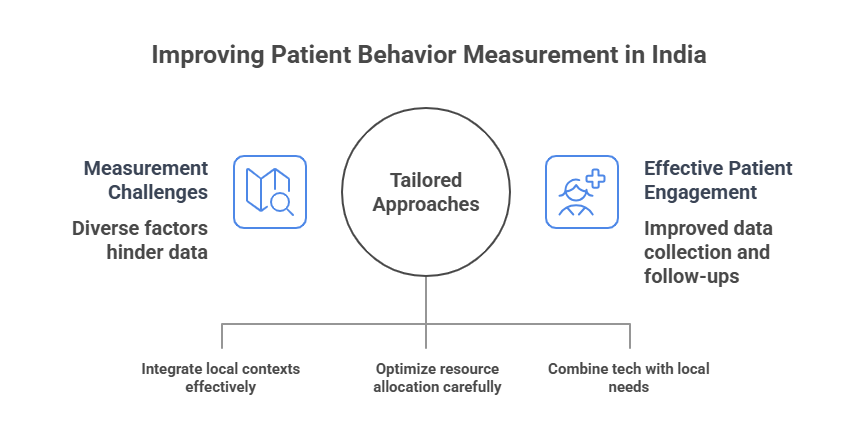
We can't ignore the realities on the ground. Measuring patient behavior in India is tough because of the diverse socio-economic and cultural factors. Diagnostics companies face key obstacles:
- Limited digital infrastructure, hindering real-time data collection (especially in rural areas).
- Vast variability in health literacy across different regions.
- Scarcity of trained personnel for accurate follow-ups.
- Ongoing privacy concerns restricting data sharing.
Addressing these barriers within healthcare diagnostics requires tailored, localized, and resource-sensitive approaches that integrate local contexts with technology for effective patient engagement.
Case Studies and Industry Insights from Indian Diagnostics Companies
Despite the challenges, diagnostics companies in India are innovating! For example, NirogGyan has pioneering patient-centric models blending technology with accessibility. I've seen highly-regarded clients like Dr. Dangs Lab have successfully used NirogGyan's visualization technology to launch digital platforms called "Decode," providing clear information and easy-to-understand insights to patients and doctors alike. Furthermore, TechEmerge Health India pilots have reached over 18,000 patients, improving operational efficiency and engagement through digital tools.
That tangible client success demonstrates how a localized strategy, focused on clear communication (a form of patient engagement), can be highly effective in our market. These initiatives prove that scalable solutions focused on quality and behavior-driven outcomes can advance healthcare diagnostics nationwide.
The Impact of Medical Reports on Patient Behavioral Change
Think about the typical lab report pages of technical terms and numbers that mean nothing to the average person. Now, imagine if those medical reports were clear, personalized, and highlighted exactly the actionable steps you needed to take. That clarity is a huge motivator for patient behavior.
Structured reports with visual aids improve patient awareness, encourage timely follow-ups, and reinforce medication adherence. The crucial takeaway here is that the clarity, content, and delivery of medical reports directly contribute to driving positive behavioral change and better health outcomes.
Future Trends in Patient Behavior Measurement and Engagement in India
Looking ahead, the future of patient monitoring and engagement in India is thrilling! We’re seeing deep integration of AI-driven analytics, which will tailor "nudges" based on an individual’s personal motivations. Wearables enable truly continuous, real-time behavioral change tracking outside of traditional clinics.
Telehealth, combined with Remote Patient Monitoring (RPM), will expand access to care, especially in rural areas. For diagnostics companies, these innovations promise more precise, culturally sensitive, and scalable patient engagement within healthcare diagnostics, ensuring better health outcomes across our diverse nation.
Conclusion: Enhancing Patient Outcomes Through Effective Behavioral Change Measurement
Ultimately, effective measurement of patient behavioral change isn't just a goal, it's essential for improving health outcomes and care quality. By wisely combining quantitative data (like adherence rates) with rich qualitative insights (like patient feedback), diagnostics companies can truly tailor interventions that support sustained behavior shifts.
Leveraging digital tools, personalized communication, and continuous monitoring fosters strong patient engagement and shared decision-making. We must ensure we integrate robust behavioral measurement into our healthcare system, enabling timely adjustments, reducing complications, and truly advancing patient-centered care throughout India.
FAQs:
1. How do diagnostics companies in India measure patient behavioral change after test reports?
Diagnostics companies use surveys, telephonic interviews, and digital tracking tools to assess changes in patient habits post-report. They monitor lifestyle modifications, medication adherence, and follow-up test rates to evaluate how effectively patients act on diagnostic insights.
2. What role do digital tools play in tracking patient behavior after diagnosis?
Digital tools like Remote Patient Monitoring (RPM) systems, AI platforms, and mobile health apps track real-time data such as medication compliance, vital signs, and follow-up actions. These tools provide actionable insights, enabling clinicians to personalize care and support long-term behavioral change.
3. Why is patient behavioral change important in diagnostics and healthcare?
Patient behavioral change determines the success of diagnostics by translating medical insights into real health improvements. Adhering to treatment plans, adopting healthy habits, and following up on test results directly reduce complications and enhance long-term patient outcomes.
4. What challenges do Indian diagnostics companies face in measuring patient behavior?
Key challenges include limited digital literacy, inconsistent internet access in rural areas, data privacy concerns, and variability in patient engagement. Diagnostics providers overcome these barriers through localized communication strategies, mobile-friendly apps, and strong privacy frameworks.
5. What future trends are shaping patient behavior measurement in India’s diagnostics industry?
Emerging trends include AI-driven behavioral analytics, wearable integration, and personalized digital nudges to promote adherence and lifestyle changes. Telehealth and blockchain are also enhancing remote monitoring, data privacy, and patient engagement across India’s evolving healthcare ecosystem.
“Upload Lab Report & Get AI Analysis from NirogGyan Now! Upload your lab results to NirogGyan for an in-depth AI-powered analysis delivered right to your device in minutes.”