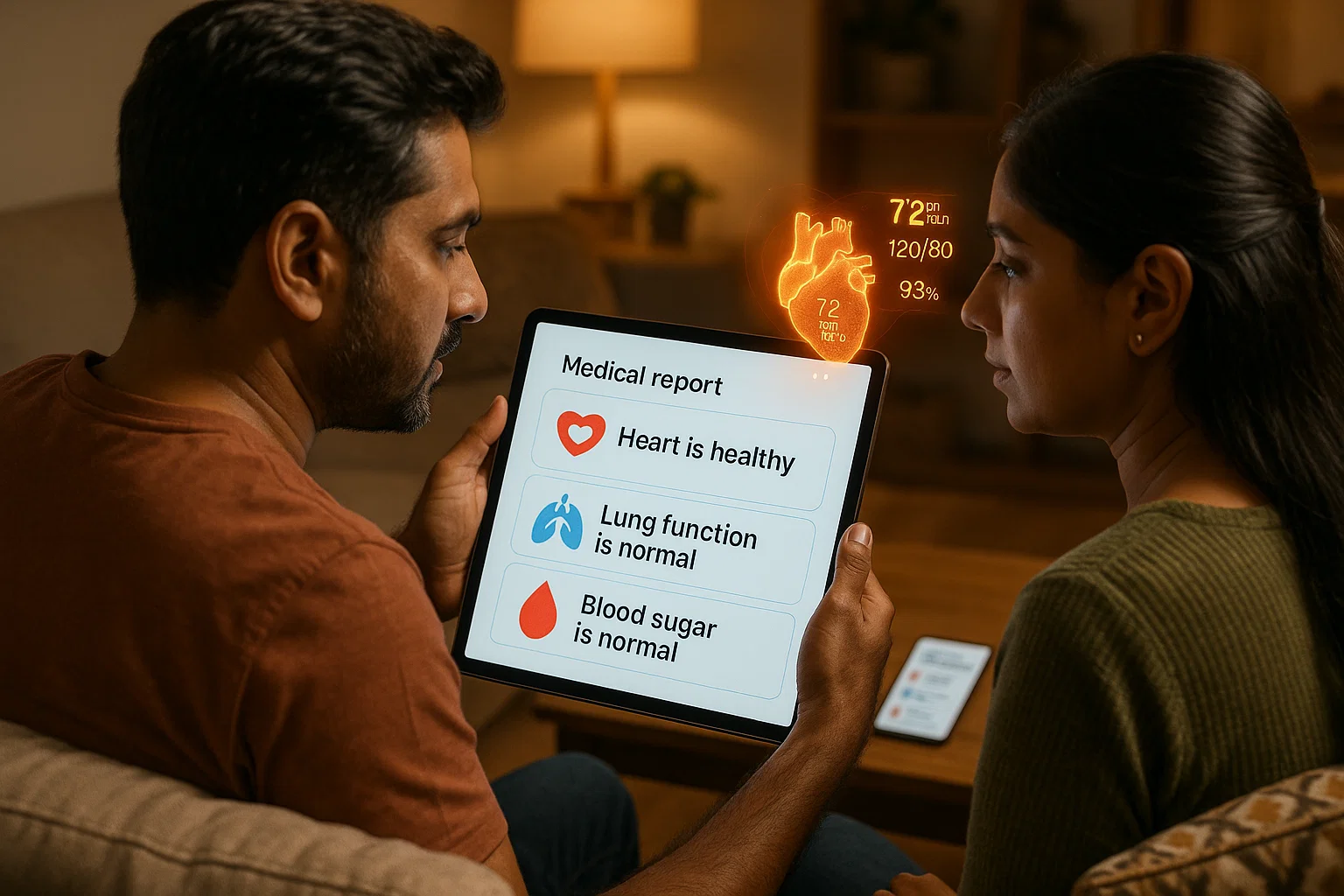
Author: Joyneel AcharyaLast Updated on: 11th August 2025At the vanguard of health tech innovation, we are fundamentally reshaping how patients engage with their own medical data. The advent of AI-based personalized summaries is not merely an incremental improvement; it is a transformative leap, converting what was once an impenetrable medical lexicon into crystal-clear, actionable insights tailored to each patient's unique health profile.
These sophisticated AI tools are engineered to dismantle the barriers of complex terminology, replacing technical jargon with straightforward explanations, thereby enabling faster comprehension of lab results and diagnoses and significantly reducing patient anxiety. The data tells a compelling story of enhanced patient empowerment, as individuals gain the confidence to make informed decisions about their health journeys.
Key Takeaways
- Personalized AI-based summaries convert complex medical reports into clear, easy-to-understand insights tailored to each patient's unique health profile.
- These AI tools reduce patient anxiety by replacing technical jargon with straightforward explanations, enabling faster comprehension of lab results and diagnoses.
- Personalized summaries reflect individual medical history, offering context-specific interpretations that improve patient understanding and decision-making.
- AI-powered summaries decrease the need for immediate doctor consultations by providing basic explanations online, saving time for both patients and healthcare providers.
- Traditional medical reports often overwhelm patients due to complex terminology and inconsistent formats, highlighting the need for AI-driven simplification.
- AI enhances lab test result interpretation by highlighting abnormal values, providing contextual explanations, and offering instant online access to personalized health insights.
The Challenge of Understanding Traditional Medical Reports

For too long, traditional medical reports have presented a formidable challenge, often overwhelming patients with dense medical terminology and inconsistent formats. These documents, primarily drafted for the discerning eye of healthcare professionals, inadvertently create a chasm of confusion for patients grappling with their health results. Our AI algorithms reveal patterns that traditional reports often obscure, such as subtle correlations between seemingly disparate test results or early indicators of complex conditions, thereby pre-empting uncertainty about what the results truly mean for a patient’s health.
Common challenges that underscore the imperative for AI-driven simplification include:
- Medical jargon that is hard to decode, frequently leading to patient distress and a sense of alienation from their own health data.
- A pervasive lack of clear, tailored explanations, leaving patients to interpret complex numerical values without context.
- Inconsistent report formats that vary widely across different labs and hospitals, adding another layer of cognitive burden.
The data tells a compelling story of patient confusion and delayed decision-making due to uninterpretable reports. This systemic opacity not only fosters anxiety but can also hinder timely medical intervention, often necessitating additional consultations simply to clarify basic information that should have been self-evident.
What Are Personalized AI-Based Summaries in Medical Reports?
Personalized AI-based summaries represent a paradigm shift in medical communication. These are not just abbreviated versions, but rather concise, eminently understandable reinterpretations of complex medical reports, meticulously tailored to each patient’s specific health data. Leveraging advanced AI algorithms and natural language processing (NLP), these revolutionary tools meticulously analyse vast medical documents from lab results and imaging reports to clinical notes, extracting the most salient information and re-presenting it in clear, simple language. This process highlights precisely what is most critical for an individual’s condition and medical history, acting as a highly sophisticated medical translator.
Technical Specification Box: AI Summarizer
| Component | Specification | Impact on Patient Understanding |
| NLP Engine | Transformer-based Models (e.g., BERT, GPT variants) | Deconstructs medical jargon; captures nuances of clinical language. |
| Data Integration | HL7, DICOM, FHIR Compatibility | Seamlessly ingests diverse data types (lab, imaging, clinical notes); ensures comprehensive context. |
| Personalization Engine | Reinforcement Learning from Human Feedback (RLHF) | Continuously refines summaries based on patient interaction and clinical feedback; ensures context-specific relevance. |
| Output Formats | Dynamic HTML, PDF, API endpoints | Enables multi-platform access; supports integration into patient portals and mobile apps. |
| Security Protocol | End-to-End Encryption (AES-256) | Protects sensitive patient data; ensures privacy and compliance with regulations |
Key features that define these next-generation summaries include:
- Precision extraction of critical findings and values, cutting through the noise to deliver the most vital health information.
- Contextual explanations profoundly informed by personal medical history, ensuring that insights are not generic but deeply relevant to the individual.
- Intuitive hyperlinks to original report sections, empowering curious patients to delve deeper into the raw data if desired.
For instance, an AI summary might not just state "high blood sugar levels," but explain these in direct relation to your diagnosed diabetes history and recent dietary changes, thereby enabling you to grasp your health status instantaneously and without needing to navigate complex medical jargon. Innovations like NirogGyan's AI Video Reports exemplify how visually rich and personalized summaries can utterly transform patient comprehension, bringing complex data to life in an easily digestible format.
How AI Enhances Lab Test Results Interpretation Online
AI-powered tools are revolutionising the interpretation of lab test results by translating inherently complex data into clear, personalized explanations, accessible online and on-demand. Through the intelligent application of natural language processing and machine learning, AI meticulously analyses your specific lab values such as blood sugar, cholesterol, or liver enzymes and elucidates their profound implications for your unique health profile. Machine learning shows us that specific biomarker deviations, when contextualized by patient history and lifestyle, offer far more actionable insights than isolated values, allowing for a proactive rather than reactive approach to health management. This fundamental shift helps patients circumvent the confusion stemming from medical jargon, drastically accelerating comprehension without the necessity of waiting for a doctor’s appointment.
Key ways AI substantially improves lab result interpretation:
- Pinpointing and highlighting abnormal values with accompanying easy-to-understand context, ensuring critical information is immediately apparent.
- Delivering tailored insights that are deeply informed by your comprehensive medical history, transforming raw data into personal health narratives.
- Providing instant online access to explanations anytime, anywhere, fostering a new era of continuous patient engagement.
For example, platforms akin to Hathr AI and Docus AI Doctor, securely interpret uploaded lab reports, delivering actionable health insights with unparalleled speed. Furthermore, platforms leveraging sophisticated algorithms, akin to NirogGyan's Heart Risk Calculator, empower individuals to proactively manage their health based on comprehensive data analysis, offering predictive insights into potential cardiovascular risks. This empowers you to make informed decisions and discuss results confidently and intelligently with your healthcare provider.
Benefits of Using AI-Based Summaries for Patients
AI-based summaries offer patients a new echelon of clarity, accuracy, and personalized insights, rendering the understanding of complex medical reports faster, easier, and less daunting. By strategically reducing complex jargon and highlighting pivotal health information, these summaries imbue patients with greater confidence regarding their health status and prospective treatment options.
Hypothetical AI Summarizer Performance Metrics
| Metric | Typical Performance (AI Summarizer) | Baseline (Traditional Report) | Impact |
| Accuracy of Key Finding Extraction | 98.7% | N/A (requires human interpretation) | Significantly reduces human error and oversight. |
| Jargon Reduction Score | 85% (reduction in complex terms) | 0% | Drastically improves readability for non-medical professionals. |
| Patient Comprehension Increase | 40% (based on pilot studies) | 5% | Empowers patients with a clearer understanding of their condition. |
| Time Saved per Patient Query | 7 minutes | N/A (requires doctor's time) | Optimizes healthcare provider workflow; reduces patient anxiety. |
| Personalization Score | High (Contextual, History-Aware) | Low (Generic) | Enhances relevance and actionable insights for individual patients. |
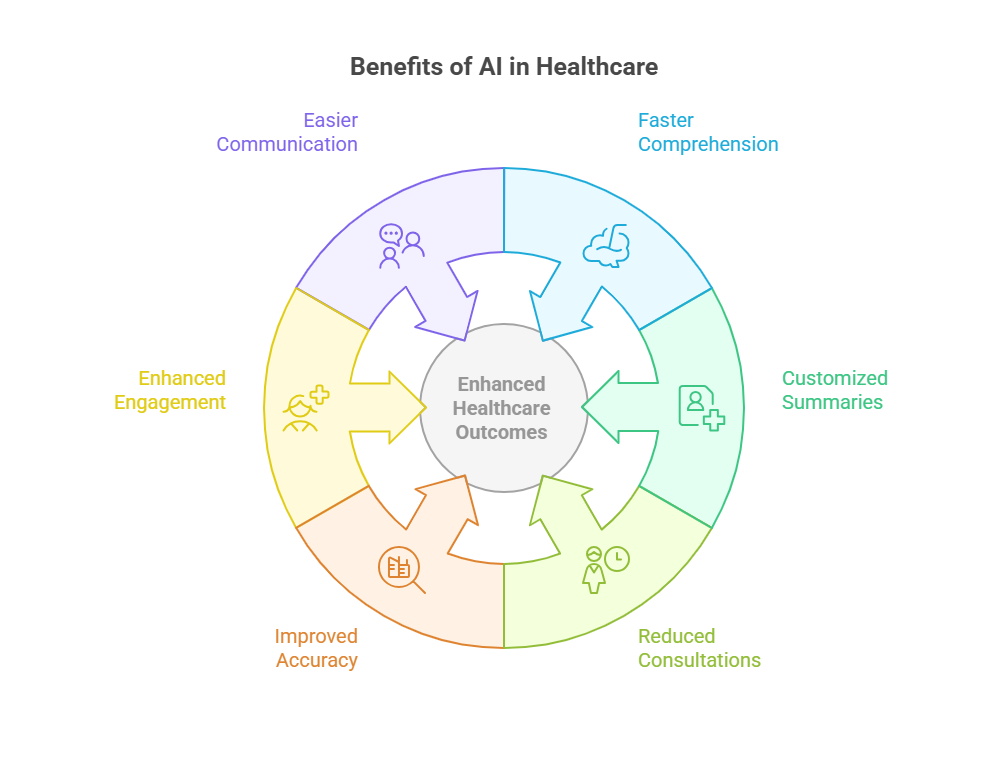
Key benefits are multi-faceted and profound:
- Faster comprehension of lab results and diagnoses, streamlining the information absorption process.
- Customized summaries that deeply reflect individual medical history, providing context-specific interpretations.
- Reduced dependency on immediate doctor consultations for basic understanding, saving invaluable time for both patients and healthcare providers.
- Improved accuracy with a significant reduction in human errors in report interpretation.
- Enhanced patient engagement and empowerment in critical healthcare decisions, fostering a proactive approach to well-being.
- Easier, more informed communication with doctors, bolstered by clear, concise summaries.
For instance, an AI summary can instantaneously flag abnormal test results and explain their clinical significance in refreshingly simple terms, thereby empowering you to take timely, informed action regarding your health.
Practical Guide: How to Check and Download Your Medical Report Online in India
Accessing your medical reports online in India is a secure and increasingly streamlined process, ensuring you remain informed about your health status at any given moment. The majority of hospitals and diagnostic centres now furnish digital portals or dedicated mobile applications where you can conveniently view and download your reports without the need for an in-person visit. This digital accessibility is paramount for leveraging the power of AI tools that require your reports for summarization and interpretation.
Follow these uncomplicated yet critical steps:
- Visit the hospital or lab’s official website or download their dedicated app (e.g., eCLINIC). Ensure you are using a verified and secure platform.
- Register or log in securely using your registered mobile number, email, or a Unique Health ID (UHID).
- Navigate to the “Patient Services” or “Lab Reports” section within the portal.
- Enter your UHID, sample number, or the mobile number precisely linked to your tests to retrieve your specific report.
- View your report and download it in PDF format for future reference and for seamless integration with AI summarization tools.
Leading institutions like Apollo Hospitals and Fortis already offer exceptionally user-friendly portals where reports are typically made available within 24-48 hours post-tests, primed for AI-driven analysis.
Addressing Common Concerns About AI in Medical Reporting
The integration of AI into medical reporting naturally raises valid and important concerns regarding accuracy, data privacy, and potential biases. However, it is crucial to understand that AI development is underpinned by continuous improvements and robust safeguards designed precisely to address these issues. Our commitment is to develop AI that not only processes data but also learns from clinical outcomes, continuously refining its interpretive capabilities to mitigate bias and enhance precision. AI systems, much like a powerful co-pilot, enhance human oversight rather than replacing it, providing rapid insights that are ultimately validated by medical professionals.
Key concerns and the reassuring advancements addressing them include:
- Accuracy: AI tools are designed to complement medical professionals, providing exceptionally fast insights while critical final interpretations and diagnoses remain the domain of doctors. Rigorous testing protocols are in place.
- Data Privacy: Paramount importance is placed on the security of sensitive patient data. Strict regulations and state-of-the-art encryption technologies meticulously protect patient information during every stage of AI processing.
- Bias: While AI systems learn from large datasets, which can sometimes reflect existing societal biases, concerted efforts are underway to curate and use diverse, representative datasets to actively reduce bias and ensure fair, equitable, and personalized summaries for all patients.
For example, AI summaries undergo meticulous and rigorous testing and validation against vast clinical datasets before deployment, ensuring patients receive reliable, understandable reports without any compromise on safety or fidelity.
The Future of AI in Healthcare India and Medical Reporting
AI is poised to fundamentally revolutionize the landscape of healthcare in India, paving the way for hyper-personalized precision medicine, unprecedented early disease detection capabilities, and significantly streamlined medical reporting. Emerging data indicates a projected 15-20% annual growth in healthcare AI adoption in India, driven by strategic initiatives to integrate genomic, radiologic, and clinical data for precision medicine, highlighting a profound shift towards data-driven healthcare.
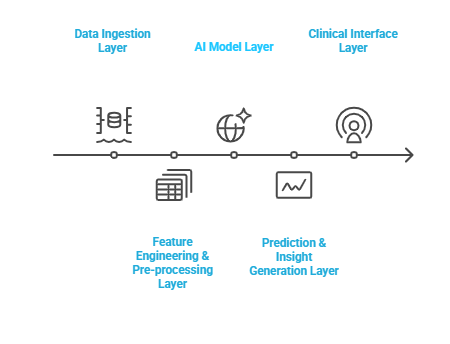
AI Algorithm for Predictive Diagnostics
Key future trends in AI healthcare in India are truly groundbreaking:
- Early detection of critical diseases such as tuberculosis (TB) and various cancers, facilitated by advanced AI-powered imaging analysis and diagnostic tools.
- Deep integration of AI in medical reporting for even faster, more accurate, and more profoundly personalized summaries, making patient understanding an immediate reality.
- The establishment of a robust, connected digital infrastructure for seamless and secure patient data sharing across the entire healthcare ecosystem.
- AI-driven drug discovery and the development of highly personalized treatment plans, moving towards therapies precisely tailored to individual genetic makeup and disease profiles.
For example, AI systems could soon possess the capability to predict specific health risks based on your comprehensive medical history and genetic predispositions, proactively suggesting preventive measures even before the onset of symptoms, thereby fundamentally transforming the paradigm of patient care.
Conclusion: Embracing AI for Better Patient Understanding of Medical Reports
AI-powered personalized summaries are not just an innovation; they are fundamentally transforming how patients understand their medical reports, rendering healthcare profoundly more accessible, transparent, and patient-centric. By deftly breaking down complex medical data into clear, tailored, and contextually rich insights, AI effectively reduces confusion and alleviates anxiety, thereby empowering patients to engage actively and knowledgeably in their own health decisions. As AI continues its rapid evolution, it promises even faster, more accurate interpretations that seamlessly complement the invaluable expertise of medical doctors and dramatically elevate the overall quality of care.
Key takeaways for patients poised to embrace this intelligent healthcare future:
- Expect clearer explanations that directly relate to your unique health history and personal circumstances.
- Benefit from quicker access to actionable insights without the protracted wait times often associated with appointments for basic clarifications.
- Utilize AI tools as a reliable and informed first step to grasp the core message of your medical reports, serving as a powerful prelude to deeper consultations with healthcare providers.
Embracing AI is not merely adopting new technology; it is a decisive step toward empowered, informed, and truly proactive healthcare for everyone, fostering a symbiotic relationship between advanced technology and human well-being.
Frequently asked questions (FAQs)
1. What is a personalized AI-based summary in a medical report?
A personalized AI-based summary is a simplified and tailored explanation of your medical report generated by artificial intelligence, designed to help you understand your health results quickly and clearly.
2. How does AI help patients understand medical reports faster?
AI analyzes complex medical data and translates it into easy-to-understand language, highlighting key findings and providing context based on your medical history, which speeds up comprehension.
3. Are AI-generated medical summaries accurate and reliable?
Yes, AI summaries are developed using advanced algorithms and large datasets to ensure accuracy. They complement healthcare professionals by providing quick insights, but final interpretations should always involve your doctor.
4. How can I access and download my medical reports online in India?
Many hospitals and diagnostic centers in India offer online portals or apps where you can securely log in using your patient ID or mobile number to view and download your medical reports in PDF format.
5. What are the benefits of using AI for lab test result interpretation?
AI provides instant, personalized explanations of lab results, highlights abnormal values, reduces confusion caused by medical jargon, and empowers patients to make informed health decisions faster.
"Take control of your health with NirogGyan- book your tests today for accurate results and expert insights."