Next time you scroll past paparazzi photos of celebrities walking out of a gym or through an airport, look past the designer athleisure. The one item in almost every frame is a water bottle.
It is easy to dismiss this as a curated celebrity aesthetic. In reality, carrying your own water is one of the simplest defensive health habits you can adopt in modern life.
Quick Summary
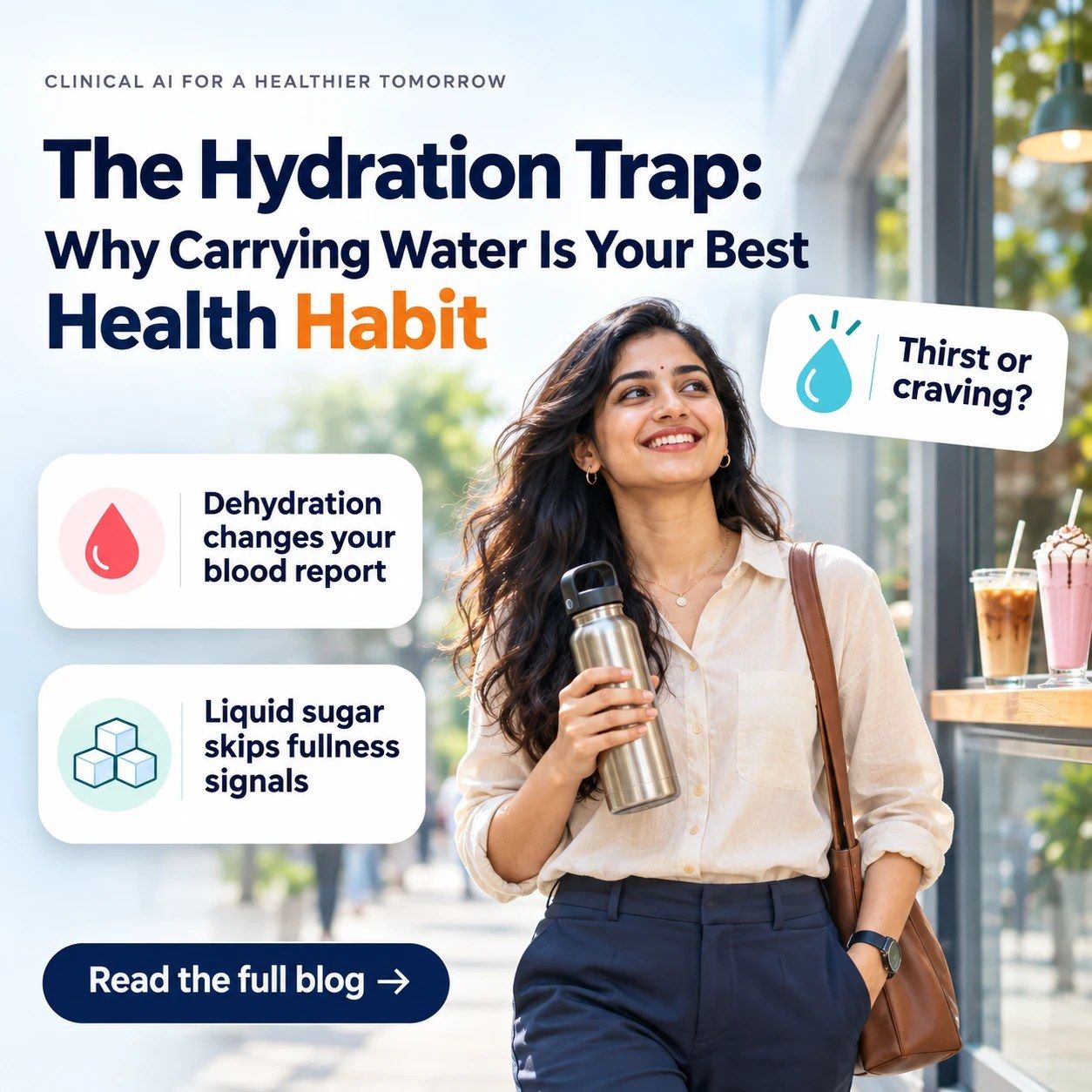
- Thirst can pass for a craving. Mild dehydration often feels like tiredness or an urge for something sweet, and city streets are full of 400-calorie frappes, bubble teas and shakes.
- Liquid sugar fills you up less. Calories you drink trigger weaker fullness signals than calories you chew, so you add energy without eating less later.
- Fructose goes straight to the liver. Regular sugary drinks are linked with higher triglycerides, visceral fat and fatty liver (MASLD).
- Dehydration distorts blood tests. Low fluid intake can push hemoglobin, hematocrit, BUN and uric acid higher than your true baseline.
- A visible water bottle is the fix. Carrying water and pre-hydrating before you leave removes the impulse purchase before it happens.
Not sure what your numbers say? Upload your latest blood test to the NirogGyan Lab Report Analyzer for a clear, visual breakdown of your metabolic and kidney markers.
The Accessory Hiding in Plain Sight
Consider a normal day in any Indian metro. You leave your home or air-conditioned office for errands, a commute or a meeting. Traffic, heat and dry indoor air quietly drain fluid, and within a couple of hours you may be mildly dehydrated without feeling especially thirsty.
What is available on almost every street corner? Air-conditioned cafes and kiosks selling iced mochas, caramel cold brews, bubble teas, sweetened sodas and packaged juices, often 400 calories or more in a single cup.
Modern retail has turned simple thirst into a large market for liquid desserts. When you step out without water, your health baseline is left to convenience marketing.
The Biology of the Thirst-to-Sugar Pipeline
Our bodies did not evolve around high-fructose syrups and chilled retail refrigerators. Two vulnerabilities in our wiring are exploited by urban life every day.
1. Thirst and hunger signals overlap
The hypothalamus helps regulate both thirst and appetite. Even a 1% to 2% fall in body water can show up not as a dry throat but as low energy, mild mental fatigue or a pull towards something sweet. The evidence on thirst being mistaken for hunger is still modest, but the practical lesson is sound: a glass of water costs nothing and is worth trying before a sugary drink.
Many people instead buy a sweetened beverage to "pick up" their energy. The sugar gives a brief lift that masks the underlying fluid deficit while adding hundreds of empty calories.
2. Liquid calories bypass fullness signals
When you eat solid food such as an apple, a bowl of dal or a plate of vegetables, fibre and chewing slow digestion. Your gut releases fullness hormones like peptide YY and cholecystokinin, and hunger signals from ghrelin fall.
Liquid sugar largely skips this process. With a large cold coffee or flavoured iced tea carrying about 40 grams of added sugar:
- Weaker satiety signalling: The stomach empties liquids within minutes and produces much less fullness than the same calories in solid food. You take in the equivalent of a small meal without eating less at your next one.
- Liver overload: The fructose arrives in a concentrated rush through the portal vein. The liver converts the excess into fat through de novo lipogenesis, which can raise circulating triglycerides and contribute to fatty liver.
If your triglycerides are already high, our guide on TG:HDL ratio and high triglycerides explains what to do next.
What Dehydration Does to Your Blood Report
Dehydration is not only about feeling sluggish. It changes the make-up of your blood sample. If you go for a routine health checkup under-hydrated, your results reflect that.
Hemoconcentration: the false high red cell count
Blood is roughly 55% plasma, and plasma itself is over 90% water. When you are under-hydrated, plasma volume drops. Your red cells, white cells and platelets are unchanged in total, but they are now suspended in a smaller pool of liquid.
This hemoconcentration can nudge hemoglobin, hematocrit (PCV) and red cell count above their normal ranges, which can cause needless worry about conditions like polycythemia.
Got a high hemoglobin or PCV on your report? Check what else it could mean before you worry.
Analyze my reportKidney strain and uric acid
Your kidneys need enough fluid volume to filter waste from the blood. When water intake is low:
- Uric acid rises: The kidneys hold on to fluid, and less uric acid is excreted. Persistently high levels raise the risk of gout and kidney stones.
- BUN climbs faster than creatinine: Urea is reabsorbed along with water in the kidney tubules, so BUN rises quickly while serum creatinine often stays steady. This can show up as a high BUN-to-creatinine ratio on a kidney function test (KFT).
Plain Water vs Common Outdoor Drinks
Not everything sold as refreshing supports your health baseline. Here is how common choices compare, per typical serving:
| Drink (typical serving) | Sugar | Calories | Metabolic impact | Hydration value |
| Plain water | 0 g | 0 kcal | Neutral; supports normal kidney clearance | Best |
| Packaged fruit juice (300 ml) | 25 to 35 g | 120 to 160 kcal | Fibre removed; quick glucose and insulin rise | Fair |
| Iced frappe or shake (350 to 400 ml) | 35 to 60 g | 300 to 500 kcal | Heavy fructose load on the liver; adds visceral fat over time | Poor; works more like a liquid dessert |
| Energy or sports drink (500 ml) | 28 to 40 g | 140 to 200 kcal | Designed for endurance athletes; unnecessary sugar on desk days | Fair for heavy sweating, poor otherwise |
| Tender coconut water (250 ml) | 6 to 9 g (natural) | 45 to 60 kcal | Natural potassium and magnesium; modest glycaemic load | Good |
| Unsweetened nimbu pani (250 ml) | 0 to 1 g | 5 to 10 kcal | Citrate from lemon may help discourage kidney stones | Good |
5 Practical Habits for a Resilient Baseline
Good preventive care does not need to be expensive or complicated. It relies on small, repeatable habits that remove daily friction.
1. Pre-load before you leave
Never start a long commute or airport wait on an empty tank. Drink 300 to 400 ml of plain water about 15 minutes before leaving home or work. You then arrive with your thirst already settled, so passing a cafe is less likely to trigger a sugar craving.
2. Keep a bottle in your line of sight
Behaviour follows visual cues. If drinking water means standing up, finding a cup and walking to a dispenser, you will delay it until you are properly thirsty. Keep a durable bottle on your desk in a colour that stands out, and sipping becomes automatic.
3. Try the 10-minute thirst delay
When you feel an urge for an iced sweet drink, tell yourself: "I will drink 250 ml of water first, wait 10 minutes, and if I still want it, I will buy it." Often the craving fades once the thirst is dealt with, and if it does not, you have lost nothing.
4. Choose natural electrolytes over neon sports drinks
If you spend time outdoors in an Indian summer, water alone may feel less replenishing because of the salts lost in sweat. Instead of a neon energy drink with 30 grams of sugar, try:
- Fresh tender coconut water (daab or nariyal pani)
- Homemade nimbu pani with a pinch of black salt (kala namak) and no added sugar
- Thin buttermilk (chaas) with roasted cumin powder
These replace potassium, sodium and magnesium without a load of liquid fructose.
5. Walk after meals
If you have a high-carbohydrate meal or an occasional sweet drink, do not sit straight down. Using your leg muscles, especially the soleus and quadriceps, pulls glucose out of the blood without needing much insulin. A gentle 10 to 15 minute walk soon after eating can noticeably blunt the post-meal sugar rise.
If you are watching your sugars closely, see what your fasting blood sugar and HbA1c are telling you.
Frequently Asked Questions
How much water should an adult in India drink every day?
For most healthy adults in a moderate climate, about 2 to 3 litres a day (roughly 8 to 10 glasses, including water from food and other drinks) is a reasonable baseline. Needs rise with heat, humidity, exercise and body size. A simple check is urine colour: pale straw is ideal, dark amber suggests you need more fluid, and completely clear urine all day may mean you are drinking more than you need.
People with kidney, heart or liver conditions, or those on diuretics, should follow the fluid advice their doctor has given them.
Does tea or black coffee count towards hydration?
Yes, with caveats. Tea and moderate amounts of black coffee do contribute net fluid, contrary to older claims that they dehydrate you. Strong coffee and concentrated tea have a mild diuretic effect, though. If your tea or coffee is loaded with sugar or condensed milk, the sugar outweighs the hydration benefit, so keep plain water as your main source.
Can dehydration make my cholesterol or lipid profile look worse?
Slightly, yes. Dehydration shrinks plasma volume and concentrates everything in it, including lipids. It does not change the number of lipoprotein particles in your body, but a dehydrated blood draw can show slightly higher total cholesterol and triglyceride values than a well-hydrated one.
Can I drink water before a fasting blood test?
Yes, and you should. Fasting means no food, tea, coffee, milk or juice for 8 to 12 hours. Plain water has no calories and does not affect fasting glucose, lipids or liver enzymes. One or two glasses before your draw makes the vein easier to access and helps avoid artificial hemoconcentration.
Is drinking 4 to 5 litres of water a day better for detox?
No. Your kidneys and liver already handle waste, and more water does not speed that up. Drinking very large amounts, especially quickly, can dilute blood sodium dangerously (hyponatremia). Unless you are training hard or working in extreme heat, drinking well beyond thirst offers no extra benefit.
Mastering the Baselines of Health
Preventive health does not start in an intensive care unit, and it rarely needs a complicated regimen. It is built quietly, day after day, in choices that seem almost too simple to matter.
Carrying your own water, noticing when thirst is disguised as a sugar craving, and not letting convenience decide what you drink are foundational defensive habits. When your cells are well hydrated, your kidneys filter efficiently, your blood volume stays steady and your liver is spared a steady stream of liquid sugar.
Look after the daily baselines, and let your blood reports show the difference.
Want to see what your routine numbers are really saying about your health? Upload your latest blood test for a private, visual overview in seconds.
Analyze my report