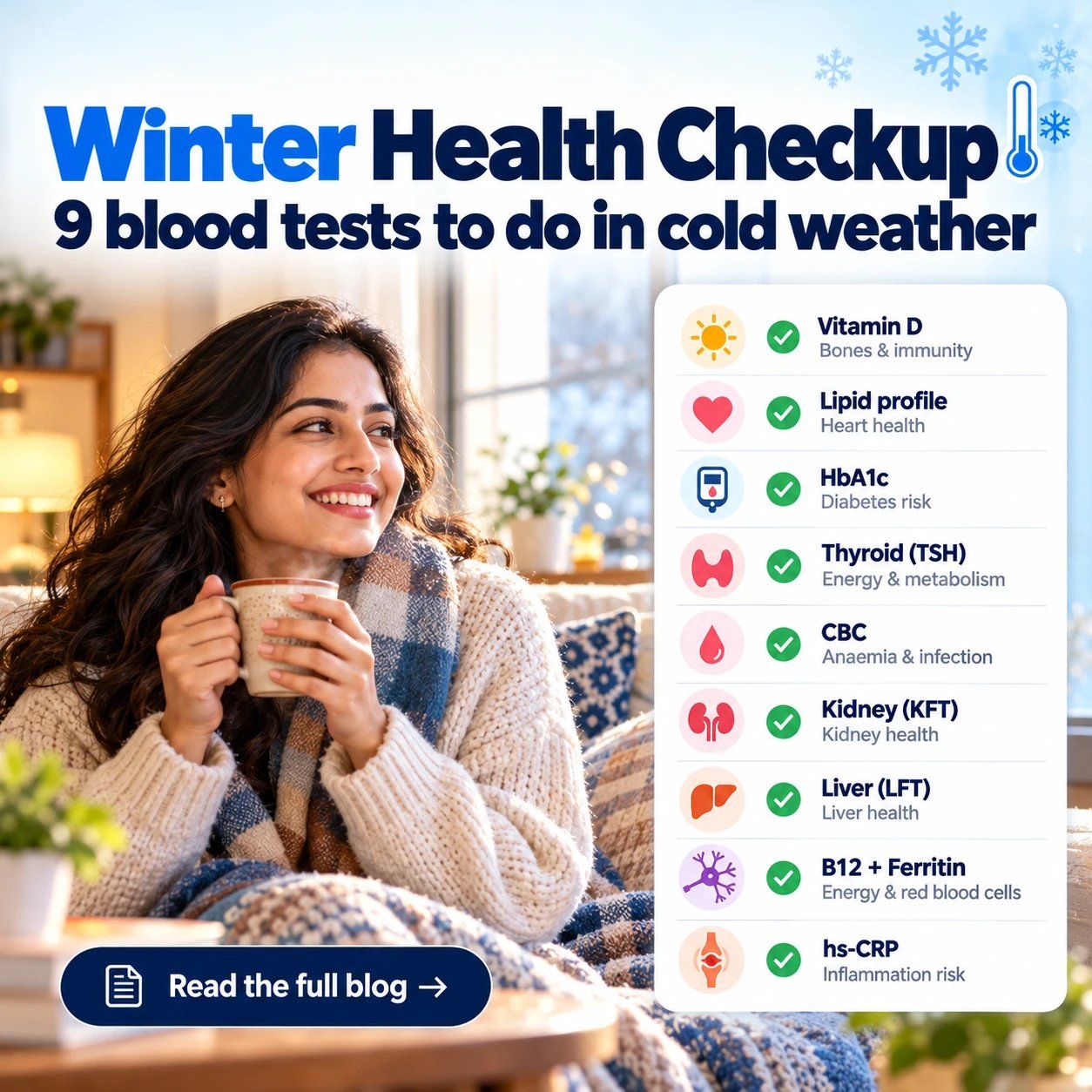
Quick answer: A good winter health checkup covers nine things: vitamin D (25-hydroxyvitamin D), lipid profile, HbA1c with fasting glucose, thyroid (TSH, with free T4 if advised), complete blood count (CBC), kidney function (creatinine, eGFR), liver function (SGPT/ALT), vitamin B12 with ferritin, and, if your doctor suggests it, hs-CRP. Add a blood pressure reading. The best time to test is early in the season, so you can act on the results before the coldest weeks.
Winter in India is the season of warm tea, heavy meals, less water, less walking and less sunlight. For many people that quietly pushes the numbers that matter in the wrong direction, and the first sign is often a blood report, not a symptom.
This guide explains what changes in the cold, which tests are worth doing, the common reference ranges, and how to read your report before you see your doctor.
Why winter is a good time for a health checkup
Several things shift at once in colder months. These are general patterns reported in research, and they vary by person and by city.
- Blood vessels tighten in the cold, and blood pressure often runs higher in winter. A large 2020 review of 47 studies found office readings about 3 to 6 mmHg higher in winter than in summer. People with hypertension or heart disease are usually advised to be more careful in cold weather.
- Less sunlight means less vitamin D. Season, smog, skin melanin, clothing and sunscreen all affect how much vitamin D your skin makes, according to the NIH Office of Dietary Supplements. In north Indian winters, fog, smog and layered clothing make this worse.
- Blood sugar and cholesterol can drift up. Several studies find HbA1c slightly higher in winter and spring. Some find a small winter rise in LDL cholesterol too, though results are mixed. Both fit with heavier food and less activity.
- Thyroid symptoms get blamed on the weather. Tiredness, feeling cold, dry skin and weight gain are easy to dismiss as winter, but they can also be signs of an underactive thyroid. A pooled analysis found TSH tends to peak in winter, usually by a modest amount.
- Infections rise. Colds, flu and chest infections can change your white blood cell and platelet counts, and a fever workup is not the same as a routine checkup.
- People drink less water. Mild dehydration can nudge creatinine and urea upward and make a kidney report look worse than it is.
None of this means winter is dangerous for everyone. It means winter is a sensible time to check your baseline, particularly if you are over 30, have a family history of diabetes or heart disease, or take regular medication.
Who should do a winter checkup?
| Who | Why winter matters |
| Adults over 30 | A yearly baseline; winter is a convenient time to repeat it |
| People with diabetes or prediabetes | HbA1c and glucose control can slip with heavier meals and less activity |
| People with high blood pressure or heart disease | Cold raises cardiovascular strain; keep your doctor's follow-ups |
| Adults over 60 | Higher risk of low vitamin D, B12 deficiency and kidney changes |
| People with thyroid disease | Check TSH on your usual schedule; do not self-adjust the dose |
| Anyone with tiredness, joint pain or low mood that won't lift | Worth a doctor visit and baseline tests before blaming winter |
The 9 winter blood tests, one by one
Reference ranges differ between labs and methods. Use the range printed on your own report, and treat the numbers here as general guides, not a diagnosis.
1. Vitamin D (25-hydroxyvitamin D, 25(OH)D)
What it measures: the main circulating form of vitamin D, which reflects what your skin and diet provide. Reference points (NIH ODS): below 12 ng/mL (30 nmol/L) is deficiency, 12 to under 20 ng/mL is inadequate, and 20 ng/mL (50 nmol/L) or more is sufficient for most people. Some Indian labs and doctors use higher targets, so ask what your doctor aims for. Why winter: less sun, more smog and more clothing. Low levels are linked to bone pain, muscle weakness and fatigue. Caution: do not start high-dose vitamin D on your own. Too much can raise blood calcium.
2. Lipid profile (LDL-C, HDL-C, non-HDL, triglycerides)
What it measures: total cholesterol, LDL-C, HDL-C, triglycerides and non-HDL cholesterol. Common reference points: total cholesterol under 200 mg/dL, triglycerides under 150 mg/dL, HDL-C above 40 mg/dL in men and 50 mg/dL in women, and LDL-C under 100 mg/dL for most people. People with diabetes or heart disease usually have stricter LDL-C targets. Why winter: heavier, fried and sweet food plus less exercise. Read more: high triglycerides and the TG:HDL ratio.
3. HbA1c and fasting glucose
What it measures: HbA1c is glycated haemoglobin, a three-month average of blood sugar. Fasting plasma glucose (FPG) is your sugar after an overnight fast. Reference points (American Diabetes Association): HbA1c below 5.7% is normal, 5.7% to 6.4% is prediabetes, and 6.5% or above is in the diabetes range. Fasting glucose below 100 mg/dL is normal, 100 to 125 is prediabetes, and 126 or above is in the diabetes range. Diagnosis needs confirmation by a doctor. Why winter: festive eating, less movement, and for some people, medication gaps. Caution: HbA1c can read falsely low or high in anaemia, iron deficiency and some haemoglobin variants, so interpret it with your CBC.
4. Thyroid profile (TSH, free T4)
What it measures: thyroid stimulating hormone (TSH), which the pituitary raises when the thyroid underperforms, and free thyroxine (free T4) when TSH is abnormal. Common reference range: many labs show about 0.4 to 4.0 mIU/L for TSH, but ranges vary, and pregnancy and age change targets. Why winter: hypothyroid symptoms such as tiredness, feeling cold, dry skin, constipation and weight gain overlap with ordinary winter complaints. A raised TSH with a normal free T4 is called subclinical hypothyroidism, and whether it needs treatment is a doctor's decision. Caution: if you take levothyroxine, do not change the dose because of one report.
5. Complete blood count (CBC)
What it measures: haemoglobin (Hb), red blood cell indices such as MCV and MCH, white blood cells (WBC), and platelet count. Typical reference points: the WHO defines anaemia as haemoglobin below 13 g/dL in men and below 12 g/dL in non-pregnant women. A typical WBC range is about 4,000 to 11,000 per microlitre and platelets about 150,000 to 450,000 per microlitre. Why winter: infections change WBC and sometimes platelets, and anaemia often shows up as feeling cold and tired. Caution: a low platelet count during or after a fever needs a doctor, not a blog.
6. Kidney function (creatinine, eGFR, urea, uric acid)
What it measures: serum creatinine, blood urea, uric acid, and the estimated glomerular filtration rate (eGFR), which is calculated from creatinine, age and sex. Typical reference points: creatinine roughly 0.7 to 1.3 mg/dL in men and 0.6 to 1.1 mg/dL in women; eGFR of 90 or above is normal, and an eGFR below 60 for three months or more suggests chronic kidney disease (KDIGO). One abnormal reading is a reason to repeat, not to panic. Why winter: people drink less water, and dehydration can push creatinine and urea up temporarily. Drink normally before the test, unless your doctor says otherwise.
7. Liver function (SGPT/ALT, SGOT/AST, bilirubin, ALP, GGT)
What it measures: liver enzymes alanine aminotransferase (ALT, also called SGPT) and aspartate aminotransferase (AST, also SGOT), plus bilirubin, alkaline phosphatase (ALP), gamma-glutamyl transferase (GGT) and albumin. What to look at first: SGPT/ALT. Many labs list an upper limit near 40 U/L. A mildly raised ALT is often linked to fatty liver (metabolic dysfunction-associated steatotic liver disease, MASLD), which is common with raised triglycerides and prediabetes. Why winter: heavier food and alcohol around the festival and wedding season.
8. Vitamin B12 and ferritin
What it measures: vitamin B12 (cobalamin) for nerve and blood health, and ferritin, a marker of iron stores. Common reference points: B12 below about 200 pg/mL is commonly treated as low, with 200 to 300 pg/mL a borderline zone; ferritin ranges differ by lab and by sex. Low B12 is common in vegetarians and in people who take metformin or acid-reducing medicines. Why winter: tingling hands and feet, tiredness, poor concentration and low mood are easy to blame on the weather, but B12 and iron deficiency produce the same complaints.
9. hs-CRP (only if your doctor suggests it)
What it measures: high-sensitivity C-reactive protein, a general marker of inflammation. Common reference points: many labs print under 1 mg/L as lower cardiovascular risk, 1 to 3 mg/L as average, and above 3 mg/L as higher, when you are well. A value taken during an infection is not useful for this purpose, so avoid testing it with a cold or fever. Why winter: infections are more common, so timing matters. hs-CRP is a doctor-guided add-on, not a must-have.
Do not forget: blood pressure
Blood pressure is not a blood test, but it is the most useful winter number you can check. Measure it at rest, seated, on the same arm, at the same time each day for a week, and take the log to your doctor. Do not stop or change blood pressure medicine yourself.
How to prepare for winter blood tests
- Fasting: fasting glucose and often the lipid profile need 8 to 12 hours without food, with water allowed. CBC, HbA1c, TSH and vitamin D usually do not. Ask your lab when you book.
- Water: drink water normally the evening before and the morning of the test.
- Medicines: do not skip them to prepare. Tell the lab and your doctor what you take, including supplements and biotin, which can interfere with some thyroid results.
- Timing: go in the morning, and avoid testing during an acute cold or fever for tests like hs-CRP and CBC unless your doctor asks.
- Compare like with like: use the same lab each time if you can, since methods and ranges differ.
Simple winter habits that help your numbers
- Move daily, even a 30-minute brisk walk indoors or at midday. Aim for the 150 minutes of moderate activity per week that most guidelines recommend.
- Get safe midday sun on exposed skin when air quality allows, and ask your doctor whether you need a vitamin D supplement.
- Go easy on festive extras: fried food, sweets and alcohol raise triglycerides, blood sugar and liver enzymes.
- Keep drinking water, even when you are not thirsty.
- Sleep and warmth: layers and enough sleep help blood pressure and mood.
- Do not stop prescribed medicine because you feel fine.
After the report: read it before you see the doctor
A winter checkup can return forty to eighty values with ranges and flags. Reading them before the appointment helps you ask better questions and remember the answers. NirogGyan's free Lab Report Analyzer explains each value in plain language, shows whether it is in range for your age and gender, and suggests what to ask your doctor. It is for preparation, not diagnosis. For a full walk-through of ranges, units and flags, read How to Read a Medical Lab Report. Planning a checkup for the whole family? See our Diwali health checkup guide.
Don't panic, just scan. Upload your winter checkup report to the free NirogGyan Lab Report Analyzer and see what every value means in plain English.
Analyze my reportWhen to see a doctor without waiting
Contact a doctor or go to a hospital the same day for chest pain or pressure, breathlessness, sudden weakness on one side, slurred speech, fainting, a very high or very low blood sugar reading, or a fever that will not settle. Do not use a blog or an app as a reason to delay care.
Frequently asked questions
Which blood tests should I do in winter?
Vitamin D, lipid profile, HbA1c with fasting glucose, TSH, CBC, kidney function, liver function, and vitamin B12 with ferritin are a sensible set. hs-CRP is an optional add-on if your doctor suggests it.
Does cold weather affect blood test results?
Some results can shift a little with the season, including vitamin D, HbA1c and, for some people, lipids, blood pressure and TSH. Dehydration can also temporarily raise creatinine. A doctor interprets a single result in context.
Is vitamin D deficiency worse in winter in India?
Often, yes, especially where winters are foggy or smoggy and people cover up. Skin synthesis depends on season, smog, skin melanin and clothing, according to the NIH Office of Dietary Supplements. Low vitamin D is common in India in every season, so test rather than guess.
What is a normal vitamin D level?
By NIH ODS thresholds, 20 ng/mL (50 nmol/L) or above is sufficient for most people, 12 to under 20 ng/mL is inadequate, and below 12 ng/mL is deficiency. Your doctor may aim higher.
What is a normal HbA1c?
Below 5.7% is normal, 5.7% to 6.4% is prediabetes, and 6.5% or above is in the diabetes range, per the American Diabetes Association. Your doctor confirms any diagnosis.
Do I need to fast for winter blood tests?
For fasting glucose and often the lipid profile, yes, 8 to 12 hours with water only. CBC, HbA1c, TSH and vitamin D usually do not need fasting.
Can I read my own lab report?
Yes. The reference range and flag beside each value give you the first clue, and a tool such as the NirogGyan Lab Report Analyzer can explain each value in plain language. Use it to prepare for a doctor visit, not to diagnose yourself.
How often should I get a health checkup?
Once a year is a reasonable baseline after 30 if you feel well, and more often if you have a chronic condition. Follow your own doctor's schedule if you have one.
Sources
- Vitamin D: Fact Sheet for Health Professionals, NIH Office of Dietary Supplements
- Seasonal blood pressure variation assessed by different measurement methods: systematic review and meta-analysis, Journal of Hypertension, 2020
- Seasonal variations and the influence of COVID-19 pandemic on hemoglobin A1c, glycoalbumin, and LDL cholesterol, Diabetology International, 2022
- Seasonal variations in levels of human thyroid-stimulating hormone and thyroid hormones: a meta-analysis, 2021
- American Diabetes Association diagnosis criteria; WHO anaemia haemoglobin thresholds; KDIGO chronic kidney disease definition
Ranges not attributed to a source above are commonly printed adult values and vary by lab, age and sex. Always use the range on your own report.
This article is for general health education and is not medical advice. It does not diagnose or treat any condition. Consult a qualified doctor about your own results.