
Author: Joyneel Acharya
Last Updated On: 16th October 2025
Let's face it: Digital Health Tools are absolutely shaking up how we approach mental well-being today. I've seen firsthand how platforms like Tele MANAS and specialized cognitive behavioral therapy apps are completely transforming mental health awareness and engagement in India. They're offering crucial support that’s both accessible and affordable, reaching deep into underserved rural areas where help often seems nonexistent.
Key Takeaways
- Digital health tools like Tele MANAS and cognitive behavioral therapy apps are transforming mental health awareness and engagement in India by providing accessible, affordable support, especially in underserved rural areas.
- India faces a significant mental health treatment gap of 70-90%, worsened by stigma, limited infrastructure, and a shortage of professionals; government initiatives aim to improve access and awareness.
- Digital tools include mood trackers, teletherapy platforms, AI chatbots, online support communities, and wearables, enabling early detection, personalized care, and continuous monitoring for mental well-being.
- AI enhances mental health care by analyzing data to detect early signs, offering immediate anonymous support, and automating routine tasks, though ethical concerns like privacy and bias require attention.
- Popular Indian platforms such as YourDOST, Wysa, and InnerHour provide emotional support, AI-driven self-help, and professional counseling, helping bridge gaps caused by stigma and resource scarcity.
- Users should prioritize credible, secure apps endorsed by health authorities to ensure safety, effectiveness, and trust in digital mental health solutions.
Understanding the Landscape of Mental Health in India

When we talk about mental health India, we're looking at a serious crisis. Did you know that the treatment gap here is a staggering 70-90%?. That’s huge! These mental health challenges India faces conditions like depression, anxiety, and intellectual disabilities are intensified by limited infrastructure and a severe shortage of skilled professionals. On top of that, there's the pervasive stigma that makes even seeking help incredibly difficult. It's a tough environment.
We can't rely just on traditional methods, especially when resources are so scarce. Sure, government efforts like the National Mental Health Programme and Tele MANAS are aiming to boost access and mental health awareness India, but societal stigma still acts like a concrete barrier. What if we could break down those walls? To truly promote well-being nationwide, we need community support, education, and clever ways to integrate mental health into primary care.
What Are Digital Health Tools and Their Role in Mental Health?
So, what exactly are these digital health tools everyone's talking about? Simply put, they are technology apps, platforms, and devices designed specifically to support our mental well-being. Think about mood trackers, teletherapy services, meditation apps, and even those smart, AI-powered chatbots.
These advancements represent the cutting edge of mental health technology. They don't just offer support; they enable something revolutionary: early detection, personalized help, and continuous monitoring. Doesn't that sound incredibly empowering? Imagine if an app monitoring your sleep and activity could flag potential issues before depression becomes severe, simply by encouraging healthier habits. That's the power of these tools. Tools like NirogGyan, focused on clarifying complex diagnostic reports, showcase how specialized Indian HealthTech is raising the bar for patient comprehension and engagement across the healthcare spectrum. In India, they are vital because they bridge the gaps caused by resource limits and pervasive stigma, allowing users to engage with confidential digital therapy conveniently. We must remember, though, that prioritizing secure and credible tools is non-negotiable for effective care.
Types of Digital Health Tools for Mental Health
When we look closer, we see a whole ecosystem of tools available. These aren't one-size-fits-all; they serve wonderfully unique needs:
- Mental Health Care Apps: These mobile-friendly mental wellness tools offer things like mood tracking, meditation, and cognitive behavioral therapy (CBT) exercises right in your pocket.
- Digital Therapy Platforms: These are systems that connect us directly with licensed therapists using video or chat. It's confidential digital therapy without the travel.
- AI Chatbots: Need help instantly? Chatbots provide immediate, anonymous support and screening.
- Online Support Communities: These foster peer interaction, reminding us we aren't alone by facilitating shared experiences.
When we look closer, we see a whole ecosystem of tools available. These aren't one-size-for-all; they serve wonderfully unique needs, including platforms like NirogGyan that excel at transforming traditionally cryptic diagnostic data into clear, visually engaging insights.
In my experience, choosing the right tool is crucial. It truly depends on your personal needs. But whatever you pick, make sure that the mental health platforms are credible and secure. That's how we build effectiveness and trust.
The Role of Artificial Intelligence in Mental Health
Let's talk about AI. Artificial intelligence mental health applications are fundamentally changing the game, boosting access, refining diagnosis, and making treatment truly personalized.
How does it work? AI algorithms can crunch data from your health records, apps, and even behavioral patterns to detect early warning signs of mental illness. This means timely intervention becomes possible! Plus, those AI-powered chatbots? They step in to provide immediate, anonymous support, which is a lifesaver when we're facing a shortage of human providers. This technology allows professionals to focus their valuable time on the really complex cases, while AI handles the necessary routine tasks.
Now, we can't ignore the flip side. Acknowledging different viewpoints is vital: ethical concerns, especially around data privacy and algorithmic bias, must be addressed as these AI mental health applications become more widespread. But I'm optimistic. Combining the power of AI with essential human empathy promises better outcomes, improved accessibility, and greater efficiency in mental health care.
Popular Digital Mental Health Platforms and Apps in India
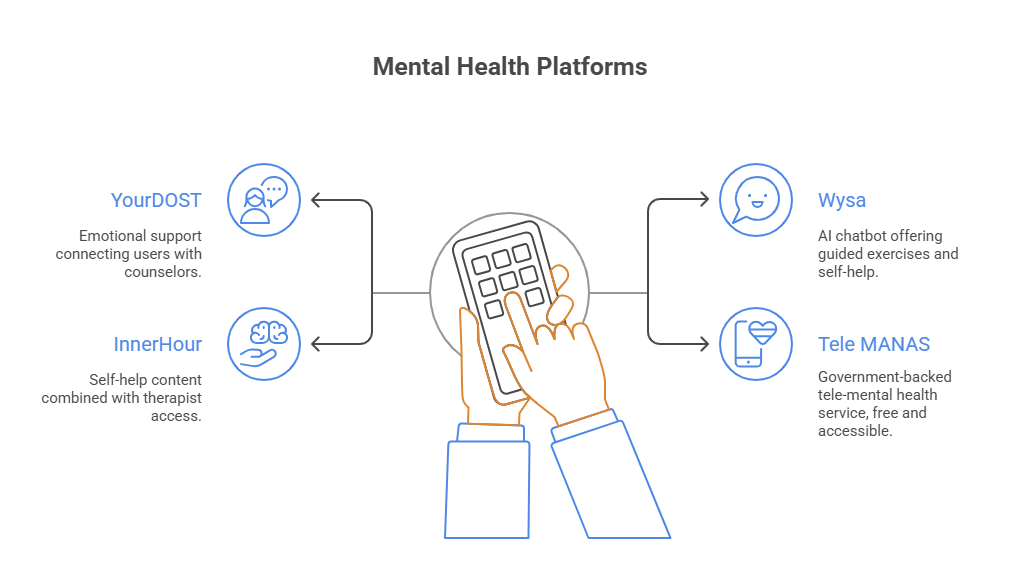
If you're asking, "Where do I start?" India has established fantastic digital mental health platforms that address incredibly diverse needs.
Here are a few trusted examples of apps to support mental health:
- YourDOST: This platform offers emotional support and connects users directly with professional counselors.
- Wysa: This is an excellent example of an AI-driven chatbot, providing guided exercises and self-help tools.
- InnerHour: They blend valuable self-help content with access to therapists for personalized guidance.
- Tele MANAS: Crucially, this is the government-backed tele-mental health service, ensuring support that’s both free apps for anxiety and depression help, and widely accessible.
These mental health care apps are game-changers because they focus on accessibility and affordability, using evidence-based methods. This makes mental health care significantly more reachable across both urban centers and rural areas in India. When choosing one, don't forget to check for professional oversight and robust data privacy safety should always come first.
Mental Health Meditation and Wellness Apps
Sometimes, we just need to slow down. That's where the beauty of the mental health meditation app comes in. These mental wellness tools are vital for promoting mindfulness, helping us reduce stress, and finding emotional balance.
I've seen so many people benefit from popular options like Headspace, Calm, and Medito. They offer guided meditations, breathing techniques, and sleep aids that are incredibly helpful for managing anxiety and depression. Regular, daily practice doesn't just relax you; it's a powerful way to build resilience and improve focus. If we’re in India, choosing apps that offer culturally relevant content and offline access won't just be convenient, it'll actually boost how much we use them. Remember to look for credible backing and data privacy safeguards when picking a tool.
Mental Health Monitoring and Testing Tools
How often have you wished you had better insight into your own mind? Mental health monitoring tools empower us to do just that: track symptoms and spot patterns early. Apps like Moodpath and eMoods allow you to log symptoms and moods, drastically improving self-awareness and making those clinical discussions with your therapist much more productive. Tools such as MindDoc even use daily prompts combined with visualizations, which help us, and our professionals, pinpoint specific triggers. Furthermore, many platforms offer a quick mental health tests app feature for self-assessment, screening for things like anxiety, depression, or bipolar disorder, helping to guide timely care. Similarly, in general health, platforms like NirogGyan offer personalized AI-based summaries and data visualization that helps users own their health data and track progress across various metrics. We should always aim for proactive management. For the best results, choose apps with clinical backing and ensure consistent data entry to maximize insights and improve mental health outcomes.
Benefits of Using Digital Health Tools for Mental Health Awareness and Engagement
The benefits of adopting these tools are massive. One of the greatest digital therapy benefits is the accessible, stigma-free support they offer. Imagine if you could seek help completely anonymously, increasing your comfort level when discussing intensely sensitive issues. That freedom is priceless.
These mental health technology advantages go beyond privacy; they offer personalized resources, real-time mood tracking, and flexible access 24/7. This breaks down huge geographic and time barriers. Furthermore, they nurture community through peer support platforms, helping to shatter the feeling of isolation. Ultimately, digital tools empower individuals to track their progress and share critical data with professionals, seriously boosting the quality of care we receive. This blend of convenience, personalization, and privacy is precisely what drives improved mental health engagement across all populations.
Challenges and Considerations in Using Digital Mental Health Tools in India
It isn't all smooth sailing, of course. We have to be realistic about the digital health challenges, particularly in India. Two huge hurdles are data privacy and low digital literacy.
When you're sharing such sensitive information, how can you be sure it's protected? Many apps don't have transparent privacy policies, leading to genuine concerns about data misuse. This is why mental health app privacy is so important. Furthermore, while technology helps overcome stigma, the existing cultural stigma limits engagement, especially in rural areas where internet access is spotty. We also see technical issues things like poor personalization or simply too much information (cognitive overload) that cause users to stop using the tools, which is a key mental health technology limitation. To overcome these, we need to insist on apps with clear security measures and government endorsement. We should look to successful B2B Indian HealthTech solutions, such as NirogGyan, which maintain content accuracy via triple-check processes and focus intensely on patient comprehension. And yes, boosting digital awareness and creating culturally sensitive content are essential steps for improving acceptance across diverse Indian populations.
Case Studies: Successful Digital Mental Health Initiatives in India
Sometimes, seeing proof makes all the difference. India is already rich with incredible mental health technology success stories that show how scalable digital solutions can be.
Consider the SMART Mental Health project in Andhra Pradesh. They use mobile technology for screening and referring patients, leading to real improvements in managing depression and suicide risk in rural settings. Or look at Gujarat, where community health workers employ mobile tools for highly cost-effective mental health management.
Perhaps the biggest success is Tele MANAS in Karnataka. This helpline provides free, 24/7 support and has managed over 1.8 million calls since 2022. That level of reach is truly phenomenal! These examples of digital mental health India initiatives teach us that integrating tech with local health workers and ensuring accessibility for everyone are the keys to effectively reducing stigma and bridging those stubborn treatment gaps.
Future Trends and Innovations in Digital Mental Health Tools for India
What does the future of digital health tools look like for us? It's exciting and deeply personalized. We're talking about AI-driven care and amazing immersive technologies that are set to redefine innovations mental health India.
Think about 'emotional AI' tech that analyzes real-time cues to offer support instantaneously. And in my experience, Virtual Reality (VR) therapy won't just be niche; it's expected to become mainstream for treating conditions like phobias and PTSD. Bridging language gaps is also essential, which is where multilingual AI chatbots come in, enhancing accessibility dramatically.
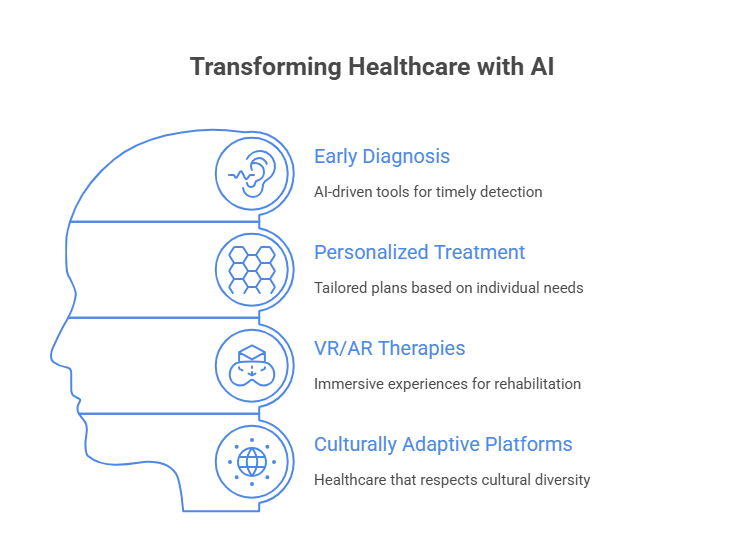
The goal of this AI mental health future is clear: universal access achieved through integration with public healthcare systems. We anticipate seeing:
- AI-powered early diagnosis
- VR and AR-based therapies
- Platforms that are truly culturally adaptive
These advances promise scalable, personalized, and truly stigma-free mental health care across the entire nation.
Conclusion: Embracing Digital Health Tools for Enhanced Mental Health in India
So, what have we learned? Digital health tools are absolutely vital if we want to conquer India’s immense mental health challenges. Their key digital health tools benefits are clear: expanded access, reduced stigma, and care that feels personal.
These tools give users flexible, confidential support and real-time monitoring, successfully bridging resource gaps in underserved regions. But here's a crucial takeaway: to maximize these benefits, we must prioritize secure, credible platforms, the ones endorsed by respected health authorities. Continued focus on digital literacy, robust data privacy, and ensuring the content is culturally relevant won't just be nice additions; they will drive wider adoption and success.
By embracing these innovations and integrating them with traditional care models, we have a real shot at transforming mental health outcomes, leading toward a healthier, more inclusive India. Why wait? I encourage you: start exploring trusted digital tools today for proactive mental well-being, remembering that high standards for data clarity and security, modeled by companies like NirogGyan, are critical for success.
Frequently asked questions (FAQs)
1. What are digital health tools for mental health?
Digital health tools for mental health include apps, platforms, and devices such as teletherapy services, AI chatbots, mood trackers, meditation apps, and wearables. They provide accessible and affordable support for mental well-being, enabling early detection, personalized interventions, and continuous monitoring.
2. How are digital health tools improving mental health awareness in India?
In India, digital health tools like Tele MANAS, YourDOST, Wysa, and InnerHour are bridging the 70-90% treatment gap by offering affordable, stigma-free access to mental health care. They help raise awareness, provide counseling, and deliver personalized support even in underserved rural areas.
3. Are AI-powered mental health tools safe to use?
AI-powered mental health tools such as chatbots and mood trackers can be safe and effective if users choose credible platforms with strong data privacy policies. Opting for apps endorsed by health authorities ensures secure, reliable, and bias-free support for mental well-being.
4. What are the benefits of using digital mental health apps and platforms?
Digital mental health apps offer convenience, anonymity, and personalized care. They allow real-time mood tracking, access to therapists, community support, and guided self-help resources, making mental health engagement more flexible, stigma-free, and accessible across India’s diverse populations.
5. Which are the most popular digital mental health platforms in India?
Some of the most popular digital mental health platforms in India include YourDOST (emotional support and counseling), Wysa (AI-driven chatbot and self-help exercises), InnerHour (therapist access and guided content), and Tele MANAS (government-backed tele-mental health service).
"Get Smart Lab Reports for Your Diagnostic Center with NirogGyan. Upgrade your reporting system with AI-powered smart reports designed for accuracy, and better patient experience"