Digital Health Tools That Scale: What Labs Need to Know Before Expanding
Author: Joyneel AcharyaLast Updated on: 16th August 2025
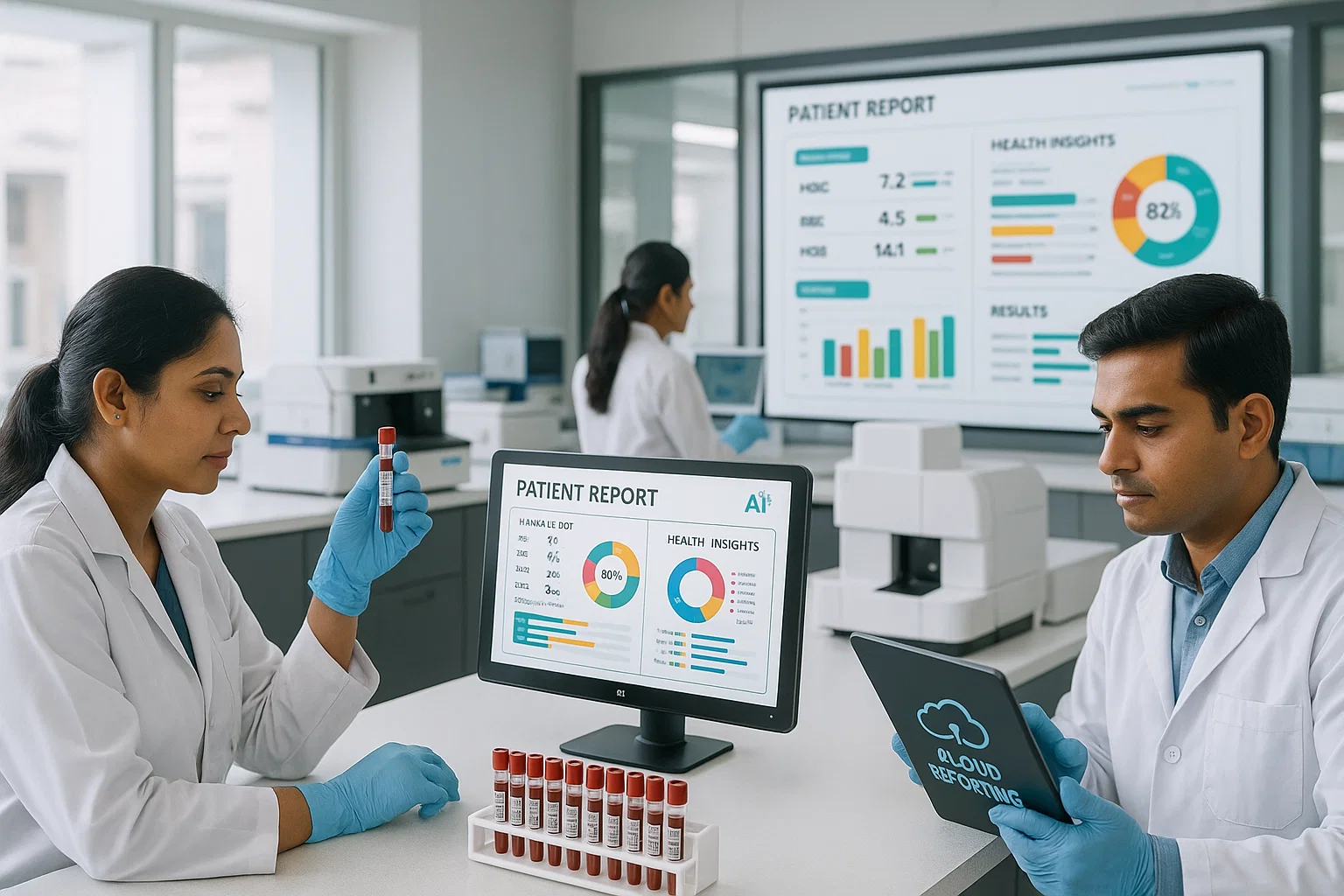
In the rapidly evolving landscape of Indian healthcare, digital health tools are no longer a luxury but a fundamental necessity for laboratories aspiring to scale their operations. While enhancing efficiency and accessibility is paramount, our expert consultation emphasises that the bedrock of sustainable growth lies in robust data protection and privacy frameworks.
This transformation isn't just about handling larger volumes; it's about doing so with unwavering integrity, securing sensitive patient information, and ensuring full compliance with both national and international data protection standards. Our security framework ensures that as labs expand their digital footprint, patient trust, which can be easily eroded if quality or ethical standards are compromised, remains paramount.
Key Takeaways
- Selecting scalable digital health tools that integrate with existing systems (LIMS, EHRs) is essential for labs aiming to expand without operational disruptions.
- Key tools for scaling labs include AI-powered diagnostic platforms, cloud-based analytics, telehealth interfaces, and patient portals that enhance efficiency, accuracy, and patient engagement.
- Labs must evaluate compatibility with workflows, compliance with Indian data privacy laws (HIPAA, IT Act), cost-effectiveness, and vendor support before scaling digital solutions.
- Digital health adoption accelerates diagnostics, improves data management, reduces manual errors, and supports remote patient monitoring, enabling labs to handle higher volumes with maintained quality.
- India-specific digital health tools address infrastructure challenges with multilingual interfaces, cloud optimization for connectivity, cost-effective AI diagnostics, and adherence to local regulations.
- Prioritizing interoperability, security, and customization in digital health tools ensures smoother expansion and sustainable growth for laboratories.
Understanding Digital Health and Its Impact on Laboratory Expansion
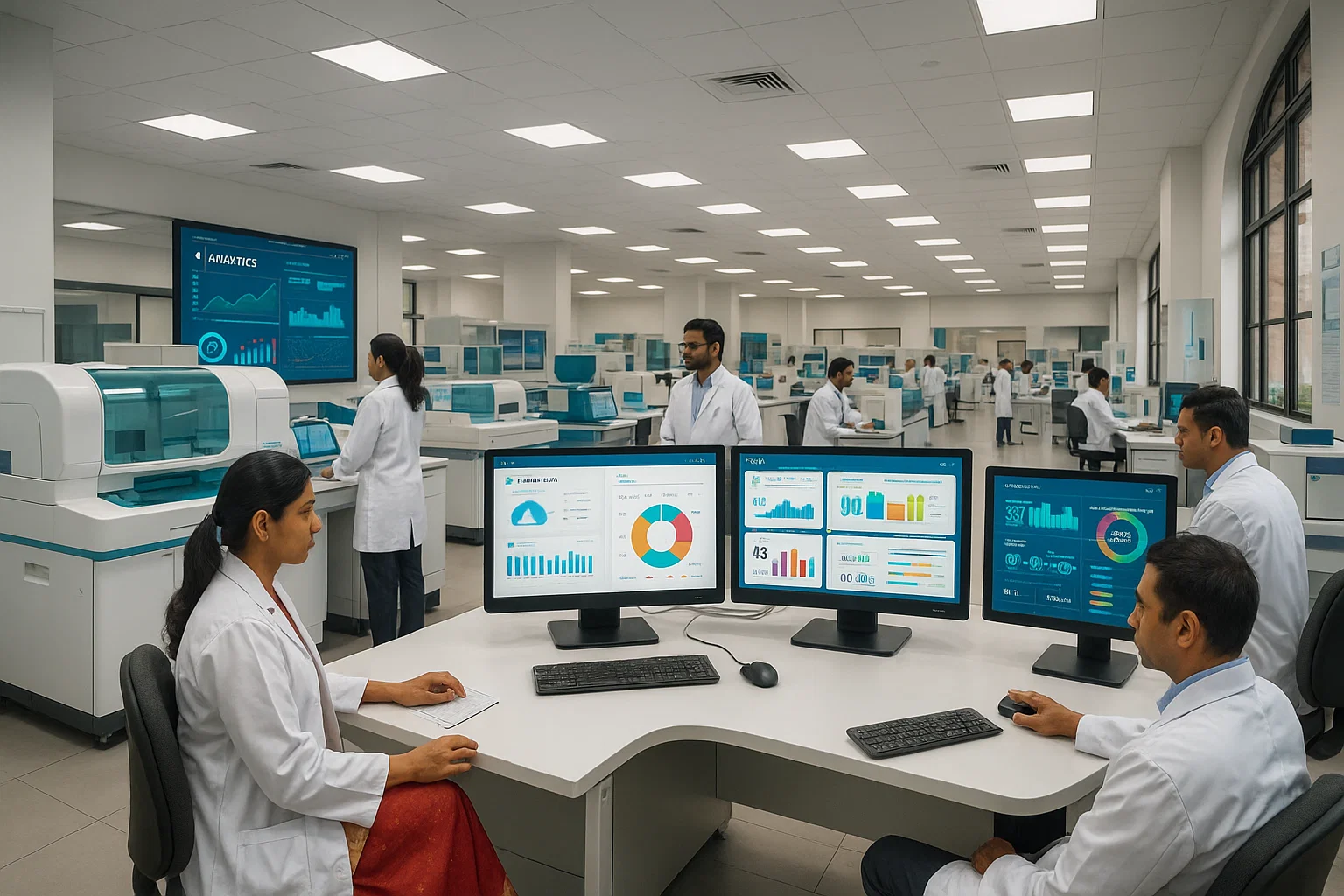
Digital health integrates advanced technologies to significantly enhance healthcare delivery. For laboratories, this translates into faster diagnostics, improved data accuracy, and streamlined workflows. However, this technological leap creates an unprecedented volume of sensitive patient data, including health records, diagnostic results, and personal information. The impact on lab expansion, therefore, is intrinsically linked to how effectively this data is managed and secured. Privacy regulations demand that laboratories implement stringent measures to protect this information. Tools like Electronic Health Records (EHRs), AI-driven analytics, and telehealth platforms enable labs to handle larger volumes, but they also necessitate enhanced data management for better decision-making, increased operational efficiency, and improved patient engagement through secure remote monitoring. Embracing digital health is not merely a technological upgrade; it is a strategic imperative that demands a sophisticated approach to data governance and cybersecurity to future-proof lab services amidst growing demand.
Essential Digital Health Tools for Labs Looking to Scale
Scalable digital health tools empower labs to enhance efficiency, accuracy, and patient engagement as they grow. However, the selection of these tools must be guided by their inherent security features and compliance capabilities. Data security in healthcare requires that all core systems are built with privacy by design.
Key tools, with a focus on their security implications, include:
- Laboratory Information Management Systems (LIMS): These centralise sample tracking and automate workflows, which, when properly secured, can significantly reduce errors and safeguard data integrity. Integration with EHRs must ensure robust encryption for user data during transfer and storage.
- AI-Powered Diagnostic Platforms: While accelerating image analysis and pattern recognition for faster, precise results, AI tools must be transparent about their data usage and employ anonymisation techniques where possible to protect patient privacy. Inaccurate preliminary diagnoses from AI can have severe consequences, highlighting the need for rigorous validation and clear communication of limitations.
- Cloud-Based Analytics: These enable real-time data sharing and advanced reporting. However, cloud solutions must be carefully chosen to ensure secure data storage complying with Indian data sovereignty norms and robust access controls.
- Telehealth and Patient Portals: These facilitate remote consultations and seamless report delivery, improving patient satisfaction and accessibility. Privacy regulations demand that these platforms ensure end-to-end encryption for all communications and data exchanges.
Security Certification Highlight: ISO 27001 Our security framework ensures that when selecting digital health tools, laboratories should prioritise vendors who demonstrate adherence to internationally recognised information security management standards, such as ISO 27001. While not explicitly mentioned in the sources, such certifications signify a robust commitment to data security and a systematic approach to managing sensitive information. This provides an independent assurance of a vendor’s security posture, which is critical for trust and compliance.
Prioritising interoperability and security in these tools is vital for sustainable scaling.
Digital Health Solutions Tailored for Indian Labs
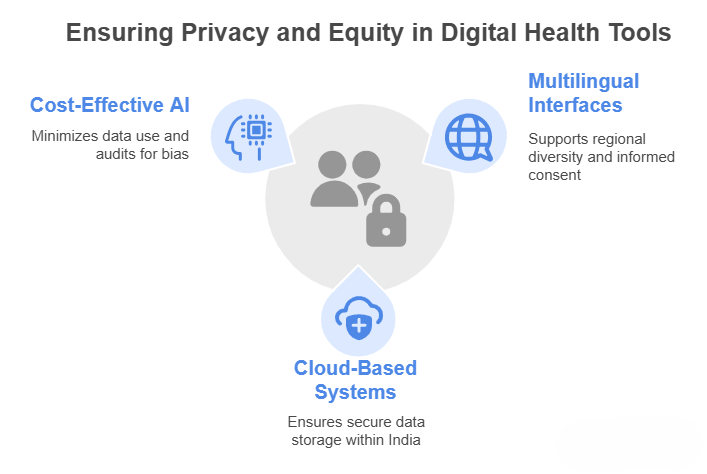
Digital health solutions designed specifically for Indian labs must address unique challenges such as infrastructure gaps, regulatory compliance, and diverse patient needs, all while upholding data privacy. Privacy regulations demand that these solutions prioritise interoperability with popular Indian LIMS platforms and strict compliance with national data privacy laws, including the Information Technology Act (IT Act) and the nascent Digital Personal Data Protection Act (DPDP Act, 2023). Furthermore, adherence to upcoming CDSCO guidelines for Software as a Medical Device (SaMD) is crucial for regulated medical software.
Key features of India-focused digital health tools, assessed through a data protection lens, include:
- Multilingual interfaces: These support regional diversity while ensuring that privacy notices and consent forms are comprehensible across linguistic barriers, a crucial aspect of informed consent.
- Cloud-based systems optimised for variable internet connectivity: These must integrate secure data storage mechanisms that align with Indian data sovereignty norms, meaning data must be stored within India's geographical boundaries if required by law.
- Cost-effective AI modules for diagnostics: These must be developed with data minimisation principles and regularly audited for algorithmic bias to ensure equitable and private patient outcomes.
Choosing vendors familiar with India’s healthcare ecosystem ensures smoother integration and, critically, demonstrates verifiable adherence to regulatory requirements.
Challenges Labs Face When Scaling Digital Health Tools
Scaling digital health tools in laboratories inevitably encounters hurdles, with data protection and privacy being paramount among them. Data security in healthcare requires proactive identification and mitigation of these challenges. Labs frequently struggle with integrating new tools smoothly into existing systems like LIMS and EHRs, which can cause workflow disruptions and introduce new vulnerabilities if not managed securely. Ensuring data security and stringent regulatory compliance, especially with India's evolving data protection laws, adds significant complexity.
Here’s an expert consultation on common challenges and their resolutions:
| Challenge Area | Description | Expert Recommendation for Resolution |
| Lack of Interoperability | Diverse digital tools often do not communicate seamlessly, leading to data silos, manual data entry, and potential security gaps during data transfer. | Prioritise FHIR-compliant APIs and standardised data exchange protocols. Demand vendors demonstrate robust integration capabilities with existing LIMS and EHR systems. |
| Data Privacy & Compliance | Maintaining patient data privacy and meeting compliance standards (e.g., IT Act, DPDP Act 2023, HIPAA, CDSCO guidelines) is complex and constantly evolving, especially for platforms asserting compliance without demonstrable proof. | Implement a dedicated compliance officer. Conduct regular, independent third-party audits of data protection protocols. Ensure robust encryption for user data both in transit and at rest. Privacy regulations demand transparent privacy policies and clear communication about data handling. |
| Staff Training Needs | Without proper staff training, even the most advanced AI diagnostics or data security measures may underperform, leading to human error that compromises data integrity or security. | Develop comprehensive, workflow-based training modules focusing on secure data handling, incident response, and the proper use of digital tools. Foster a culture of security awareness. |
| Cost vs. ROI | Budget constraints can limit investment in advanced security features or robust cloud solutions, despite their long-term benefits in safeguarding patient data and ensuring business continuity. | Frame cybersecurity investment as a non-negotiable cost of doing business in digital healthcare, not an optional expense. Calculate ROI not just on efficiency gains, but on reduced legal risks, enhanced patient trust, and avoidance of costly data breaches. |
| Misinformation & Content Integrity | The dissemination of unproven or unsubstantiated health advice, particularly if content lacks clear source attribution or disclaimers, poses a significant public health risk and undermines credibility. This is an integrity issue that impacts trust in the data being presented. | Mandatory source attribution for all health content, rigorous medical expert review, and clear disclaimers for unproven therapies are essential to prevent misinformation and maintain scientific integrity. |
Addressing these challenges early with expert vendor support and a phased implementation strategy can lead to successful scaling and build sustained patient trust.
The Role of Artificial Intelligence Tools in Healthcare Labs
Artificial Intelligence (AI) is revolutionising healthcare labs by boosting diagnostic accuracy and operational efficiency. However, its integration introduces profound data privacy and security considerations. AI-powered tools analyse vast datasets from lab tests, medical images, and patient records, which are often highly sensitive. Data security in healthcare requires that AI implementations ensure the anonymisation or pseudonymisation of patient data wherever feasible. Predictive analytics and automated image analysis, while cutting turnaround times significantly, must be rigorously validated to prevent algorithmic bias that could lead to inaccurate results or privacy infringements for certain patient groups.
Privacy regulations demand that transparency regarding AI's limitations and data usage is explicitly communicated to users. Labs adopting AI-driven solutions must not only enhance precision and optimise resource use but also establish ironclad data security protocols to protect the vast amounts of data processed by these intelligent systems. This includes securing AI models from adversarial attacks and ensuring the integrity of the data pipelines feeding the AI algorithms.
Practical Steps Labs Should Take Before Expanding Digital Health Infrastructure
Before expanding digital health infrastructure, laboratories must adopt a structured approach, placing data protection and privacy at its core, to ensure smooth integration and sustainable growth. Our security framework ensures that every step is meticulously planned to safeguard patient information.
Data Governance and Security Implementation Checklist
| Step | Description & Data Security/Privacy Focus |
| 1. Thorough Needs Assessment | Identify high-volume tests suitable for digital scaling, simultaneously assessing the types of data involved (e.g., PHI, sensitive genetic data) and the required level of protection. Define explicit data classification policies. |
| 2. Workflow Mapping & Security Integration | Map existing workflows to identify all data touchpoints and potential integration points for new tools. This is critical for embedding security controls into the workflow, not as an afterthought. Identify areas where data minimisation or anonymisation can be applied. |
| 3. Vendor Due Diligence | Collaborate with vendors that offer customization and robust ongoing support, critically evaluating their data security practices, compliance certifications (e.g., ISO 27001, if applicable), and incident response plans. Demand demonstrable proof of compliance with Indian regulations. |
| 4. Pilot Studies & Security Audits | Conduct pilot studies to evaluate tool usability, workflow impact, and crucially, their compliance with data privacy laws and established security protocols. Perform vulnerability assessments and penetration testing during this phase. Monitor pilot outcomes to guide phased implementation. |
| 5. Robust Data Security Protocols | Establish ironclad data security protocols aligned with Indian regulations (e.g., DPDP Act 2023, IT Act). This includes implementing robust encryption for all user data, stringent access controls (Role-Based Access Control – RBAC), data backup strategies, and a comprehensive incident response plan. |
| 6. Comprehensive Staff Training | Train staff with workflow-based learning modules, with a heavy emphasis on data privacy, secure operating procedures, recognising phishing attempts, and proper incident reporting. Continuous training is essential to adapt to evolving digital tools and threats. |
| 7. Ethical Framework & Conflict Mitigation | Implement robust mechanisms to ensure that clinical decisions (e.g., ordering tests) are solely driven by patient need and not influenced by potential financial incentives. Transparency of business models, including commission structures, is essential for maintaining trust. |
| 8. Proactive Regulatory Engagement | Go beyond merely asserting compliance by actively engaging with relevant Indian regulatory bodies (e.g., NMC, Ministry of Health and Family Welfare) and demonstrating verifiable adherence. Seek independent third-party certifications or audits for objective assurance. |
| 9. Performance Monitoring & Iteration | Continuously monitor performance metrics, including security incidents and privacy breaches, to guide iterative improvements. Regular security reviews and updates are non-negotiable. |
This methodical preparation minimises disruptions, safeguards patient data, and maximises the return on investment for labs.
Future Trends in Digital Health for Labs in India
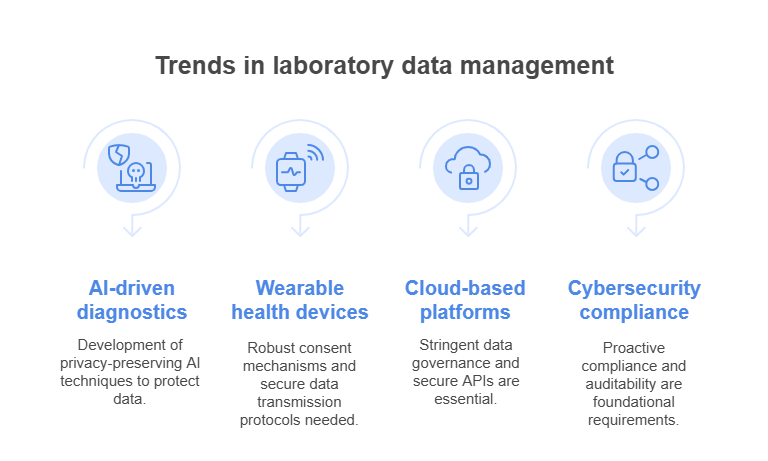
The future of digital health in Indian labs is profoundly shaped by advancements in AI, telemedicine, and personalized medicine, all of which will heighten the criticality of data protection and privacy. Labs will increasingly adopt AI-powered predictive analytics, which, while optimising test workflows and anticipating disease outbreaks, necessitates even stricter controls over patient data privacy and ethical AI usage. Telehealth integration will expand lab reach into rural areas, enabling remote sample collection and virtual consultations. Privacy regulations demand secure pathways for such remote interactions, especially for home sample collection, ensuring chain of custody and data integrity.
Key trends to watch from a cybersecurity and data privacy perspective:
- Expansion of AI-driven diagnostics and automation: This will necessitate continuous development of privacy-preserving AI techniques (e.g., federated learning, differential privacy) to protect sensitive datasets.
- Growth of wearable health devices feeding real-time lab data: This influx of continuous, personal data will require robust consent mechanisms, secure data transmission protocols, and clear policies on data ownership and usage.
- Cloud-based platforms enabling seamless data sharing across labs: While beneficial for collaboration, this trend amplifies the need for stringent data governance, secure APIs, and interoperability standards that incorporate robust data privacy features.
- Increased focus on cybersecurity and data privacy compliance: This is not merely a trend but a foundational requirement. Regulatory bodies will likely introduce more granular rules, particularly concerning the DPDP Act 2023, requiring labs to demonstrate proactive compliance and auditability.
For example, labs leveraging AI and cloud tools can reduce turnaround times while maintaining data security, crucial for scaling in India’s diverse healthcare landscape.
Conclusion: Preparing Labs for Scalable Digital Health Adoption
Successful scaling of digital health in laboratories hinges on strategic preparation across people, processes, and technology, with an unwavering commitment to data security and privacy. Labs must prioritise interoperability, robust data security aligned with Indian regulations, and comprehensive staff training to ensure smooth and secure adoption. A phased rollout, commencing with pilot programs, helps identify integration challenges early and optimise workflows for larger volumes, all while stress-testing security protocols. Data security in healthcare requires a proactive stance, anticipating risks and implementing safeguards before scaling to avoid costly breaches or regulatory non-compliance. Implementing strong data privacy protocols is not just a compliance requirement; it's fundamental to building and maintaining patient trust, which is the ultimate currency in healthcare. Preparing thoughtfully enables labs to harness digital health’s full potential for sustainable, secure, and ethical growth.
Frequently asked questions (FAQs)
1. What are the key digital health tools that labs should consider for scaling with data protection in mind?
Labs should focus on scalable Laboratory Information Management Systems (LIMS), AI-powered diagnostic platforms, cloud-based analytics, telehealth interfaces, and patient portals that are designed with privacy-by-design principles and offer robust encryption to enhance efficiency and support growth securely.
2. How can labs in India ensure digital health tools comply with local data privacy regulations?
Labs must choose tools that demonstrably comply with Indian data privacy laws such as the IT Act and the Digital Personal Data Protection Act (DPDP Act, 2023), ensure secure data storage within specified geographical limits (if required), and work with vendors familiar with the Indian healthcare regulatory environment and CDSCO guidelines for SaMD.
3. What challenges do labs face when integrating new digital health tools from a security and privacy perspective?
Common challenges include ensuring interoperability among diverse digital tools without creating security vulnerabilities, managing budget constraints to invest in adequate security features, comprehensive staff training needs for secure operation, and maintaining data security and compliance standards amidst evolving threats.
4. How do artificial intelligence tools benefit healthcare labs while ensuring data privacy?
AI tools improve diagnostic accuracy, speed up test result analysis, and automate workflows. To ensure data privacy, AI implementations must employ data minimisation, anonymisation, and rigorous validation to prevent bias and protect patient information, helping labs handle higher volumes efficiently while maintaining quality and ethical standards.
5. What practical steps should labs take before expanding their digital health infrastructure to ensure data protection?
Labs should conduct a thorough needs assessment focused on data types, run pilot tests with integrated security audits, provide comprehensive staff training on data privacy, establish and enforce robust data security protocols (including encryption), engage stakeholders for ethical oversight, and continuously monitor performance metrics to ensure successful and sustainable scaling with patient data integrity.
"Deliver Clear, Patient-Friendly Lab Reports - Partner with NirogGyan Today"