
Author: Joyneel Acharya
Last Updated on: 30th July 2025
A big problem in healthcare around the world is readmissions. They not only add unnecessary costs to healthcare systems (about $41 billion a year in the U.S.) but they also show that there are problems with care quality, communication, and support after discharge. More and more evidence shows that better lab reporting and getting patients involved in their care can greatly lower readmission rates, improve outcomes, and make healthcare systems work better.
Key Takeaways
• Hospital readmissions are a major challenge globally, costing billions and impacting patient outcomes, with an estimated 10–60% being avoidable.
• Machine learning models significantly improve readmission prediction accuracy compared to conventional models like LACE, especially when using automatically generated features from longitudinal data.
• AI-powered solutions enable proactive care, including predictive analytics, risk stratification, and early warning systems, to prevent readmissions and enhance efficiency.
• Specific lab test results are crucial predictors for readmissions, such as preoperative serum albumin, postoperative CRP and procalcitonin, and other blood markers like HbA1c, WBC, RBC, and UA.
• AI tools assist clinicians by speeding up diagnoses, suggesting effective treatments, flagging drug interactions, and integrating data for enhanced care coordination.
• Remote Patient Monitoring (RPM) and patient engagement technologies improve post-discharge adherence and reduce complications by allowing continuous tracking and personalized support beyond hospital walls.
• Interventions combining multiple components (e.g., patient education, medication reconciliation, follow-up) are more effective at reducing readmissions than single interventions.
• Patient-specific factors and care quality influence readmissions, with demographic, social, and disease-related characteristics, along with substandard care, contributing to risk.
• The inclusion of operational data, such as clinic occupancy rates and staffing, can also significantly improve the accuracy of readmission forecasting.
• Predictive models for surgical patients can offer data-driven, personalized treatment recommendations, such as pre-operative blood transfusions, potentially leading to substantial cost savings.
Understanding the Readmission Problem
What Are Hospital Readmissions?
A hospital readmission occurs when a patient returns to the hospital within 30 days of being discharged. These events often indicate unresolved health issues, gaps in post-discharge care, or poor communication between providers and patients.
Why Reducing Readmissions Matters
- Financial strain: Readmissions drive billions in avoidable healthcare spending.
- Regulatory penalties: Programs like Medicare’s Hospital Readmission Reduction Program (HRRP) penalize hospitals with high readmission rates.
- Patient well-being: Rehospitalization is emotionally and physically taxing and may result in worsened health outcomes.
Leading Causes
- Incomplete lab tests or pending results at discharge
- Lack of patient education on symptoms and follow-up
- Poor communication between inpatient and outpatient providers
- Inadequate post-discharge support systems
The Power of Better Lab Reports in Preventing Readmissions
Lab reports inform 70–80% of clinical decisions. When they’re incomplete, delayed, or unclear, clinicians may miss critical information that affects discharge decisions and follow-up care.
Key Features of High-Quality Lab Reports
- Completeness: All ordered tests are finalized before discharge.
- Timeliness: Fast turnaround enables real-time care adjustments.
- EHR Integration: Lab results embedded in EMRs support continuity of care.
- Standardization & Clarity: Easy-to-read, uniform reports reduce misinterpretation.
Tackling Tests Pending at Discharge (TPADs)
Between 41% and 100% of patients leave hospitals with pending test results. These delays can cause missed complications and lead to avoidable readmissions. Systems that ensure all test results are reviewed before discharge show significant drops in readmission rates.
How Machine Learning and AI Transform Lab Reports Into Predictive Tools
Predictive Analytics for Risk Stratification
By feeding lab data into machine learning models, hospitals can predict 30-day readmission risk more accurately than traditional scoring systems like LACE.
Examples of key predictive markers:
- Pre-op albumin: Linked to mortality and complications post-surgery
- Post-op CRP & procalcitonin: Indicators of sepsis or surgical issues
- HbA1c, WBC, RBC, UA: Effective predictors in bariatric and diabetic patients
ML models using lab and clinical data have achieved an AUC of 0.83, significantly outperforming traditional models (LACE: 0.66).
Automated Feature Engineering
Techniques like Word2Vec extract meaningful patterns from longitudinal lab data, enabling automatic feature creation without manual coding. These insights are then used to fine-tune risk models for surgical and chronic care patients.
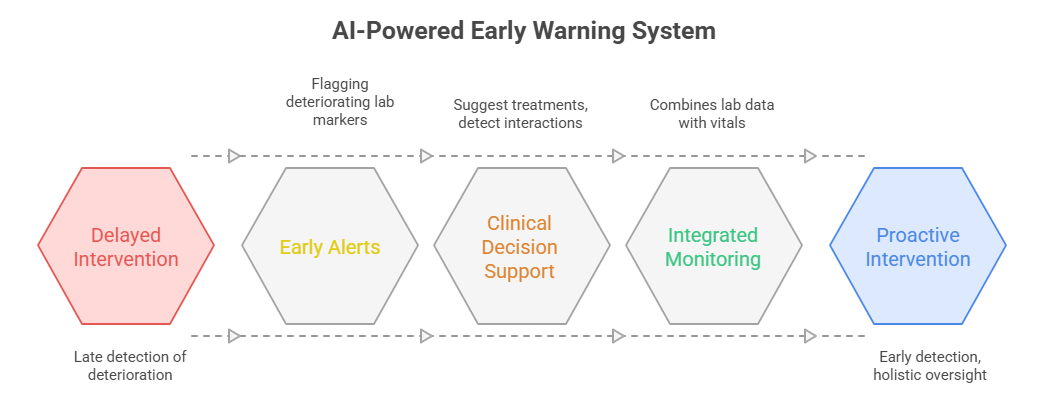
AI-Powered Early Warning and Decision Support
- Early alerts: Real-time flagging of deteriorating lab markers
- Clinical decision support systems (CDSS): Suggest treatments and detect drug interactions
- Integrated monitoring: Combines lab data with vitals for holistic oversight
Hospitals that implement AI-driven tools report up to a 25% drop in readmissions and faster clinical response times.
Empowering Patients: The Human Side of Readmission Reduction
Why Informed Patients Matter
Patient behavior and understanding post-discharge play a pivotal role. Studies suggest 12% to 75% of readmissions are preventable through better education and aftercare.
Education Models That Work
- Project RED: Simplified instructions and visual guides to reduce errors
- Care Transitions Intervention (CTI): Teaches patients to manage medications and recognize warning signs
- Naylor’s Transitional Care Model: Involves caregivers in structured discharge planning
Role of Technology in Engagement
- Mobile Apps & SMS Tools: Support medication reminders, symptom tracking
- Virtual Assistants: Deliver tailored health tips and lifestyle advice
- Patient Portals: Provide secure access to lab reports and care plans
A study showed 86% medication adherence in patients using digital engagement tools, and 35% fewer readmissions in hospitals with AI-based patient follow-up systems.
The Role of EMRs and Integration
Why EHR-Lab Integration Matters
- Flags abnormal values in real-time
- Provides longitudinal health views
- Minimizes transcription errors
- Enables seamless communication across care teams
Hospitals using automated EHR alerts and lab completion checklists before discharge have seen significant reductions in 30-day readmission rates.
Challenges with Current Lab Reporting Systems
Even today, many hospitals struggle with:
- Outdated systems that delay result delivery
- Non-standardized formats that confuse interpretation
- Poor EHR integration, creating data silos
- Resource limitations in smaller facilities
Solving these issues requires investing in automation, data interoperability, and user training.
Real-World Evidence and Case Studies
- A Davies Award-winning hospital reduced readmissions from 11.4% to 8.1% using real-time lab analytics.
- Machine learning studies on older patients using thousands of lab variables accurately identified high-risk cases.
- Medicare analysis of 200,000+ patients showed the greatest reductions came from completing lab tests before discharge and enhancing coordination.
Future Trends: Where Lab Reports Are Heading
Key Innovations on the Horizon
- AI-generated, patient-specific reference ranges
- Real-time anomaly detection
- Voice and visual lab summaries for patient portals
- Integration with wearable RPM data for continuous tracking
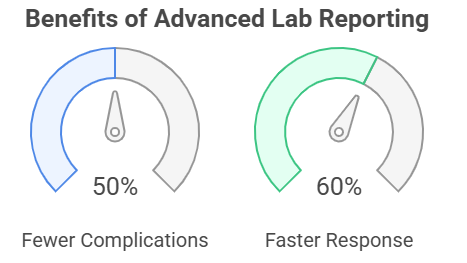
Benefits of Advanced Lab Reporting
- Up to 50% fewer post-discharge complications
- 60% faster response to early signs of deterioration
- Better alignment of clinical workflows with patient needs
Conclusion: Turning Lab Data Into Action
Reducing readmissions requires a systemic shift: from seeing lab reports as static documents to using them as dynamic, predictive, and actionable tools. When combined with AI, integrated EHR systems, and patient-centered technologies, better lab reports don’t just support clinicians - they empower entire healthcare ecosystems.
Hospitals and healthcare providers should:
- Finalize and review all lab tests before discharge
- Embed predictive analytics and alerts into EMRs
- Invest in staff training and patient education
- Use digital tools to support patient adherence and monitoring
By reimagining the role of lab reports, we can significantly reduce avoidable readmissions, improve outcomes, and create a smarter, more sustainable healthcare system.
Frequently Asked Questions (FAQs)
1. How do lab reports help prevent hospital readmissions?
Lab reports provide crucial data that help clinicians identify early warning signs of complications before a patient is discharged. When integrated with predictive analytics, they enable timely interventions that reduce the risk of readmission.
2. What are the most important lab markers to watch before discharge?
Key markers include CRP, procalcitonin, serum albumin, HbA1c, white and red blood cell counts, and uric acid. Abnormal results in these tests are often linked to postoperative complications and increased readmission risk.
3. Can AI really reduce hospital readmission rates?
Yes. AI-powered systems analyze lab data in real time, flag risks, assist in clinical decision-making, and automate patient follow-up. Hospitals using AI tools have reported up to a 25–35% reduction in readmission rates.
4. How does patient education impact readmission risk?
Educated patients are more likely to follow post-discharge instructions, manage their medications, and recognize early signs of complications. Studies show up to 75% of readmissions are preventable through proper education and aftercare.
5. What role do electronic health records (EHRs) play in reducing readmissions?
EHRs centralize lab data, automate alerts for critical values, and streamline communication across care teams. They ensure all test results are reviewed and acted upon before discharge, helping to prevent oversight-related readmissions.