
The Role of Lab Reports in the Self-Diagnosis Era
Author: Joyneel Acharya
Last Updated On: 15th July 2025
In the age of instant Google searches and online test results, your lab report isn't just for your doctor - it's your personal health dashboard. But are you using it the right way, or risking misdiagnosis? Let’s decode the power (and the pitfalls) of self-diagnosis through lab reports.
Key Highlights
- Lab reports are crucial tools for patients in the self-diagnosis era, enabling better health understanding and informed decision-making through online access.
- Correct interpretation of common tests like CBC, blood sugar, and lipid profiles is essential, with patients advised to review values, use reliable resources, and consult healthcare professionals as needed.
- Lab reports contain patient details, test results with reference ranges, and lab notes, all of which help detect health issues early and monitor treatments effectively.
- Familiarity with lab report components empowers patients to actively participate in their healthcare journey while avoiding misinterpretation of medical jargon.
- Common lab tests provide vital insights into conditions such as infections, diabetes, heart disease risk, thyroid function, and gout, aiding early detection and management.
- Combining self-awareness with professional advice improves early illness detection, tracks treatment progress, and reduces unnecessary hospital visits.
Lab reports have become essential tools for patients taking charge of their health in today’s self-diagnosis era. With increasing access to digital healthcare platforms and government initiatives like the Ayushman Bharat Digital Mission, patients can easily obtain their lab results online. This transparency enables better understanding of their health status and empowers them to make informed decisions.
However, interpreting lab reports correctly is key. Common tests such as CBC, blood sugar, and lipid profiles provide vital clues about overall health but can be confusing without guidance.
Patients benefit most when they:
- Review their reports carefully and note any values outside the normal range
- Use reliable online resources or apps designed to explain medical terms in simple language
- Consult healthcare professionals when results indicate potential concerns or symptoms worsen
By combining self-awareness with professional advice, patients can improve early detection of illnesses, track treatment effectiveness, and reduce unnecessary hospital visits. This balanced approach helps avoid risks of misdiagnosis while leveraging the convenience and empowerment that lab reports offer.
Common Lab Tests and Their Role in Self-Diagnosis
Common lab tests like Complete Blood Count (CBC), blood sugar, and lipid profiles are vital tools for understanding your health and spotting early signs of illness. These tests provide measurable data that can indicate infections, diabetes risk, cholesterol levels, and more.
Here are some frequently used lab tests and what they reveal:
- Complete Blood Count (CBC): Checks overall blood health, detecting anemia, infections, or blood disorders.
- Blood Glucose Test: Measures blood sugar levels to screen for and monitor diabetes.
- Lipid Profile: Assesses cholesterol and triglycerides to evaluate heart disease risk.
- Thyroid Panel: Evaluates thyroid gland function affecting metabolism and energy levels.
- Uric Acid Test: Helps detect gout or kidney issues by measuring uric acid in the blood.
While these tests empower you to track your health, interpreting results without medical guidance can be tricky. Abnormal values don’t always mean disease but signal when to consult a healthcare provider. Using lab reports alongside professional advice ensures safer and more accurate self-diagnosis.
Blood Tests: The Foundation of Health Monitoring
By measuring various components like red and white blood cells, hemoglobin, glucose, and cholesterol, these tests give healthcare providers essential clues about your body's condition.
Blood tests serve multiple purposes:
- Monitor chronic conditions such as diabetes and heart disease
- Detect infections, anemia, or blood disorders
- Guide decisions on further diagnostic tests or treatments
Interpreting blood test results requires understanding reference ranges, which indicate typical values for healthy individuals. Values outside these ranges may signal health issues but don’t always mean disease. For example, a high white blood cell count might suggest infection, while low hemoglobin could indicate anemia.
Always discuss your blood test results with a healthcare professional to grasp their significance in your specific context. This partnership ensures accurate interpretation and timely action.
| Common Blood Test | What It Measures | Why It Matters |
| CBC | Blood cells and hemoglobin | Detects infections, anemia |
| Blood Glucose | Sugar levels in blood | Monitors diabetes risk |
| Lipid Profile | Cholesterol and fats | Assesses heart disease risk |
Specialized Tests: Understanding Reticulocyte Count, Hormone Panels, and More
Specialized tests provide deeper insights into specific health conditions that common tests may not reveal.
A reticulocyte count measures young red blood cells, helping evaluate how well your bone marrow produces new blood cells. For example, a high count often indicates your body is compensating for anemia, while a low count might suggest bone marrow problems. This test is crucial when investigating unexplained anemia or monitoring treatment.
Hormone panels assess levels of key hormones such as thyroid, cortisol, or reproductive hormones. These tests help diagnose thyroid disorders, adrenal issues, or fertility concerns by identifying imbalances that affect metabolism, stress response, or reproductive health.
Other specialized tests include creatine kinase (CK) tests, which detect muscle or heart damage by measuring enzyme levels in the blood.
| Test | What It Measures | Why It Matters |
| Reticulocyte Count | Young red blood cells | Bone marrow function and anemia |
| Hormone Panels | Various hormones (thyroid, cortisol) | Detects hormonal imbalances |
| Creatine Kinase (CK) | Enzyme levels in muscles and heart | Identifies muscle or heart damage |
Understanding these tests can guide you and your doctor in managing complex health issues more effectively.
How to Access and Interpret Lab Reports Safely
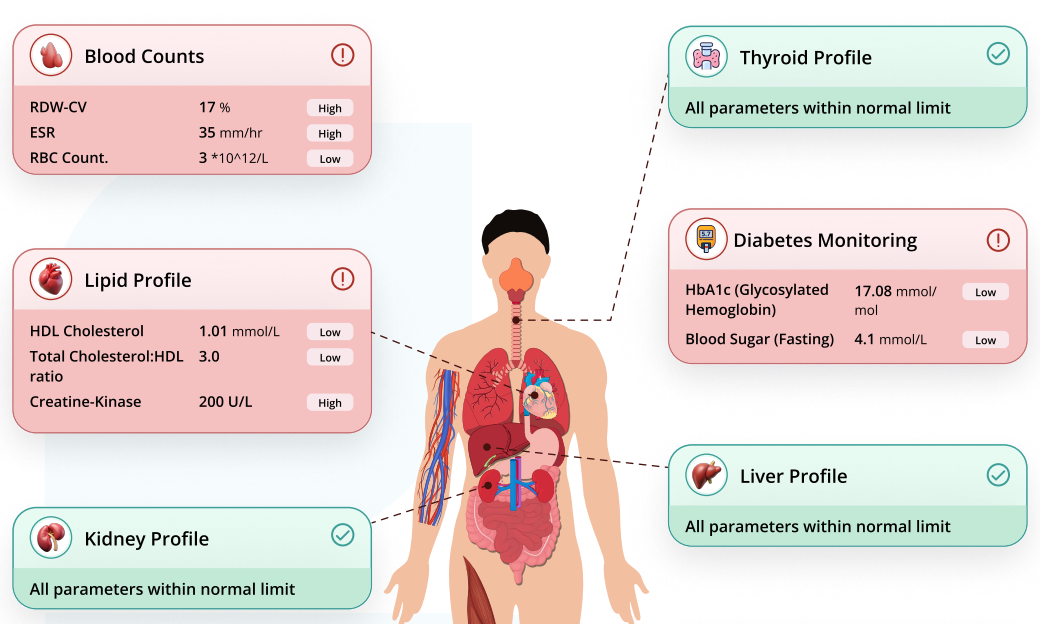
Accessing your lab reports securely and interpreting them correctly is crucial for effective health management. NirogGyan’s VizApp platform is a great place to understand your lab reports, get actionable insights on your healthcare journey, and easily find out what corrective action to take. Many labs like Pathkind, Metropolis, and Manipal TRUtest offer online portals or apps where you can download your reports safely after proper authentication. Some services even provide home sample collection with digital report delivery, ensuring convenience and privacy.
When you receive your report, follow these tips to interpret it safely:
- Check patient details and test dates to confirm the report is yours.
- Compare your results against the reference ranges provided; values outside these ranges may need attention.
- Avoid self-diagnosing solely based on numbers; use trusted resources to understand terms but consult a healthcare professional for interpretation.
- If your report includes notes or comments from the lab, read them carefully - they often highlight important observations.
Remember, lab errors can occur, so if something seems unusual or symptoms persist, seek a second opinion or retesting. Combining digital access with professional guidance ensures you use lab reports as a reliable tool without risking misinterpretation.
When to Consult a Medical Professional
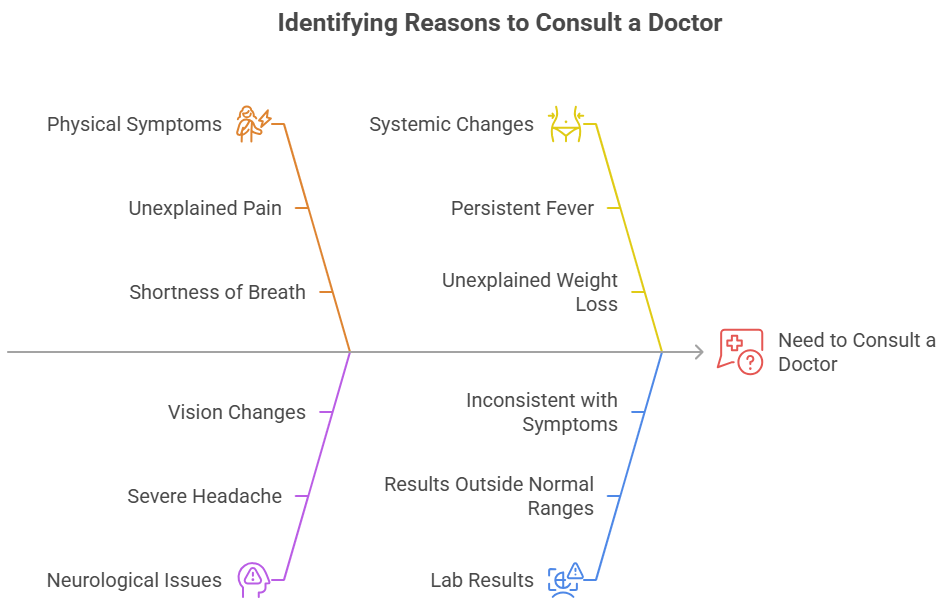
Always consult a medical professional if your lab results show abnormal values or if you experience persistent or worsening symptoms. While lab reports provide valuable information, they are just one part of a complete health assessment. Certain signs require prompt medical attention to avoid complications.
Consider seeing a doctor if you notice:
- Unexplained pain, sudden shortness of breath, or difficulty breathing
- Severe headache, vision changes, fainting, or loss of consciousness
- Persistent fever, unexplained weight loss, or unusual fatigue
- Lab results significantly outside normal ranges or inconsistent with your symptoms
Early consultation helps in accurate diagnosis and timely treatment. For example, a high white blood cell count with fever may indicate infection requiring antibiotics, while abnormal blood sugar levels might need medication adjustments.
Remember, self-diagnosis can delay necessary care or cause unnecessary anxiety. Use lab reports as a guide but rely on professional expertise for interpretation and treatment decisions.
| When to Consult a Doctor | Why it Matters |
| Symptoms worsen or new symptoms appear | Ensures timely diagnosis and care |
| Lab results are abnormal or unclear | Prevents misinterpretation and delays |
| You feel anxious or uncertain about results | Provides reassurance and guidance |
Future Trends: The Evolving Role of Lab Reports in Healthcare
Lab reports are set to become more integrated, personalized, and technology-driven, transforming healthcare delivery. Smart Reports, with advancements like AI-powered diagnostics, digital pathology, and blockchain for secure data sharing will enhance accuracy and speed. These innovations promise to reduce errors and enable real-time analysis, making lab results more actionable for both doctors and patients.
Key components of Smart Reports include:
- AI and Machine Learning: Automated interpretation of complex test data will support faster, more precise diagnoses.
- Point-of-Care Testing (POCT): Portable devices will allow instant lab testing at clinics or homes, improving accessibility in remote areas.
- Interoperability and Blockchain: Secure sharing of lab reports across hospitals and specialists will streamline care coordination and patient history tracking.
- Personalized Health Monitoring: Integration with wearable devices and IoT sensors will enable continuous health tracking and early detection of anomalies.
These trends will empower patients to engage proactively with their health data while helping healthcare providers deliver tailored, timely interventions.
Frequently Asked Questions (FAQs)
1. What are lab reports and why are they important for self-diagnosis?
Lab reports are detailed documents that provide the results of medical tests. They help individuals understand their health status, detect potential issues early, and monitor ongoing treatments, making them essential tools in self-diagnosis.
2. How can I accurately interpret my lab report results?
To interpret lab reports accurately, compare your test results with the reference ranges provided, understand the medical terms used, and consider your symptoms. It’s important to consult a healthcare professional for a comprehensive interpretation.
3. Are home lab tests as reliable as tests done in medical labs?
Home lab tests can be reliable if conducted through certified and accredited providers. However, they may have limitations compared to full medical lab tests, so it’s advisable to follow up with a medical professional, especially if results are abnormal.
4. What should I do if my lab report shows abnormal results but I feel fine?
Even if you feel fine, abnormal lab results should not be ignored. Consult a healthcare provider to understand the significance of these results and determine if further testing or treatment is necessary.
5. When is it necessary to seek professional medical advice despite having lab reports?
You should seek professional advice if your lab results show significant abnormalities, if you have persistent or worsening symptoms, or if you are unsure about how to interpret your results. Professional guidance ensures accurate diagnosis and appropriate care.
Conclusion: Empowering Indian Patients Through Lab Reports
Lab reports are powerful tools that empower Indian patients to take charge of their health with confidence and clarity. By understanding and accessing their lab results, patients can engage actively in their healthcare journey, spotting early signs of illness and monitoring treatment progress effectively.
To maximize this empowerment:
- Always verify your lab report details for accuracy.
- Use trusted resources to decode medical terms and reference ranges.
- Combine self-awareness with timely consultation from healthcare professionals.
- Embrace digital platforms offering easy, secure access to lab reports.
This balanced approach helps prevent misinterpretation and ensures that lab reports serve as reliable guides rather than sources of confusion or anxiety. As the healthcare landscape evolves with technology and home testing, patients equipped with knowledge and professional support will enjoy better outcomes and greater control over their wellbeing.
By making lab reports an integral part of health management, patients can transform from passive recipients to informed partners in their care.