What Digital Natives Expect from Their Lab Reports
Author: Joyneel Acharya
Last Updated On: 25th July 2025Picture this scenario: A new era dawned in healthcare, where the archaic paper-trail of medical reports gave way to dynamic, intelligent data. This isn't a distant dream; it’s the expectation of digital natives, a generation born into the embrace of technology, fundamentally reshaping how we access and interact with our health information. This transformation, driven by innovation in diagnostic labs across India and beyond, showcases a profound evolution in patient care.Key Highlights
- Digital natives expect lab reports to be clear, accessible, and integrated with their digital lifestyles, favoring simple language and intuitive visuals over medical jargon.
- Instant access to lab reports via mobile apps or patient portals is essential, enabling real-time updates and seamless availability anytime, anywhere.
- Compatibility with personal health apps and wearable devices is a priority, allowing users to track health trends and manage wellness proactively.
- Strong data privacy and security measures, including transparent policies and robust encryption, are critical to gain digital natives’ trust.
- Personalization of lab reports with tailored insights based on individual health profiles enhances patient engagement and empowerment.
- In India, lab reports still face challenges like inconsistent digital infrastructure, limited integration with health systems, and data privacy concerns, though leading diagnostic chains are beginning to adopt more user-friendly digital solutions.
Understanding Who Digital Natives Are and Their Healthcare Expectations
Digital natives are individuals inherently comfortable with technology, their lives interwoven with smartphones, apps, and seamless online platforms. This digital fluency directly shapes their expectations for healthcare experiences: they demand speed, transparency, and personalisation. Unlike previous generations, they don't just want to receive instructions; they want to actively participate, understand clear, jargon-free information, and have their health data tailored to their unique needs, accessible anytime, anywhere, with assured privacy. The journey of diagnostic services moving from traditional paper reports to highly accessible digital formats is a testament to this evolving patient demand.
The Current Landscape of Lab Reports in India
For too long, lab reports in India, while accurate and consistent due to regulatory standards, remained text-heavy, filled with medical jargon, and often confined to physical copies or emailed PDFs. This posed significant limitations for digital natives. The journey from traditional methods was fraught with challenges: inconsistent digital infrastructure, limited integration with personal health apps, and evolving data privacy concerns.
Technology Evolution Comparison: Traditional vs. Digital Lab Reports
| Feature | Traditional Lab Reports | Digital Lab Reports (Desired) |
| Accessibility | Physical copies, email PDFs | Mobile apps, patient portals |
| Clarity | Text-heavy, medical jargon | Simple language, visual aids |
| Engagement | Passive reading | Interactive, personalised insights |
| Integration | Isolated | Sync with health apps, EHRs |
| Proactivity | Reactive | Proactive health management |
Despite these hurdles, a remarkable shift began. Leading diagnostic chains are now embracing user-friendly digital reports, transforming static data into interactive insights.
Key Features Digital Natives Expect in Lab Reports
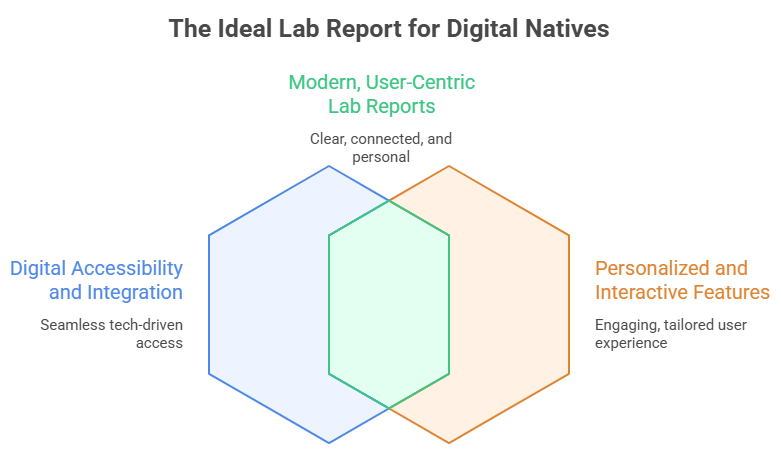
Digital natives envision lab reports as dynamic tools, not just static documents. They seek clarity, simplicity, digital accessibility, interactive formats, and personalised insights.
Clarity and Simplicity in Lab Report Presentation
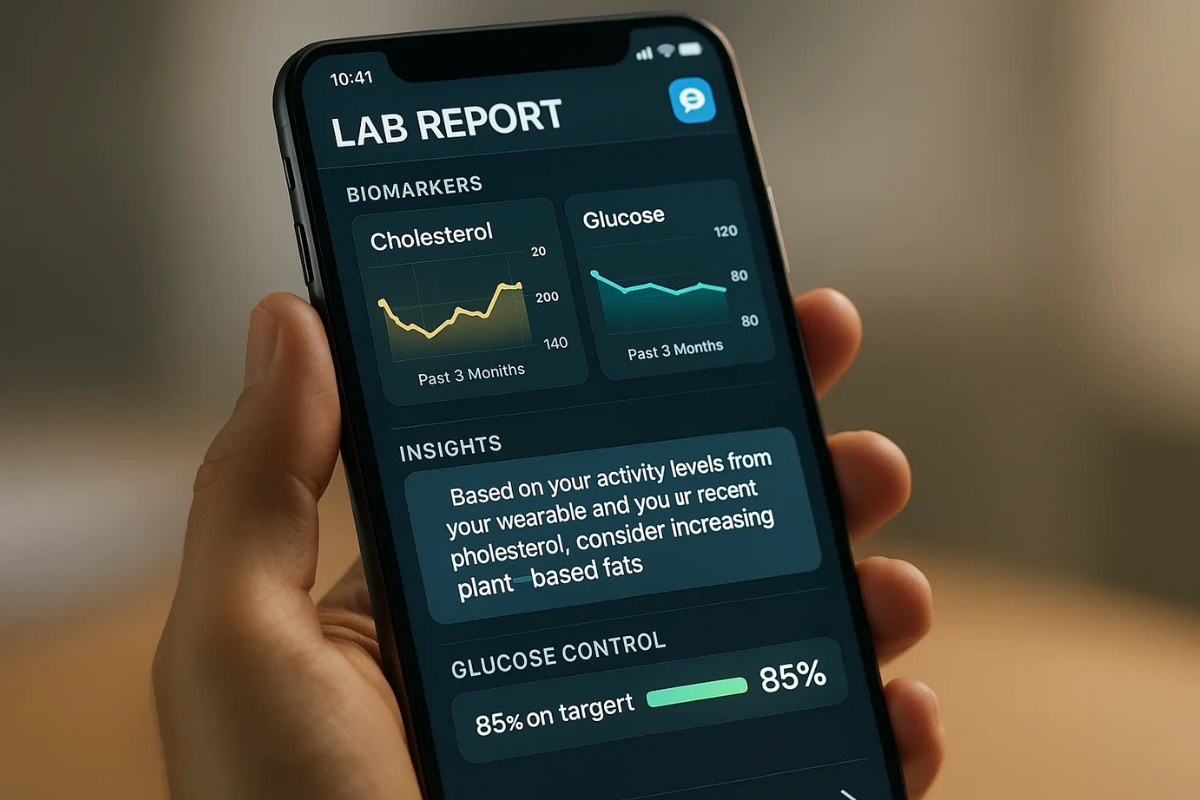
The breakthrough in presenting lab reports lies in transforming complex medical data into easily digestible information. This means using plain language instead of medical jargon (e.g., "liver enzyme" instead of "alanine transaminase") and incorporating powerful visual aids like colour-coded indicators, graphs, and trend charts. Imagine an Innovation Timeline graphic here, charting the evolution from raw numerical tables to intuitive, visual summaries that highlight normal ranges in green and abnormal values in red, empowering immediate understanding. This simplification encourages proactive health management.
Digital Accessibility and Integration with Health Tech
The true revolution is in digital accessibility and seamless integration. Mobile apps and patient portals now offer instant access to lab results, anytime, anywhere, facilitating quicker decision-making and communication with healthcare providers. This is where healthcare technology breakthroughs truly shine, creating a unified health profile by integrating with digital health ecosystems like fitness trackers, EHRs, and telemedicine platforms. The success of this integration can be seen in the growth of platforms that manage diagnostic bookings and report delivery, reflecting the impact of digital solutions. For example, some platforms, like NirogGyan, a digital healthcare platform operating in India, have grown to facilitate the processing of over 300,000 reports. This growth underscores the widespread adoption and demand for digitally accessible health records.
Key Statistic: On-the-Go Health Management! 92% of digital natives prefer instant mobile access to their lab reports.
Personalized and Interactive Lab Report Features
The transformation didn't stop at accessibility; it evolved into personalisation and interactivity. By leveraging AI and smart analytics, reports now offer customised explanations, risk assessments, and health recommendations based on a patient’s unique profile. Imagine a Metrics Dashboard visual here, showcasing patient engagement metrics, AI interpretation accuracy, and proactive health interventions. Interactive features allow users to explore their results dynamically, click on values for explanations, and view trend graphs over time, turning data into actionable health insights.
Success Story Highlight: Empowering Proactive Health! A patient, once overwhelmed by their cholesterol report, used an AI-driven, interactive platform to understand their elevated LDL levels. The report not only explained the numbers but suggested tailored dietary changes and a follow-up test, transforming anxiety into proactive health management.
Challenges in Meeting Digital Natives’ Expectations
Despite these innovations, challenges persist. Bridging the gap between traditional formats and modern expectations, overcoming digital infrastructure disparities, and addressing data privacy and security concerns remain critical hurdles. Labs must build robust encryption and transparent policies to earn digital natives' trust.
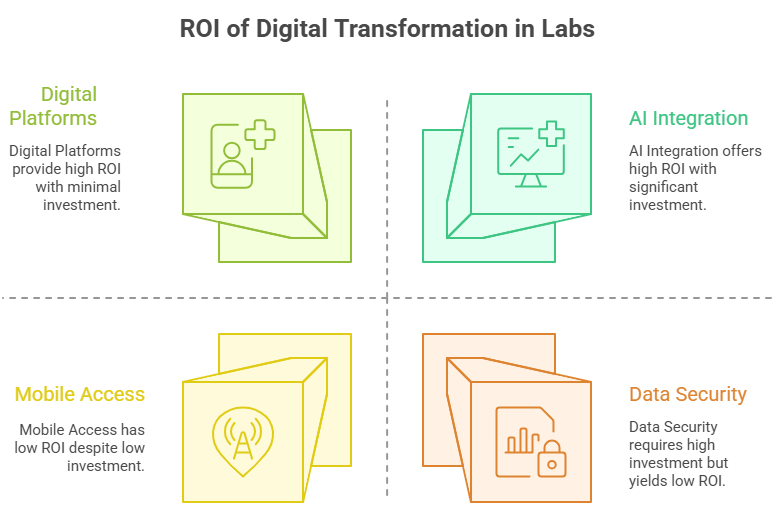
Potential ROI of Digital Transformation in Labs
| Investment Area | Benefit | Potential ROI (Concept) |
| Digital Platforms | Increased patient engagement | Higher patient retention, new service adoption |
| AI Integration | Reduced physician interpretation time | Operational efficiency, enhanced patient satisfaction |
| Data Security | Enhanced patient trust | Reduced legal risks, improved brand reputation |
| Mobile Access | Greater accessibility | Expanded market reach, particularly in remote areas |
Best Practices for Labs and Healthcare Providers
To meet these evolving expectations, labs and healthcare providers must prioritise user-centric design, seamless digital integration, and robust data security. Simplifying language, providing instant mobile-friendly access, integrating with EHRs, and enforcing strict data security protocols are paramount.
Future Trends: The Evolution of Lab Reports for Digital Natives
Looking ahead, the horizon sparkles with promise. Emerging technologies like AI, blockchain for security, and patient-centric designs will continue to shape the future of lab reporting. This journey is about empowering patients to take proactive control of their health.
Conclusion: Embracing the Digital Native Patient in Lab Reporting
Embracing the digital native patient means transforming lab reports into clear, accessible, and interactive tools that empower individuals to take charge of their health. It’s about building trust through transparent, secure, and user-friendly systems. By focusing on clarity, real-time access, integration, data privacy, and personalization, labs are not just satisfying a new generation of patients; they are setting a new, higher standard for healthcare transparency and collaboration, forging a future where health information is truly in the hands of those it serves. Quick Fact: The Future is Personalised! AI-driven insights are transforming generic lab reports into customised health roadmaps.
Frequently Asked Questions (FAQs)
1. What makes lab reports different for digital natives?
Digital natives expect lab reports to be clear, easy to understand, and accessible digitally on mobile apps or portals. They prefer interactive and personalized reports integrated with their digital health tools.
2. How can I access my lab reports online in India?
Many labs provide digital portals or mobile apps where patients can securely access their lab reports. Check with your healthcare provider or diagnostic center for available digital services.
3. Are digital lab reports secure?
Reputable healthcare providers use encryption and secure platforms to protect patient data. Always use official apps or websites and avoid sharing sensitive information on unsecured channels.
4. What should I do if I don’t understand my lab report?
You can consult your doctor or healthcare provider for explanations. Some digital platforms also offer educational resources or customer support to help interpret lab results.
5. How are digital health technologies improving lab reports?
Digital health enables instant report access, integration with health apps, personalized insights via AI, and interactive features that help patients better understand and manage their health.