
Author: Joyneel Acharya
Last Updated On: 31st October 2025
Have you ever tried to navigate a new hospital app only to feel completely lost? Or maybe you’ve received cryptic lab results that left you more anxious than informed? We've all been there. It’s frustrating when technology, which is supposed to help, ends up complicating our healthcare journey. That’s why design thinking isn’t just a buzzword in healthtech; it's a revolution essential for advancing healthcare innovation and creating a better patient experience.
Key Takeaways
- Design thinking in healthtech centers on empathy, collaboration, and iterative prototyping to create patient-focused, accessible, and personalized solutions that enhance patient experience and trust.
- By deeply understanding patient challenges, healthtech innovations reduce frustration, improve satisfaction, and foster patient empowerment, clarity, and transparency.
- UX design plays a critical role by ensuring healthcare technologies have simple, intuitive interfaces, accelerating adoption by medical staff and increasing patient engagement through user-friendly portals.
- Medical UX focuses on making digital health tools easy and efficient for patients, providers, and caregivers, improving accessibility, reducing errors, and streamlining workflows.
- The continuous testing and refinement process in design thinking allows healthtech solutions to adapt quickly to user feedback, ensuring they remain relevant and effective.
- Overall, integrating design thinking and UX principles in healthtech builds stronger trust, confidence, and inclusivity, ultimately leading to better patient outcomes and a more responsive healthcare system.
Understanding Design Thinking and Its Relevance to Healthtech
So, what exactly is design thinking? Simply put, it's a human-centered strategy for solving complex problems. Instead of starting with the technology, we start by deeply understanding the patient’s needs and behaviors. In the context of health technology and digital health, this means creating tools and systems that are genuinely accessible, intuitive, and responsive to real-world patient struggles.
I've seen firsthand how this approach, centered on empathy, collaborative teamwork, and continuous refinement, transforms a confusing system into an empowering one. By embedding these principles, we ensure that healthtech innovations are not only effective clinically but also reliable, fostering stronger trust in technology-driven care.
Core Principles of Design Thinking in Healthcare
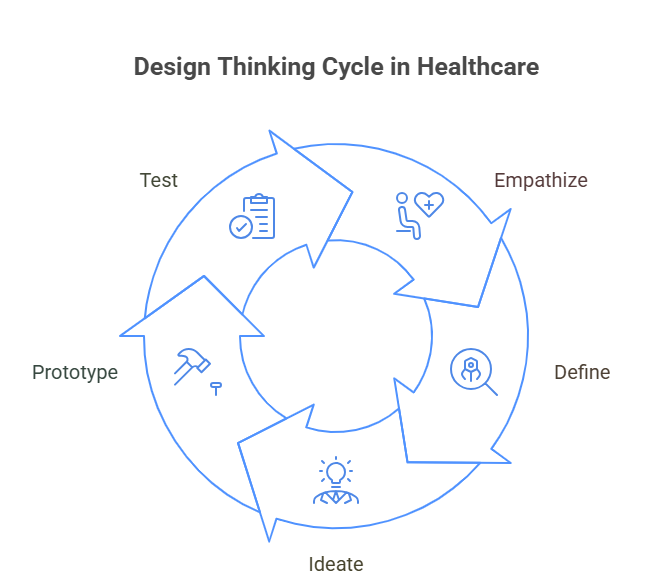
Design thinking is structured around five core principles, ensuring our solutions are truly patient-focused. It's a cyclical journey:
- Empathize: We start by deeply understanding the patient’s experiences and emotions. Imagine if we empathized with chronic patients to reveal pain points often overlooked?.
- Define: We use those insights to clearly frame the specific healthcare problems we need to solve.
- Ideate: We generate diverse, creative ideas without constraints.
- Prototype: We build quick, low-fidelity models to explore potential solutions.
- Test: We gather user feedback to refine and improve.
Applying these design thinking principles ensures that our medical ux is practical and responsive to patients’ evolving needs.
The Role of UX Design in Enhancing Healthcare Technology
When we talk about making healthcare technology work, UX design is the secret sauce. Good UX design focuses on simplicity and intuitive interfaces, helping both patients and providers navigate complex systems with ease.
The integration of UX design with a smart healthcare system accelerates technology adoption by medical staff and increases patient engagement through clear, user-friendly portals. We don’t want clunky systems that cause frustration; we want seamless virtual visits enabled by well-designed telemedicine apps. Prioritizing UX design ensures that our tools empower users and enhance patient outcomes.
What is Medical UX and Why It Matters
Medical UX focuses specifically on designing digital health technologies like apps, electronic health records, or devices to be easy, efficient, and accessible for everyone: patients, providers, and caregivers.
Why does medical ux matter so much? Because it directly impacts the patient experience. It's about reducing errors, streamlining workflows, and ensuring that diverse users can access understandable information. Ultimately, effective medical ux builds confidence and trust in healthcare technology, making care more patient-centered and inclusive for us all.
How Design Thinking Improves Patient Experience and Builds Trust
Design thinking improves the patient experience by prioritizing clear, accessible communication and involving patients in the design process itself. This user-centered approach is how we build genuine trust in digital health.
For example, when Tucson Medical Center used a user-centered approach for their digital front door, I've seen how streamlining access and personalizing care pathways enhanced patient engagement. By focusing on genuine patient challenges, we create healthcare experiences that feel more reliable and trustworthy, strengthening patient-provider relationships.
Enhancing Patient Engagement and Satisfaction Through Design
How can we truly boost patient experience and satisfaction in healthtech applications? We start by co-creating solutions with patients, capturing their real experiences, and simplifying interfaces for easier navigation. Patient portals, for instance, are far more effective when designed with clear visuals and tailored content, encouraging active participation in care. This human-centered approach ensures patients feel valued and understood.
Building Trust in Healthcare Technology with User-Centered Design
Trust in healthcare technology isn't given; it's earned. User-centered design earns that trust by involving users throughout development, ensuring solutions are intuitive and empathetic. Iterative testing allows us to constantly address feedback and reduce anxiety.
In my experience, using empathetic AI chatbots that communicate like real clinicians, for instance, can increase patient comfort and confidence. This not only enhances usability but also strengthens the patient-provider relationship, making technology a trusted partner.
Real-World Examples of Design Thinking in Healthtech Innovations
Design thinking isn't just theory; it's driving massive healthtech changes.
- Kaiser Permanente used co-creation workshops to redesign their patient portal, resulting in clearer navigation and personalized insights.
- Omada Health used iterative prototyping to build a digital program for chronic disease management with user-friendly interfaces.
- Philips applied design thinking to create a streamlined medication delivery system, enhancing patient comfort.
- We can also look at companies like NirogGyan, which specializes in transforming complex diagnostic data into visually intuitive and actionable health insights (a key result of user-centered design). Their "Smart Report" system is a smart healthcare system that helps patients understand confusing lab results by using plain language and clear visualizations, turning cryptic data into comprehension, which is essential for building trust.
These examples demonstrate how human-centered design leads to solutions that improve usability, engagement, and trust in healthcare technology.
Challenges and Solutions in Implementing Design Thinking in Healthcare
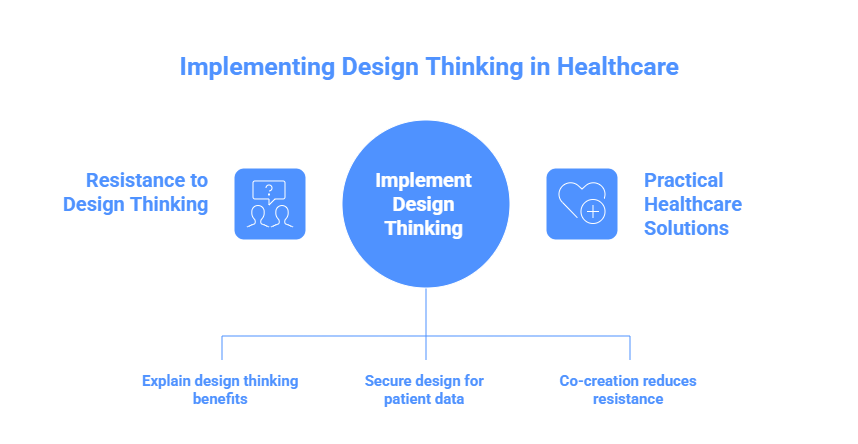
Let’s be honest: Implementing design thinking in healthcare technology won’t be easy. There's often resistance to change, complex regulations, and genuine concerns about data privacy. Diverse user needs and coordination across multiple stakeholders add to the difficulty.
However, we can overcome these obstacles:
- Educating teams on the benefits of design thinking is crucial.
- We must prioritize patient privacy through secure design.
- Engaging multidisciplinary stakeholders (clinicians and patients) early in co-creation reduces resistance and ensures practical solutions.
Addressing these barriers with empathy and collaboration enables healthcare organizations to harness design thinking's full potential.
The Future of Design Thinking in Healthtech: Trends and Opportunities
The future of design thinking in healthtech is exciting, promising deeper personalization and collaboration. Emerging digital health trends include:
- AI-powered personalization to enhance tailored care.
- Empathy-driven design to improve patient-provider connections.
- The expansion of telemedicine and wearable devices for continuous monitoring.
By embracing these shifts and increasing design literacy, healthtech can become more adaptive, efficient, and truly human-centered, transforming how care is delivered and experienced for us all.
Conclusion: The Transformative Power of Design Thinking in Healthtech
Design thinking isn't just a methodology; it's a foundational mindset that places patients at the heart of healthtech innovation. This human-centered approach fosters empathy, collaboration, and continuous refinement, leading to technologies that truly address patient needs.
The results speak for themselves: enhanced personalization, increased patient engagement and satisfaction, and streamlined workflows benefitting providers. By making this crucial pivot, we can overcome traditional barriers, adapt to evolving patient expectations, and deliver care that feels both more human and more effective. Design thinking is absolutely essential for building lasting trust in the future of patient-centered healthcare technology.
Frequently asked questions (FAQs)
1. How does design thinking improve patient experience in healthtech?
Design thinking enhances patient experience by focusing on empathy, user feedback, and real-world needs. It simplifies digital tools, reduces frustration, improves accessibility, and ensures that platforms like telehealth apps or patient portals are intuitive and emotionally supportive.
2. Why is UX design important in healthcare technology?
UX design ensures that healthtech tools are easy to use for patients, doctors, and caregivers. By improving navigation, clarity, and interface simplicity, UX reduces errors, speeds up adoption, and increases trust in digital healthcare solutions.
3. What is medical UX, and how is it different from general UX design?
Medical UX focuses specifically on designing digital tools for clinical use such as EHR systems, remote monitoring apps, wearable devices, and hospital platforms. It prioritizes safety, clarity, compliance, accessibility, and ease of use across patients, providers, and caregivers.
4. How does user-centered design build trust in healthcare technology?
User-centered design involves patients and providers in the development process, ensuring solutions match real needs. By incorporating feedback, simplifying interactions, and focusing on transparency, it builds confidence, reduces anxiety, and increases adoption.
5. What are some real-world examples of design thinking in healthtech?
Examples include redesigning patient portals to improve navigation, developing user-friendly telemedicine apps, AI chatbots with empathetic communication, and co-designed chronic care platforms like Omada Health and Kaiser Permanente’s digital tools. These improve engagement, trust, and treatment outcomes.
“Know What Your Blood Tests Really Say - Instantly Explained. NirogGyan makes medical jargon understandable so you can take control of your health decisions.”