Author: Joyneel Acharya
Last Updated on: 15th September 2025
Artificial intelligence (AI) and machine learning (ML) are revolutionising healthcare by enabling data-driven, personalized care that was once the domain of science fiction. AI refers to computer systems engineered to perform tasks that typically require human intelligence, such as reasoning and complex pattern recognition. Machine learning, a critical subset of AI, uses sophisticated algorithms to learn directly from large datasets, like electronic health records and medical images, to predict outcomes and assist in critical clinical decisions. The global adoption trend shows a significant uptick in AI integration, with healthcare providers moving from pilot projects to full-scale implementation to manage escalating operational demands and enhance patient care quality.
Key Takeaways
- AI enables earlier disease detection and more precise diagnoses by analyzing vast patient data, leading to timely interventions and improved patient outcomes.
- Key AI benefits in healthcare include early identification of high-risk patients, personalized treatments, continuous monitoring, and reduced diagnostic errors.
- Machine learning, natural language processing, and computer vision are core AI technologies enhancing predictive accuracy, clinical documentation, and imaging analysis.
- AI-powered tools assist clinicians by forecasting disease progression and automating workflow tasks, supporting safer and more efficient care delivery.
- Integration of AI into clinical workflows not only increases survival rates but also reduces healthcare costs by minimizing unnecessary procedures.
Understanding Artificial Intelligence and Machine Learning in Healthcare
Key distinctions:
| Aspect | Artificial Intelligence (AI) | Machine Learning (ML) |
| Definition | Broad field of simulating human intelligence. | Techniques that enable systems to learn from data. |
| Role in Healthcare | Supports diagnostics, workflow automation. | Analyses data patterns to predict risks and outcomes. |
| Example | AI-powered diagnostic tools. | Predictive models for patient monitoring. |
For instance, ML models can analyse patient data to forecast disease progression, helping clinicians tailor treatments proactively. The data tells a compelling story: when ML is applied to longitudinal patient data, we can anticipate adverse events with up to 76% accuracy, allowing for pre-emptive clinical action. Understanding these technologies is essential for integrating AI safely and effectively into modern healthcare.
The Fundamentals of AI Technologies in Medicine

AI technologies in medicine primarily include machine learning, natural language processing, and computer vision, each enhancing healthcare in unique and powerful ways. Machine learning shows us that by analysing thousands of clinical data points, systems can achieve superior predictive accuracy for disease risks and treatment responses. Natural language processing (NLP) extracts valuable insights from unstructured medical records, aiding in clinical documentation and complex decision-making processes. Computer vision powers medical imaging analysis, detecting subtle abnormalities in X-rays, MRIs, and pathology slides with a speed and precision that can surpass traditional methods.
Understanding these fundamentals helps healthcare providers adopt powerful AI tools effectively while navigating the critical challenges of safety and clinical integration.
Key AI Applications Transforming Patient Care
AI is revolutionising patient care through highly targeted applications that enhance diagnosis, treatment, and continuous monitoring. The trend is clear: healthcare is shifting from a reactive to a proactive model, powered by AI-driven foresight. Key AI tools include:
- Predictive Analytics: AI models analyse vast streams of patient data to identify individuals at high risk of complications, enabling early, life-saving interventions.
- Medical Imaging: Advanced computer vision algorithms detect minute abnormalities in X-rays and MRIs faster and more accurately than traditional methods, often identifying pathologies that are difficult for the human eye to discern.
- Virtual Health Assistants: AI-powered chatbots and virtual assistants support patient engagement by providing 24/7 symptom assessment, personalised education, and crucial medication reminders.
- Remote Monitoring: Wearable devices leverage AI to continuously track vital signs, alerting clinicians to subtle but significant changes in real time, which is particularly vital for managing chronic conditions.
These applications improve clinical decision-making, significantly reduce diagnostic errors, and enable truly personalised care plans, ultimately enhancing patient safety and outcomes.
AI-Powered Diagnostics and Medical Imaging
AI-powered diagnostics are revolutionising medical imaging by dramatically increasing accuracy and accelerating disease detection. Our AI algorithms reveal patterns in radiological scans that correspond to early-stage disease, patterns that are often invisible during initial human review. These advanced algorithms analyse X-rays, CT scans, MRIs, and ultrasounds to identify abnormalities such as tumours, fractures, or infections that might otherwise be missed. This capability reduces diagnostic variability and empowers clinicians to make more consistent, data-driven decisions.
Key advantages of AI in medical imaging include:
- Faster interpretation of complex images.
- Early detection of diseases like lung cancer and diabetic retinopathy.
- Enhanced image quality through advanced noise reduction and reconstruction.
- Support for remote diagnostics, improving healthcare access in underserved areas.
For example, AI tools integrated into echocardiography now enable real-time cardiac assessments, profoundly improving both diagnostic accuracy and accessibility for patients globally.
Virtual Assistants and AI Chatbots in Patient Interaction
Virtual assistants and AI chatbots are transforming patient interaction by providing instant, personalised, and empathetic support around the clock. These AI-powered tools streamline crucial tasks like appointment scheduling, medication reminders, and initial symptom assessment, significantly reducing administrative burdens and enhancing patient engagement. For example, sophisticated chatbots can guide patients through complex pre-operative instructions, answer common post-discharge questions, and connect them seamlessly to healthcare providers when human intervention is needed.
Key benefits include:
- 24/7 availability for patient inquiries and support.
- Personalised health coaching and medication management.
- Integration with electronic health records for seamless care coordination.
By automating routine tasks, virtual assistants free up invaluable clinical staff to focus on more complex patient care, driving improvements in both operational efficiency and patient satisfaction.
AI in Cardiology and Cardiovascular Health
AI is revolutionising cardiology by enabling earlier detection, more precise diagnosis, and highly personalized treatment of cardiovascular diseases. Machine learning shows us that by analysing complex patterns in cardiac imaging, such as echocardiograms and CT scans, algorithms can detect conditions like atrial fibrillation, heart failure, and coronary artery disease with greater accuracy and speed than traditional methods. AI also excels at predicting patient-specific risks by integrating clinical data, lifestyle factors, and calcium scores, enabling clinicians to craft tailored preventive care strategies.
A prime example of this innovation is NirogGyan's Heart Risk Calculator, an AI-powered tool designed to assess cardiovascular risk with high precision, empowering both patients and clinicians with actionable insights for preventive health.
Key AI applications in cardiology include:
- Automated interpretation of complex cardiac imaging.
- Predictive models for arrhythmia and myocardial infarction.
- Enhanced monitoring through intelligent, AI-driven in-hospital alarm systems.
These tools improve diagnostic precision and optimize care pathways, ultimately reducing adverse cardiac events and preventable hospitalizations.
AI Applications in Oncology and Radiology
AI is significantly advancing oncology and radiology by improving cancer detection, diagnosis, and treatment planning with unprecedented precision. In oncology, AI algorithms analyse medical images and pathology slides to detect tumours at their earliest stages and predict patient outcomes by integrating molecular and histopathological data. For instance, AI models can now identify invasive breast cancer risks from mammograms with remarkable accuracy and predict survival rates from digital pathology, enabling highly personalized treatment strategies.
In radiology, AI enhances image interpretation by rapidly spotting abnormalities in CT scans, MRIs, and X-rays, which reduces diagnostic errors and accelerates clinical workflows. These tools intelligently prioritise high-risk cases, helping radiologists focus their expertise where it is most urgently needed.
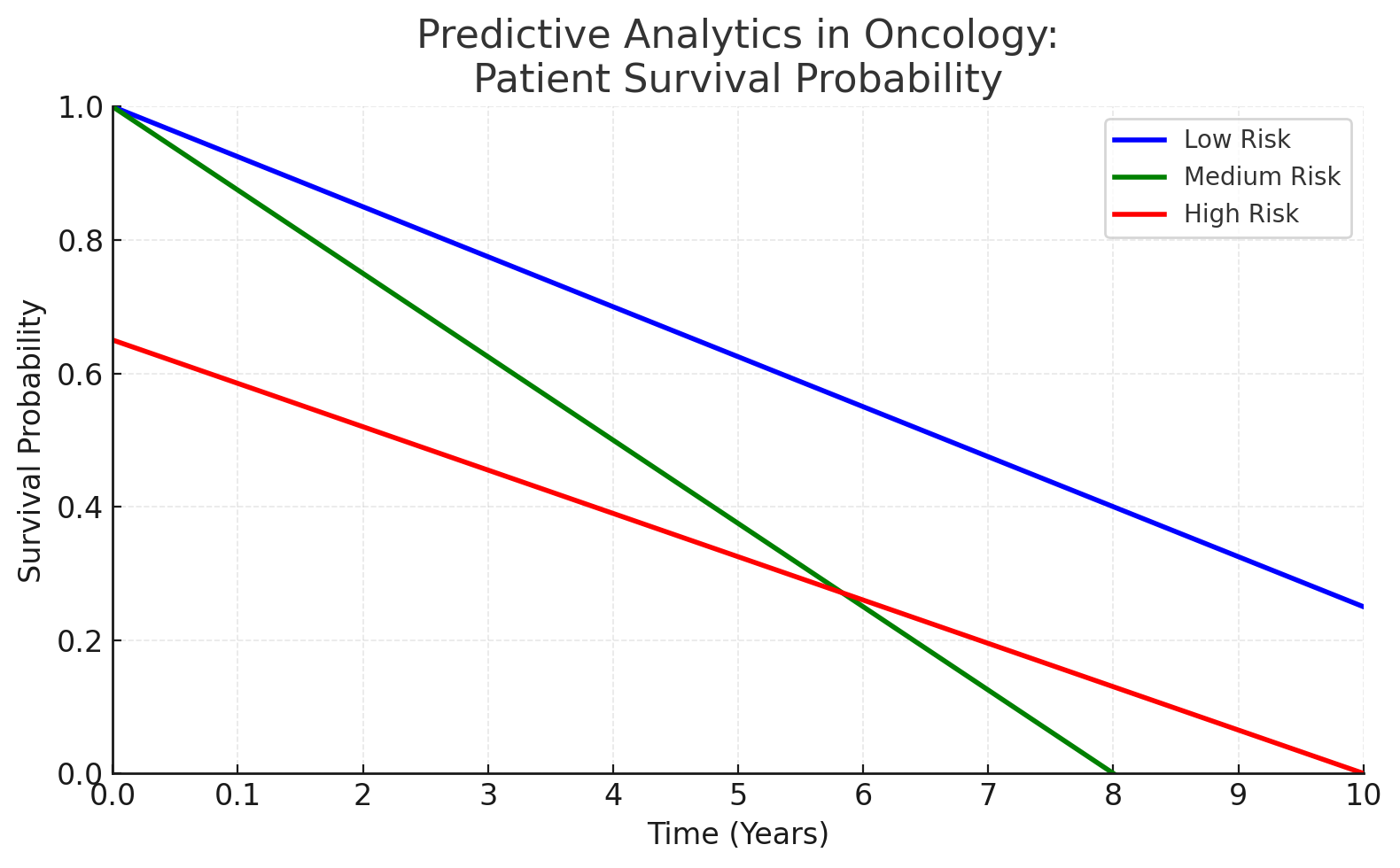
Key AI benefits in oncology and radiology include:
- Early and accurate tumour detection.
- Integration of imaging and molecular data for precise prognosis.
- Faster image analysis and reduced diagnostic delays.
- Personalized treatment recommendations.
AI’s Role in Digital Health and Remote Patient Monitoring
AI is a game-changer in digital health, enabling continuous, real-time remote patient monitoring (RPM) that enhances care quality and clinical responsiveness. By analysing data streams from wearable devices and in-home sensors, our AI algorithms reveal patterns that signify early signs of health deterioration, allowing for timely interventions before conditions escalate. This proactive approach is especially valuable for managing chronic diseases like heart failure and diabetes, where continuous oversight is critical.
An innovative application in this space is NirogGyan's AI Video Reports, which translate complex diagnostic data into easy-to-understand video summaries, significantly improving patient health literacy and engagement. This transforms a simple data point into a meaningful, actionable conversation.
Key benefits of AI in RPM include:
- Early detection of potential health emergencies.
- Personalized care plans based on real-time data.
- Reduced hospital readmissions through continuous monitoring.
- Enhanced patient engagement with smart alerts and virtual assistants.
AI-powered platforms can analyse trends in vital signs and alert clinicians to subtle changes, improving patient outcomes while reducing the clinical workload.
Challenges and Ethical Considerations in AI Healthcare Implementation
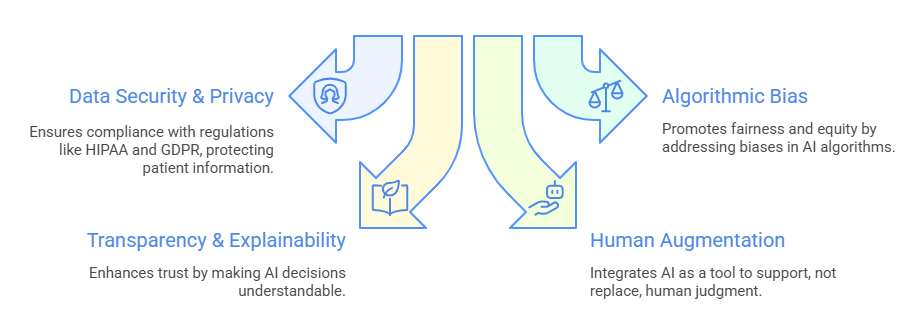
Despite its immense potential, implementing AI in healthcare faces significant challenges, including data privacy, algorithmic bias, and complex ethical considerations that must be carefully managed. Protecting sensitive patient data is paramount, as AI systems require access to vast health information, raising the risks of breaches and misuse. Furthermore, AI algorithms can inadvertently perpetuate or even amplify biases present in their training data, potentially leading to unequal care or misdiagnoses for underrepresented demographic groups.
Key challenges and ethical considerations include:
- Ensuring robust data security and patient privacy compliance (e.g., HIPAA, GDPR).
- Proactively addressing algorithmic bias to promote fairness and equity in care.
- Maintaining transparency and explainability in AI-driven decision-making.
- Integrating AI responsibly as a tool to augment, not replace, human clinical judgment.
Healthcare organisations must adopt continuous monitoring and robust ethical frameworks to build trust and safeguard patient welfare while leveraging AI’s transformative benefits.
Data Privacy and Security Concerns
Data privacy and security are critical challenges in deploying AI in healthcare, requiring robust, multi-layered safeguards to protect sensitive patient information. AI systems are data-hungry, often processing vast datasets of protected health information (PHI), which makes them prime targets for sophisticated cyber threats. Ensuring compliance with regulations like HIPAA and GDPR is a baseline requirement, but these laws don’t always fully cover the nuances of anonymised data used in AI model training, creating potential gaps in protection.
Key strategies to mitigate these risks include:
- Implementing strict access controls, data masking, and encryption at all levels.
- Conducting continuous, rigorous security audits and proactive monitoring.
- Applying AI-driven threat detection systems to identify vulnerabilities in real time.
- Ensuring complete transparency and ethical data governance to maintain patient trust.
Adopting a "zero-trust" security model helps healthcare organisations minimise breach risks while safely leveraging AI’s full potential.
Ethical Implications and Bias in AI Algorithms
AI algorithms in healthcare can unintentionally perpetuate biases, leading to unequal treatment and disparate outcomes among diverse patient groups. The data tells a compelling story of caution: these biases often stem from unrepresentative training data or a lack of diversity in AI development teams, disproportionately affecting underrepresented populations. For example, an algorithm trained predominantly on data from one demographic may misdiagnose or entirely overlook critical conditions in others, reinforcing existing healthcare disparities.
To mitigate these profound risks, healthcare organisations must:
- Curate and use diverse, representative datasets for model training and validation.
- Ensure transparency and explainability in AI decision-making processes.
- Continuously monitor AI outputs for biased patterns post-deployment.
- Involve multidisciplinary teams, including ethicists and community representatives, in the AI lifecycle.
By proactively addressing bias, AI can become a powerful tool for promoting equitable care rather than a mechanism that reinforces historical inequities.
Integration with Existing Healthcare Systems
Seamless integration of AI with existing healthcare systems is crucial for maximising its impact on patient care and operational efficiency. AI tools must align perfectly with current electronic health records (EHRs), clinical workflows, and data standards to avoid disruption and ensure smooth, intuitive adoption by clinicians. Interoperability challenges frequently arise due to disparate legacy platforms and inconsistent data formats, making deep integration a complex but essential engineering feat.
Key factors for successful AI integration include:
- Ensuring deep compatibility and bidirectional data flow with EHR systems.
- Prioritising data privacy and security compliance at every integration point.
- Training clinical staff not just to use AI tools, but to trust and collaborate with them effectively.
- Establishing clear, clinician-led protocols for validating AI-generated outputs.
For example, Cleveland Clinic’s AI-driven patient flow optimization reduced wait times by 10% precisely because it integrated smoothly with their existing scheduling systems. Addressing these elements helps healthcare organisations harness AI’s benefits without compromising care quality or clinical efficiency.
Conclusion: Unlocking the Potential of AI to Improve Patient Outcomes
AI’s transformative power lies in its ability to enhance diagnostic accuracy, personalize care at scale, and streamline healthcare delivery, ultimately leading to profoundly improved patient outcomes. By integrating advanced AI technologies like machine learning and computer vision directly into clinical workflows, healthcare providers can detect diseases earlier, tailor treatments more effectively, and monitor patients continuously with unparalleled precision.
To fully unlock AI’s potential, healthcare systems should strategically focus on:
- Investing in robust data infrastructure and championing interoperability standards.
- Ensuring ethical AI use by actively working to minimise algorithmic bias.
- Training clinicians to collaborate effectively with AI as a trusted partner.
- Prioritising patient privacy and maintaining transparent communication about how AI is used.
AI-driven predictive analytics can identify high-risk patients long before complications arise, enabling timely interventions that save lives and reduce healthcare costs. By embracing AI thoughtfully and strategically, we can empower clinicians and truly transform patient care for the better.
Frequently asked questions (FAQs)
1. How is AI improving patient outcomes in healthcare?
AI improves patient outcomes by enabling earlier disease detection, reducing diagnostic errors, and personalising treatments. Tools like predictive analytics, medical imaging analysis, and real-time remote monitoring allow clinicians to intervene faster and more precisely, which improves survival rates and reduces the need for unnecessary procedures.
2. What are the main applications of AI in modern healthcare?
Key AI applications include predictive analytics for patient risk assessment, computer vision for advanced medical imaging, natural language processing for clinical documentation, and AI-powered chatbots for enhanced patient interaction. These solutions streamline clinical workflows, enhance diagnostic accuracy, and dramatically improve patient engagement.
3. How does machine learning help in personalized treatment?
Machine learning analyses complex, patient-specific data, such as genetics, clinical history, and real-time health metrics to recommend highly personalized treatment plans. It can predict individual responses to drugs, optimise dosages, and identify high-risk patients, making care significantly safer and more effective.
4. What role does AI play in medical imaging and diagnostics?
AI enhances diagnostics by analysing medical images like X-rays, MRIs, CT scans, and pathology slides faster and often more accurately than humans alone. It is exceptionally skilled at detecting the earliest signs of diseases like cancer or heart conditions, which reduces diagnostic delays and improves treatment outcomes.
5. What challenges exist in implementing AI in healthcare?
Key challenges include ensuring absolute data privacy, rigorously addressing and mitigating algorithmic bias, and seamlessly integrating AI tools with existing electronic health records (EHRs). Critical ethical concerns, such as transparency in decision-making and ensuring equitable care, must also be managed to build patient trust and maximise AI’s benefits safely and responsibly.
"Decode your lab tests in seconds with NirogGyan - get simple, accurate health reports today!"