Author: Joyneel Acharya
Last Updated On: 5th December 2025
Ever wonder why sometimes knowing what you should do isn't enough to actually do it? It's a fundamental challenge in healthcare: getting patients to consistently follow through on medical advice. But what if we could make the healthy choice the easy choice? That's where the magic of behavioral science comes in.
It isn't about coercion; it's about giving patients subtle, well-timed prompts or 'nudges' that dramatically enhance patient engagement and lead to superior patient outcomes. This approach uses small, personalized health nudges and health reminders to cut through confusion and reduce decision fatigue. We’re going to dive into how these simple, yet powerful, interventions are changing the game.
Key Takeaways
- Behavioral science leverages small, well-timed nudges to enhance patient engagement and adherence, reducing decision fatigue and promoting healthier choices without overwhelming patients.
- Personalized reminders and prompts improve medication adherence and appointment attendance, leading to better chronic disease management and overall health outcomes.
- Nudges work by shaping decision environments using cognitive biases like default effects and loss aversion, engaging motivational pathways to reinforce positive habits sustainably.
- Clinical interventions informed by behavioral science include personalized reminders, behavioral counseling, digital tools capturing real-time data, multi-channel communication, and habit formation programs, all designed to address barriers and boost motivation.
- Digital health reminders delivered via SMS, apps, or patient portals increase patient autonomy, convenience, and proactive care management, with interactive two-way communication proving especially effective.
- Implementing nudges within clinical workflows aligns healthcare delivery with natural human behavior, easing provider workload while fostering sustained patient satisfaction and improved outcomes.
Understanding Behavioral Science and Its Role in Healthcare
Let’s face it: our brains are complicated! Behavioral science is the dedicated study of how people make health decisions, and, critically, why patients sometimes fail to act on medical advice.
This field, closely linked to behavioral biology, helps us understand the underlying cognitive processes and social influences that drive action or inaction. I’ve seen firsthand how understanding a patient’s natural decision-making patterns helps us craft effective health interventions. It’s about tailoring solutions to patient motivations, rather than just delivering generic advice. This insight enables us to identify barriers to adherence and enhance engagement in preventive care. Imagine if every piece of advice perfectly aligned with how your brain already works it’s powerful, isn't it?
The Science Behind Health Nudges and Prompts
So, what exactly is a nudge?
Think of health nudges as friendly, subtle environmental shifts that gently guide us toward healthier choices without restricting our freedom. It's smart, right? These interventions capitalize on fascinating aspects of human psychology, known as cognitive biases, like default effects or loss aversion.
Neuroscientific research actually shows these prompts engage our motivational and reward pathways, which is critical for making positive habits stick over time. Whether it’s a simple text health reminder or a planning prompt, these tools informed by behavioral biology reduce forgetfulness and boost accountability, helping us better manage chronic diseases. Effective nudges are low-cost, non-intrusive, and they absolutely respect patient autonomy, increasing the likelihood of sustained behavior change.
Types of Clinical Interventions Leveraging Behavioral Science
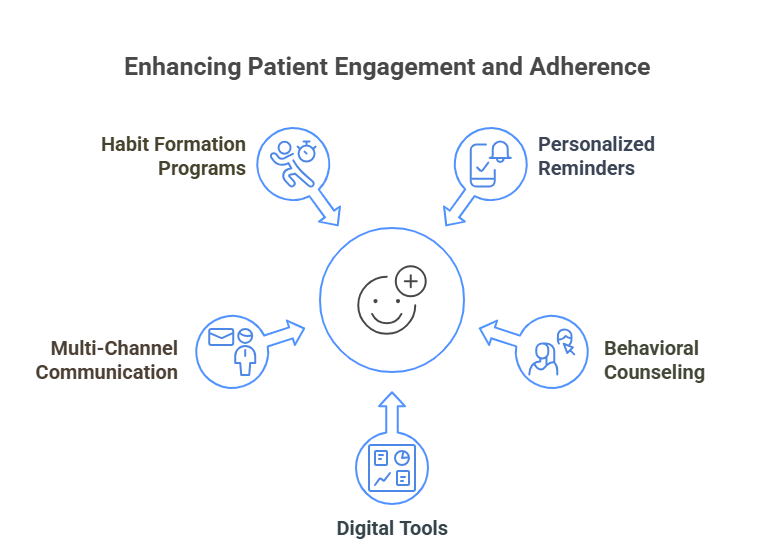
When we talk about putting behavioral science into practice, we see several exciting types of clinical interventions. These are designed specifically to boost patient engagement and adherence. We aren't just throwing pamphlets at people anymore!
Key examples of these health interventions include:
- Personalized health reminders and prompts to improve medication adherence.
- Behavioral counseling that integrates motivational interviewing and goal-setting.
- Digital tools, like ePRO platforms, that capture real-time patient data for tailored feedback.
- Multi-channel communication strategies combining phone, mail, and in-person support.
- Habit formation programs encourage sustainable lifestyle changes.
For example, smoking cessation programs often blend counseling with timely nudges to increase quit rates. These interventions are effective because they directly address cognitive biases and barriers, making health actions easier and more motivating within clinical workflows.
Digital Health Reminders and Their Effectiveness
Who doesn’t appreciate a timely ping on their phone? Digital health reminders are truly essential for sustained patient engagement. Delivered via text, apps, or patient portals, they provide timely, personalized prompts that drastically reduce forgetfulness and empower patients to proactively manage their care.
In my experience, interactive reminders with two-way communication are the real difference-makers; studies show they outperform generic alerts every time in improving appointment attendance and medication adherence. This isn't just about efficiency; it’s about improving patient satisfaction. Patients feel supported and in control because they gain enhanced convenience, better accessibility, and increased autonomy. Think about it: a simple SMS reminder can reduce costly no-show rates in hospitals, demonstrating measurable improvements.
Visualization tools that convert clinical data
Explore Health Data VisualizationIn-Person and Environmental Nudges in Clinical Settings
It's not all about technology, though. Sometimes, the simplest changes in the physical environment or communication strategy have the biggest impact on patient outcomes.
In-person and environmental nudges subtly shape patient behavior right in the clinic. Consider default appointment scheduling, strategically placed signage promoting hand hygiene, or those gentle clinician prompts encouraging vaccinations. We've seen that when clinicians use "active choice prompts," preventive screenings increase. These health nudges and clinical interventions leverage convenience and social norms to guide healthier choices without coercion. When we integrate these visual reminders and staff-led motivational prompts seamlessly into workflows, we improve patient outcomes effectively.
How Timely Health Prompts Improve Patient Engagement and Satisfaction
Timing is everything, isn't it? Timely health prompts are powerful because they deliver relevant information exactly when a patient needs it, eliminating mental load and driving patient engagement.
These health nudges don't just reduce forgetfulness; they genuinely empower patients to take control of their care. We know this leads to:
- Increased appointment attendance.
- Better medication compliance.
- Enhanced patient-provider communication.
For instance, a personalized SMS reminder sent just before an appointment or medication time helps patients stay on track without feeling bombarded. This convenience fosters trust and satisfaction, which is essential for improving patient satisfaction and achieving better overall health outcomes. We’re building a truly collaborative care environment.
Evidence and Case Studies Demonstrating Improved Patient Outcomes
Do these subtle strategies actually work? Absolutely. The evidence supporting behavioral science in improving patient outcomes is robust and consistent across diverse settings.
Let’s look at some real-world wins:
- The Penn Medicine Nudge Unit successfully used active choice prompts to boost influenza vaccination rates.
- In chronic care, personalized health reminders significantly improved statin adherence.
- A multi-center study showed that AI-powered health interventions dramatically enhanced medication adherence for cardiovascular patients, reducing missed doses and subsequent hospitalizations.
The data confirms it: we're seeing higher medication adherence rates, increased uptake of preventive screening, and reduced no-show and readmission rates. Integrating these principles into clinical workflows yields better patient outcomes without necessarily adding burden to our dedicated clinicians.
Practical Strategies for Implementing Behavioral Nudges in Healthcare
Okay, so how do we start utilizing this behavioral science effectively?
Effective health interventions must be personalized, simple, and integrated into existing workflows. Start by identifying the key behaviors you want to target, such as appointment attendance or medication adherence. Then, let's make the right choice the default! Using default options and active choice prompts within electronic health records streamlines clinician decision-making. And don't forget those timely, personalized health reminders via texts or portals to combat forgetfulness.
Crucially, we must engage patients with clear, jargon-free communication and positive reinforcement. Are we asking for feedback regularly? Because we should be. It’s the only way to refine our health nudges and ensure they remain relevant and non-intrusive, fostering sustained patient engagement.
Healthcare organizations are increasingly using intelligent reporting platforms.
Discover Lab Reporting SolutionsOvercoming Common Challenges in Behavioral Interventions
Of course, nothing in healthcare is challenge-free. When implementing these clinical interventions, we often encounter hurdles like patient skepticism, limited access to services, and fragmented care systems.
So, how do we push past these barriers and maintain high patient engagement?
We must utilize modern solutions! Telehealth and mobile apps are brilliant for increasing accessibility, particularly for rural areas. It’s also vital that we personalize our communication to build trust and motivation patients won't trust generic blasts. We’ve also found that embedding interventions into existing clinical workflows significantly reduces provider and patient resistance. Doesn't it just make sense to leverage real-time data to ensure our health reminders and prompts are relevant and timely? Proactive strategies, like combining telehealth with tailored reminders, truly bridge care gaps, ensuring our interventions are practical, scalable, and patient-centered.
Future Directions: The Evolving Role of Behavioral Science in Healthcare
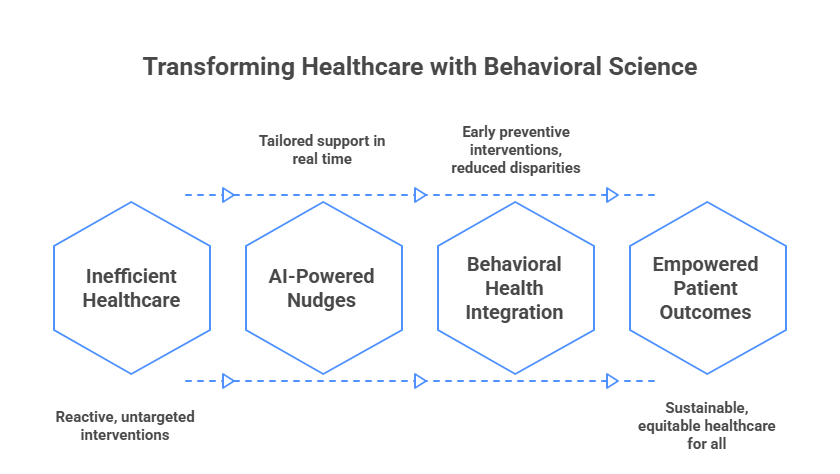
Where is this journey taking us next? The role of behavioral science in healthcare is evolving at lightning speed.
The future emphasizes integrating cutting-edge technology like AI-powered health nudges with clinical judgment to tailor support in real time. This targeted approach will dramatically improve chronic disease management and mental health care. Imagine if an AI could analyze your data and send you the perfect nudge at the perfect moment. Furthermore, we’re seeing a major push for broader behavioral health integration into primary care settings, which promises earlier preventive interventions and reduced health disparities. These innovations are all designed to empower patients, reduce the administrative burden on providers, and foster sustainable, equitable patient outcomes for all of us.
Conclusion: Harnessing the Power of Behavioral Science to Enhance Patient Outcomes
Ultimately, behavioral science isn't just a niche strategy; it’s a transformative framework that aligns healthcare delivery with real human behavior.
By thoughtfully integrating personalized health nudges, timely prompts, and intelligent environment design, healthcare systems can reduce common barriers like decision fatigue and plain old forgetfulness. This leads to higher medication adherence, better preventive care, and, critically, increased patient satisfaction. Our success depends on key strategies:
- Designing health interventions that fit natural behavior.
- Leveraging technology for personalized health reminders.
- Embedding health nudges seamlessly into clinical workflows.
When we embrace these principles, we empower both patients and providers, fostering sustainable health improvements and more efficient, human-centric care. What are we waiting for?
FAQs:
1. What are health nudges and how do they improve patient outcomes?
Health nudges are small, timely interventions that use behavioral science to guide patients toward healthier choices. They improve outcomes by enhancing medication adherence, appointment attendance, and chronic disease management.
2. How do digital health reminders improve patient engagement?
Digital health reminders, delivered via SMS or apps, provide personalized prompts that reduce forgetfulness and improve patient engagement, leading to better medication adherence and appointment attendance.
3. What are the key benefits of integrating behavioral science into healthcare?
Integrating behavioral science improves patient adherence, enhances preventive care, and fosters better chronic disease management, leading to higher patient satisfaction and improved health outcomes.
4. How can in-person and environmental nudges impact patient behavior?
In-person and environmental nudges, such as visible medication schedules and clinician prompts, subtly guide patient behavior, encouraging healthier choices like vaccinations and preventive screenings.
5. What challenges might healthcare providers face when implementing behavioral nudges?
Challenges include patient skepticism and fragmented healthcare systems, but these can be overcome with personalized communication, telehealth solutions, and integrating nudges into clinical workflows.
"Unlock accurate health insights today with NirogGyan's smart lab reports. Get personalized diagnostics and take control of your health journey. Explore our advanced health-tech solutions now!"