Author: Joyneel Acharya
Last Updated On: 20th September 2025
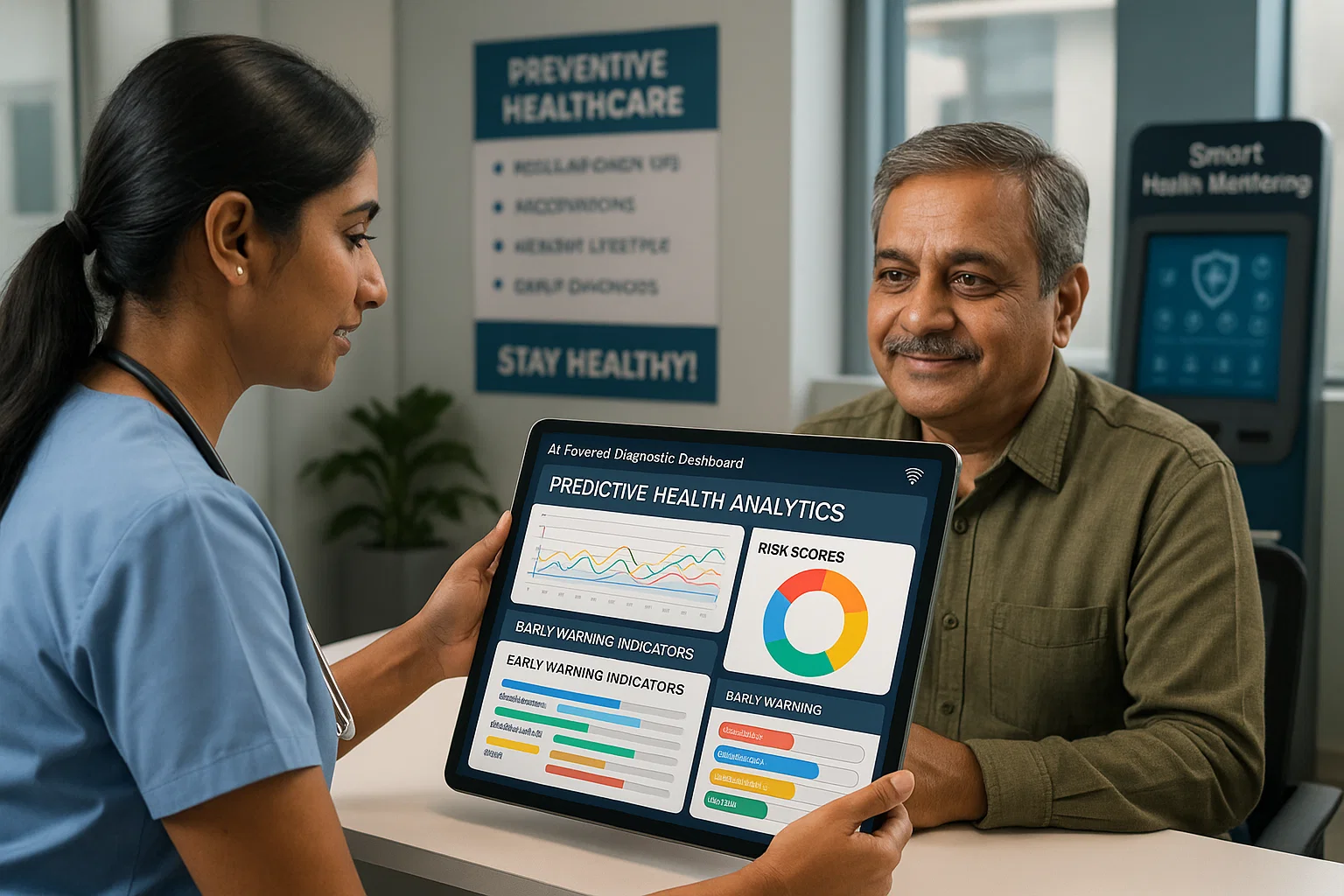
Imagine this scenario: rather than finding out about a serious health issue only after symptoms become debilitating, your doctor gets an alert from your smartwatch about concerning patterns three months in advance. This isn't a glimpse into a distant future; it's the reality of predictive diagnostics, and it's fundamentally changing healthcare.
We are finally shifting away from the "wait and see" model that has defined medicine for generations. Today's most forward-thinking healthcare leaders are harnessing data-driven insights to identify problems long before they escalate into crises.
Key Takeaways
- Predictive diagnostics shifts healthcare from treatment to prevention, using AI and continuous monitoring to find risks before symptoms show up.
- Integrating EHRs, wearables, and AI creates powerful predictive models that personalise care and improve health outcomes.
- Early intervention based on predictive insights can prevent expensive emergency treatments and improve a patient's long-term health.
- Implementation challenges like data privacy and system integration need strategic planning but are surmountable.
- The future holds even more advanced capabilities, including multi-omics integration and medical digital twin technology.
Understanding Predictive Diagnostics: Definition and Importance
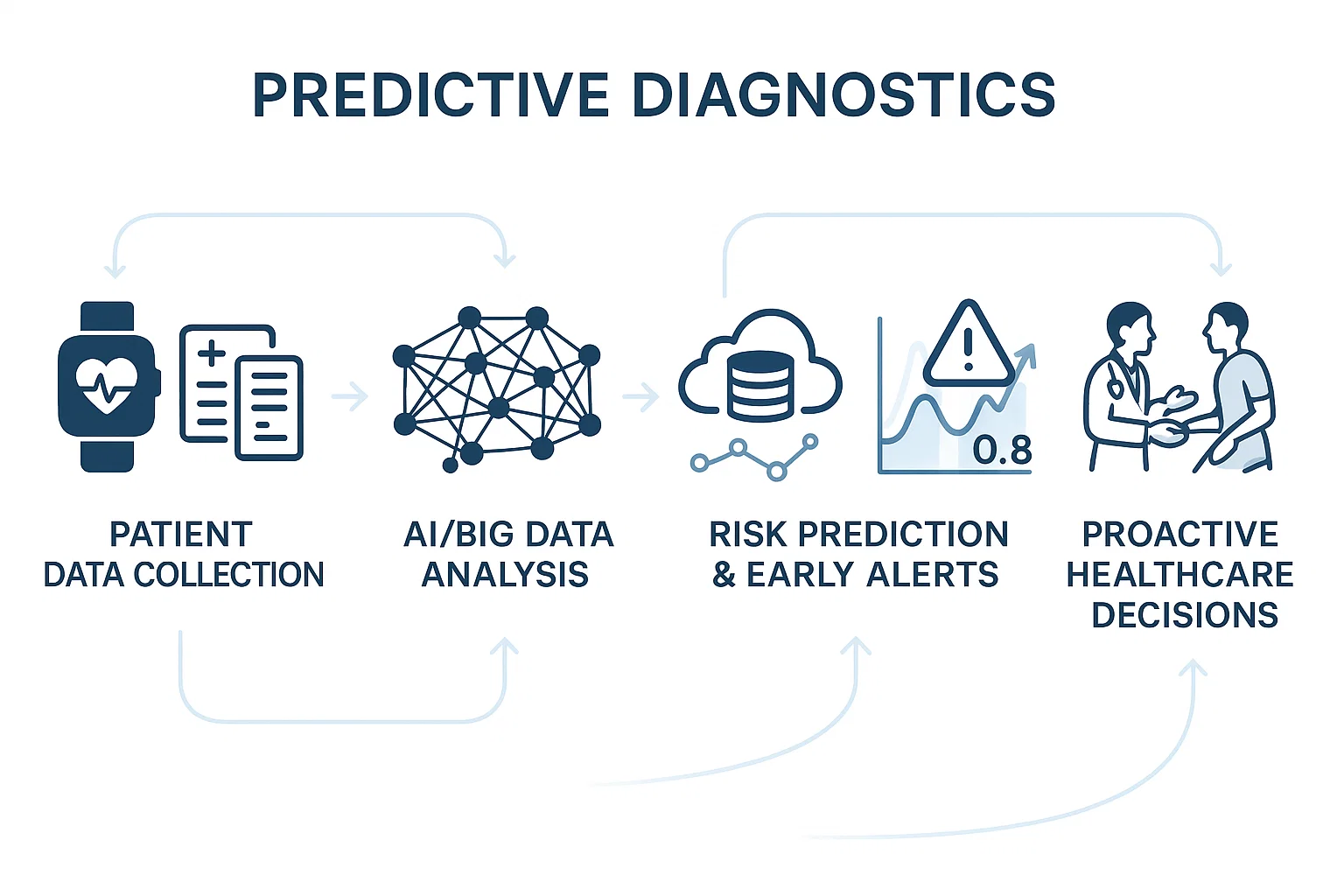
So, what is predictive diagnostics? In simple terms, think of it as a scientifically backed early warning system for your health.
Predictive diagnostics uses a powerful combination of data analytics, artificial intelligence, and continuous monitoring to flag potential health issues before symptoms even appear. Unlike traditional medical diagnostics, which act like a detective investigating symptoms that have already surfaced, this proactive method analyses your unique genetic profile, lifestyle habits, and clinical history to forecast future health risks.
The approach is revolutionary for several key reasons:
| Traditional Diagnostics | Predictive Diagnostics |
| Reactive (symptoms first) | Proactive (data first) |
| One-time testing | Continuous monitoring |
| Generic protocols | Personalized risk profiles |
| Higher treatment costs | Prevention-focused savings |
The true breakthrough comes from integrating electronic health records (EHRs) with data from wearable devices. AI algorithms then analyse this combined data, spotting subtle patterns a human might easily miss. We're now able to identify patients at a high risk of hospital readmission before they're even discharged, a level of foresight that saves both lives and resources.
For instance, a predictive model might flag a 45-year-old executive’s early diabetes risk by analysing their sleep quality, stress markers, and genetic predispositions, long before a standard annual physical would detect elevated glucose.
From Reactive to Proactive: How Predictive Diagnostics Transforms Healthcare
Let's be direct, traditional healthcare has often functioned like a fire department, rushing to put out fires that are already raging. Predictive healthcare is about spotting the smoke, giving us the chance to prevent the fire from ever starting.
As this shift takes hold, healthcare providers are using AI-powered analytics to identify risks while there's still plenty of time for prevention.
This transformation is built on a few core principles:
- Early Detection Through Smart Monitoring: Continuous tracking with modern devices reveals minor physiological changes that can signal a developing condition. For example, a shift in your heart rate variability during sleep could be an early indicator of cardiovascular issues, months before you would ever feel chest pain.
- Individualised Care Plans: Instead of relying on one-size-fits-all treatments, predictive analytics helps create a personalised health roadmap based on your specific risk profile. This leads to more targeted, effective interventions and better patient outcomes.
- Cost Reduction: This is where the financial benefits become clear. Preventing a $50,000 heart attack with a $500 early intervention programme is a decision that makes perfect sense, both clinically and economically.
The real-world impact is already here. AI models that analyse wearable data are alerting cardiologists to the early signs of heart conditions. This prompts timely lifestyle changes or medication adjustments that can prevent a major cardiac event from ever happening. That isn't just better healthcare; it's smarter healthcare.
Key Technologies and Diagnostic Tools Powering Predictive Healthcare
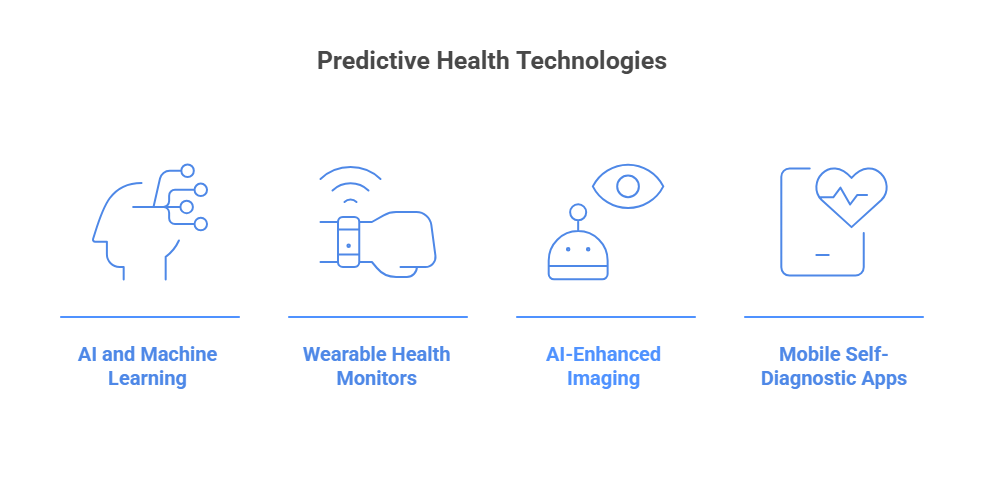
The technology fuelling predictive healthcare is no longer just theoretical. These innovations are driving real results today.
- Artificial Intelligence and Machine Learning: These are the engines of predictive health. AI algorithms process millions of data points from electronic health records (EHRs) in seconds, identifying complex disease patterns that would take human analysts years to uncover.
- Wearable Health Monitors: Your smartwatch and other wearables have evolved far beyond step counters. They are now sophisticated monitors tracking heart rate, sleep quality, activity, and even blood oxygen saturation in real-time, providing an unprecedented stream of data about your body’s daily performance.
- AI-Enhanced Imaging: Advanced diagnostic imaging, powered by computer vision, can now detect abnormalities in CT scans and other images that are so subtle they might be missed by the human eye. These algorithms are proving remarkably accurate at spotting early-stage cancers.
- Mobile Self-Diagnostic Applications: People can now conduct preliminary health checks from their smartphones, using apps that can analyse everything from skin lesions to heart rhythms.
Healthcare Analytics and Data Analytics: The Backbone of Predictive Diagnostics
This is where raw data is transformed into life-saving intelligence.
Healthcare analytics management systems are designed to process enormous volumes of patient information, creating detailed risk profiles that empower providers to make better-informed decisions. These systems can spot trends across entire populations while simultaneously generating personalised insights for each individual patient.
The real power is in data integration. When EHR data is combined with wearable metrics, genetic markers, and lifestyle information, the resulting analysis delivers incredibly accurate predictions. For example, analytics can identify which patients are most likely to miss follow-up appointments, allowing clinic staff to implement proactive outreach strategies to keep them engaged in their care.
Key applications include:
- Risk Stratification: Automatically sorting patients based on their likelihood of developing specific conditions.
- Resource Optimisation: Predicting future staffing and equipment needs based on historical and real-time patient flow patterns.
- Clinical Decision Support: Offering real-time, data-backed recommendations to clinicians during patient consultations.
This comprehensive use of data analytics in the healthcare industry ensures providers can respond to emerging health threats before they become full-blown emergencies.
Benefits of Predictive Diagnostics: Improving Health Outcomes and Reducing Costs
The advantages of predictive diagnostics go far beyond early disease detection, though that benefit alone is monumental.
- Enhanced Disease Prevention: Instead of just managing diabetes after it's diagnosed, predictive models can identify pre-diabetic patterns years in advance. This opens a window for lifestyle interventions that can prevent the disease from ever developing.
- Personalised Treatment Protocols: Care becomes tailored to each patient's unique health profile and risk factors, improving treatment effectiveness and minimising the chance of adverse reactions.
- Dramatic Cost Savings: Preventing a single stroke through early, targeted intervention can save over $100,000 in acute treatment and long-term care costs, not to mention the immeasurable value of preserving a person's quality of life.
- Improved Patient Engagement: When individuals can see their own health trends in real-time, they become active participants in their wellness journey. Gamified health monitoring through apps encourages consistent, healthy behaviours.
- Operational Efficiency: Healthcare facilities can optimise staffing rotas, reduce costly hospital readmissions, and manage inventory more effectively when they can accurately predict patient needs.
Consider this practical scenario: a predictive algorithm flags a 60-year-old patient as high-risk for readmission based on their medication adherence and certain social determinants of health. In response, the care team schedules proactive telehealth check-ins and connects the patient with community transport resources, preventing another costly emergency room visit and improving their overall health.
Challenges and Considerations in Adopting Predictive Diagnostics
Of course, this transformation isn't a simple plug-and-play solution. Implementing a predictive diagnostics framework comes with its own set of challenges.
- Data Privacy Concerns: Handling vast amounts of sensitive patient data requires an unwavering commitment to security and compliance with privacy regulations. The key is balancing data accessibility for analytics with ironclad security protocols.
- System Integration Complexity: Many healthcare facilities still rely on legacy IT systems that weren't built to communicate with modern analytics platforms. Achieving seamless interoperability often requires significant technical expertise and investment.
- Accuracy and Reliability Questions: Before making critical clinical decisions, healthcare professionals must have full confidence in the predictive models. This means understanding their sensitivity, specificity, and the potential for false positives.
- Staff Training Requirements: New technologies require new skills. Clinical and administrative teams need comprehensive training to learn how to interpret predictive insights and integrate them into their daily workflows.
- Regulatory Compliance: The regulatory landscape for digital health is constantly evolving. Staying compliant while pushing the boundaries of innovation demands continuous vigilance.
Successful healthcare organisations address these issues head-on, viewing them as implementation steps rather than roadblocks. Their key strategies include:
- Implementing robust cybersecurity that doesn't hinder usability.
- Choosing interoperable solutions that integrate smoothly with existing systems.
- Validating all predictive models through rigorous clinical testing.
- Investing in ongoing, role-specific staff training programmes.
The Future of Predictive Diagnostics: Trends and Industry Impact
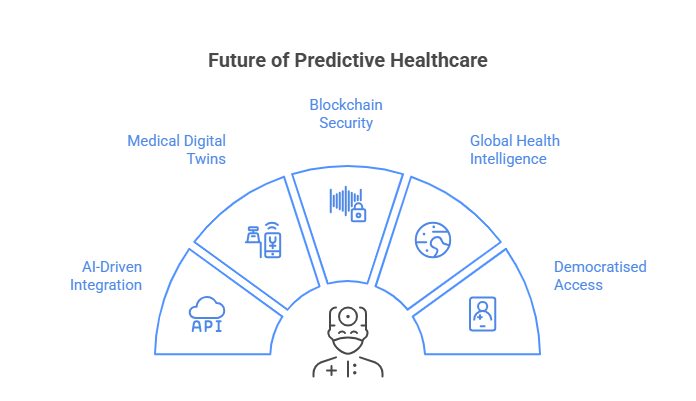
If you think today's technology is impressive, the pace of innovation is only accelerating. The future of predictive diagnostics will bring capabilities that are even more powerful.
- AI-Driven Multi-Omics Integration: We are moving towards a holistic health model that combines genomics, proteomics, metabolomics, and real-time IoT data to make predictions with unparalleled accuracy.
- Medical Digital Twins: Imagine a virtual replica of your body that allows doctors to simulate how different treatments or lifestyle changes might affect you personally. These digital models will allow for testing interventions in a virtual environment before applying them in real life.
- Blockchain-Enhanced Security: Advanced encryption and distributed ledger technology will offer new ways to ensure sensitive health data remains secure yet accessible for predictive modelling across different healthcare networks.
- Global Health Intelligence: Predictive analytics will expand beyond individual care to population health, helping public health officials identify and contain disease outbreaks before they can spread globally.
- Democratised Healthcare Access: As mobile diagnostics become more powerful and affordable, they will bring predictive health monitoring to underserved communities worldwide, helping to create more equitable access to care.
Industry leaders are already making significant investments in these areas. The healthcare organisations that adapt to these trends quickly will secure a major advantage in patient outcomes, operational efficiency, and cost management.
Conclusion: Embracing the Shift to Proactive Health with Predictive Diagnostics
The move from reactive to proactive healthcare isn't just an incremental improvement-it's a fundamental reimagining of our relationship with health and wellness.
We are transitioning from a world where we hoped to catch diseases early to one where we can confidently prevent them altogether. The powerful combination of AI-powered analytics, continuous monitoring, and truly personalised care is creating a future with healthier populations and more sustainable healthcare systems.
Your Next Steps:
- Evaluate Current Capabilities: Assess your organisation's readiness to implement predictive diagnostics.
- Invest in Data Infrastructure: Ensure your systems can handle the data volume required for effective predictions.
- Train Your Teams: Prepare your staff to interpret and act on predictive insights confidently.
- Prioritise Security: Implement robust data protection measures to maintain patient trust.
Ready to transform your approach to healthcare? Explore NirogGyan's comprehensive health solutions and discover how predictive diagnostics can revolutionise patient care in your organisation.
Frequently Asked Questions (FAQs)
1. What exactly is predictive diagnostics, and how does it differ from regular medical testing?
Predictive diagnostics uses AI and data analytics to identify potential health risks before symptoms appear. In contrast, traditional diagnostics are used to confirm a disease after you start feeling sick. Think of it as a health early-warning system that analyses patterns in your genetic data, lifestyle, and clinical history to forecast future issues.
2. How accurate are predictive diagnostic tools in identifying future health problems?
Accuracy depends on the condition and the specific tool, but leading predictive models can achieve 85-95% accuracy for conditions like heart disease and diabetes. The key is to use multiple data sources; combining genetic info, wearable data, and clinical records leads to far more reliable predictions.
3. What technologies power modern predictive diagnostics?
The core technologies include AI analysing EHR data, continuous monitoring with wearables, genomic sequencing to identify genetic risks, and mobile health apps for self-monitoring. They all work together to build a comprehensive health profile that can predict future risks.
4. What are the biggest obstacles healthcare organisations face when implementing predictive diagnostics?
The main hurdles are data security (protecting patient privacy), integrating new tools with older IT systems, validating the accuracy of the predictions, and training staff to use the technology effectively. However, organisations that tackle these challenges systematically achieve significant returns in better patient outcomes and lower costs.
5. How will predictive diagnostics change healthcare in the next decade?
We can expect to see AI-powered "multi-omics" (combining genetic, protein, and metabolic data), medical digital twins to simulate treatments virtually, and blockchain for enhanced data security. These advances will make healthcare more personalised, preventive, and accessible across the globe, especially in underserved regions where mobile diagnostics can bridge critical gaps in care.
"Unlock Better Health with NirogGyan's Expert Diagnostic Solutions. Take the First Step Towards Proactive Healthcare Today!"